









Long before anyone measured an antioxidant in a laboratory, mushrooms held a place of honor in traditional kitchens and healing systems. In China, the shiitake has been cultivated on logs for many centuries and was prized as a food that strengthens qi, the body’s vital energy. Japanese cooks built whole broths around dried shiitake, and Traditional Chinese Medicine set aside a special reverence for the reishi, or lingzhi, often called the “mushroom of immortality.” Across Europe, foragers carried baskets of porcini home from the autumn woods as a seasonal gift from the forest floor.
Today, modern nutrition science is catching up with that old wisdom. Researchers at Penn State, the National University of Singapore and the University of Florida have found that everyday culinary mushrooms carry a rare antioxidant, may support immune cells, and are linked in large studies with lower cancer risk and healthier brain aging. Best of all, you do not need exotic supplements to benefit. A handful of mushrooms in your omelet, soup or stir-fry is enough to start.
Key Takeaways
- Mushrooms are the richest food source of ergothioneine, an unusual antioxidant the body cannot make on its own, and they also supply glutathione.
- A Penn State review of 17 studies found that people eating about 18 grams of mushrooms a day had a 45% lower risk of cancer than people who ate none.
- In a six-year Singapore study, seniors who ate more than two portions a week had about 50% lower odds of mild cognitive impairment.
- Eating shiitake every day for four weeks boosted the activity of key immune cells and lowered a marker of inflammation in a University of Florida trial.
- Mushrooms exposed to sunlight or UV light become a meaningful plant source of vitamin D, and the nutrients largely survive cooking.
What Makes Mushrooms Nutritionally Unique
Mushrooms are not plants or animals. They belong to their own kingdom, fungi, and that difference shows up in their chemistry. They are low in calories and naturally rich in B vitamins, potassium, selenium and fiber, including beta-glucans, the same family of fibers found in oats. But two compounds have drawn the most attention from researchers.
Ergothioneine: the “longevity vitamin” candidate
Ergothioneine is an amino acid that works as an antioxidant. Humans cannot produce it, yet our bodies have a dedicated transporter to pull it from food into our cells, which suggests it plays an important role. Some scientists have even proposed it as a possible “longevity vitamin.” Mushrooms contain far more of it than almost any other food.
In 2017, Penn State food scientist Robert Beelman and colleagues measured ergothioneine and glutathione in 13 mushroom species and published their results in Food Chemistry. The wild porcini came out on top by a wide margin. The common white button mushroom had less than most specialty types, yet still more than most other foods. The researchers also found that mushrooms high in one antioxidant tended to be high in the other, and that ergothioneine is very heat stable, so cooking does not appear to destroy it.
Glutathione: the body’s master antioxidant
Glutathione is often called the body’s master antioxidant because it helps recycle other antioxidants and supports the liver’s natural detoxification work. Our levels tend to decline with age. Getting glutathione and ergothioneine together from food is one reason mushrooms are earning a place in conversations about healthy aging.
What the Research Shows
Lower cancer risk
In 2021, a Penn State team led by graduate researcher Djibril Ba, with John Richie, Robert Beelman and Xiang Gao, pooled 17 studies published between 1966 and 2020 that together included more than 19,500 cancer patients. Their analysis, published in Advances in Nutrition, found that people who ate about 18 grams of mushrooms a day, roughly an eighth to a quarter of a cup, had a 45% lower risk of cancer than those who ate none. The link was strongest for breast cancer.
Interestingly, varieties richer in ergothioneine, such as shiitake, oyster, maitake and king oyster, stood out, but any type of mushroom was associated with lower risk. This kind of research shows an association rather than proof of cause, yet it fits neatly with what we know about mushrooms’ antioxidant content.
A sharper mind with age
Researchers at the National University of Singapore, led by Assistant Professor Feng Lei, followed more than 600 Chinese seniors over age 60 from 2011 to 2017. Published in the Journal of Alzheimer’s Disease in 2019, the study found that people who ate more than two standard portions of mushrooms a week (one portion is about three-quarters of a cup cooked, or 150 grams) had about 50% lower odds of mild cognitive impairment, the stage that often comes before more serious memory loss. Even one portion a week appeared to help. The team pointed to ergothioneine, noting that earlier work had found lower blood levels of it in people with cognitive impairment.
Mushrooms fit beautifully alongside other brain-friendly foods, such as leafy greens and blueberries.
Stronger immune defenses
Traditional healers have long used shiitake to support resilience, and a controlled trial from the University of Florida put that idea to the test. Nutrition scientist Susan Percival and her team asked 52 healthy adults aged 21 to 41 to eat 5 or 10 grams of dried whole shiitake every day for four weeks. The results, published in the Journal of the American College of Nutrition in 2015, showed that gamma delta T cells, a type of front-line immune cell, proliferated 60% more, and NK-T cells about twice as much, after the four weeks of daily shiitake. Participants also had more protective IgA antibodies in their saliva and lower C-reactive protein, a blood marker of inflammation.
If you are building a winter wellness routine, mushrooms pair well with the other approaches in our guide to natural immune support for cold and flu season.
A longer life?
The evidence on lifespan is encouraging but modest. A 2021 Penn State study in Nutrition Journal followed 30,378 American adults from national health survey data for an average of 6.7 years. Mushroom eaters had a lower risk of death, though that single result was not statistically conclusive. When the researchers combined it with four other cohorts, totaling more than 600,000 people, mushroom intake was linked with a small but significant 6% lower risk of death. A separate analysis by the same team suggested that swapping a daily serving of red or processed meat for mushrooms was associated with lower mortality.
The Evidence at a Glance
| Study | Who and how much | What they found |
|---|---|---|
| Ba et al., Advances in Nutrition, 2021 | 17 studies, 19,500+ cancer patients; about 18 g/day | 45% lower cancer risk vs. no mushrooms; strongest for breast cancer |
| Feng et al., Journal of Alzheimer’s Disease, 2019 | 600+ seniors in Singapore, 6 years; 2+ portions a week | About 50% lower odds of mild cognitive impairment |
| Dai et al., J. Am. College of Nutrition, 2015 | 52 healthy adults; 5–10 g dried shiitake daily for 4 weeks | More active gamma delta and NK-T cells, more salivary IgA, lower CRP |
| Ba et al., Nutrition Journal, 2021 | 30,378 U.S. adults, plus meta-analysis of 600,000+ people | 6% lower risk of death in the pooled analysis |
| Kalaras et al., Food Chemistry, 2017 | 13 mushroom species tested | Porcini highest in ergothioneine and glutathione; compounds are heat stable |
The Sunshine Trick: Mushrooms and Vitamin D
Here is a piece of kitchen magic worth knowing. Mushrooms contain ergosterol, a compound that turns into vitamin D2 when exposed to ultraviolet light, much as our skin makes vitamin D in the sun. A 2018 review in Nutrients by Glenn Cardwell and colleagues explains that ordinary store-bought button mushrooms usually have less than 1 microgram of vitamin D per 100 grams. But fresh mushrooms set out in the midday sun for 15 to 120 minutes typically climb above 10 micrograms per 100 grams. In one test, sliced mushrooms reached 32.5 micrograms after an hour in the sun.
The review concluded that a 100-gram serving of UV-treated mushrooms could provide half to all of an adult’s daily vitamin D needs. The vitamin also holds up well in the kitchen: mushrooms kept about 88% of their vitamin D after five minutes of dry pan-frying and roughly two-thirds after boiling or baking. Many grocery stores now sell “UV-treated” or “high in vitamin D” mushrooms, which is a simple way to get this benefit.
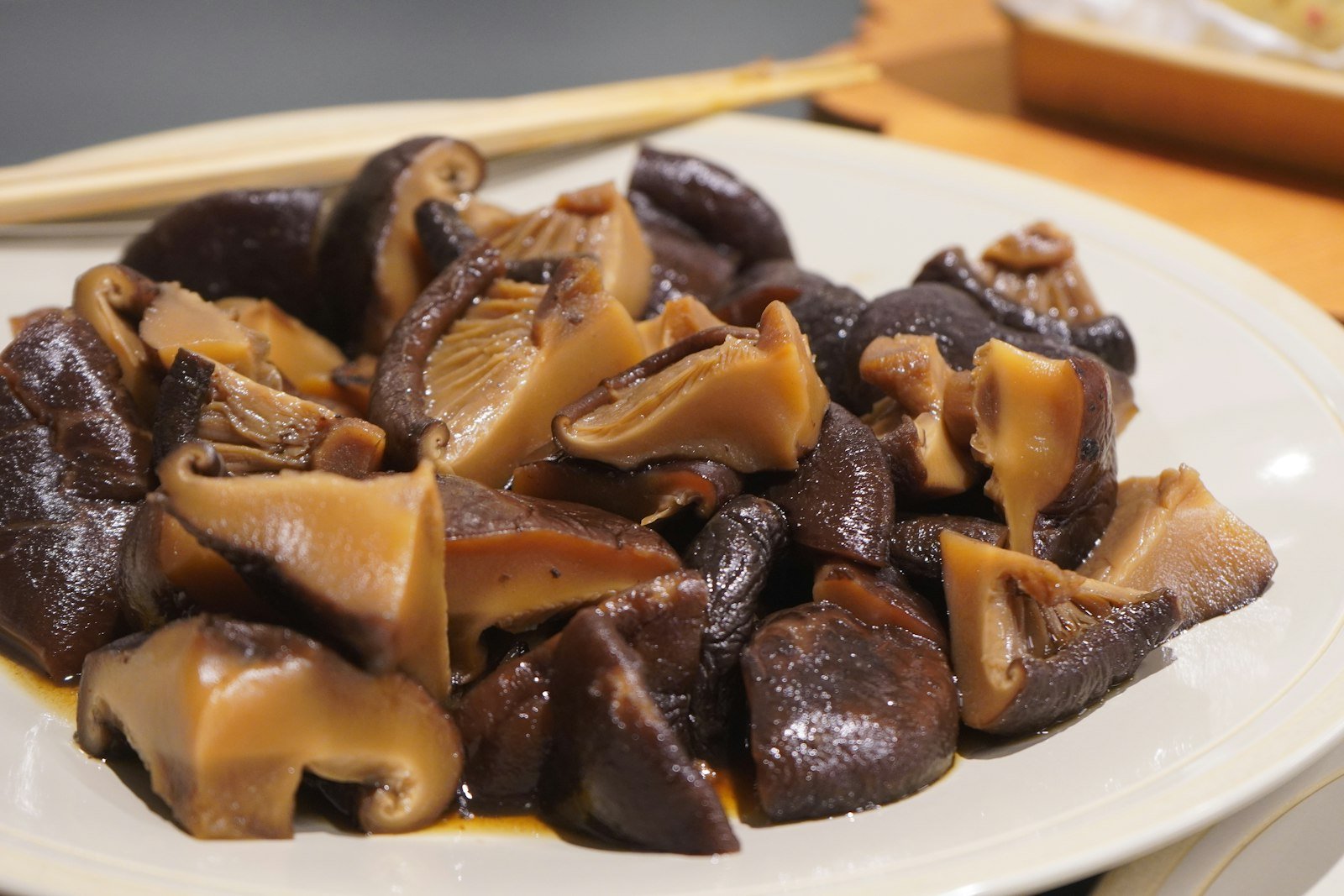
How to Eat More Mushrooms: Practical Steps
- Start small and steady. The research benefits appeared at modest amounts: about 18 grams a day, or two portions a week. A small handful of sliced mushrooms most days is a realistic goal.
- Go beyond the white button. Rotate in shiitake, oyster, maitake and king oyster, which are richer in ergothioneine. If you can find porcini, even dried ones, they are the antioxidant champions.
- Give them a sunbath. Slice fresh mushrooms, spread them gill-side up on a tray, and set them in strong midday sun for 15 to 60 minutes before cooking. Or buy UV-treated mushrooms.
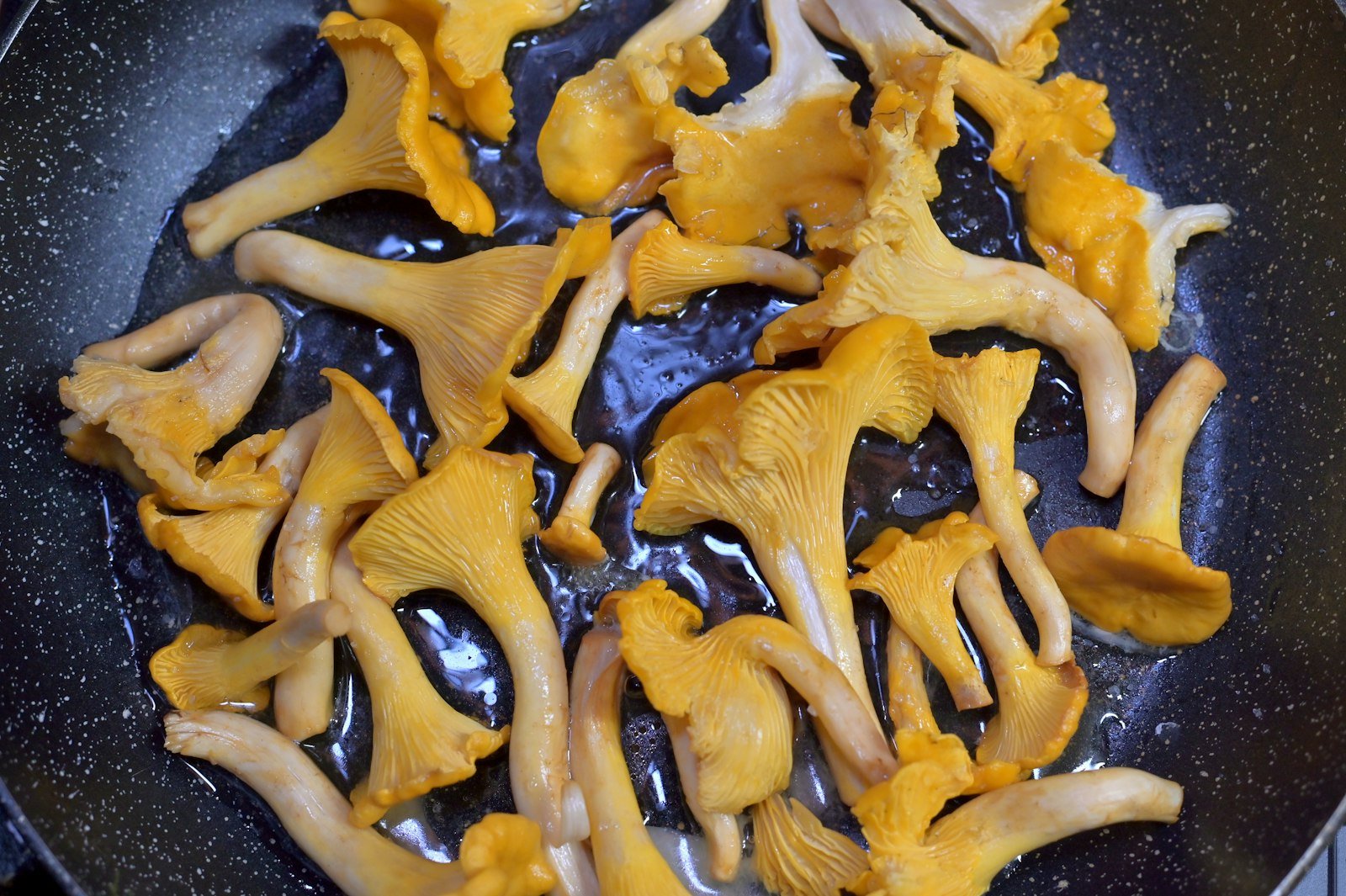
- Cook them well. A dry or lightly oiled sauté until golden brings out a deep, savory flavor. Ergothioneine handles heat well, and pan-frying preserves vitamin D best.
- Blend them into meals you already love. Finely chopped mushrooms can replace part of the ground meat in tacos, sauces and burgers, adding flavor while lightening the dish.
- Keep dried mushrooms on hand. Dried shiitake keeps for months. Soak them in warm water, then use both the mushrooms and the rich soaking liquid in soups, grains and stews, just as Japanese and Chinese cooks have done for generations.
- Count them toward your plant variety. Each mushroom type adds to the diversity that feeds your gut microbes, as explained in our guide to eating 30 plants a week.
A simple everyday recipe idea
Warm a teaspoon of olive oil in a skillet, add a generous handful of sliced shiitake or oyster mushrooms and cook undisturbed for three to four minutes until browned. Stir in minced garlic, a splash of tamari and a handful of spinach. Serve over brown rice or alongside beans or lentils for a satisfying meal that brings together several of the world’s longest-lived food traditions.
The Bottom Line
Mushrooms are one of nature’s most underrated foods. They bring a rare pair of antioxidants, ergothioneine and glutathione, along with fiber, B vitamins and, with a little sunshine, vitamin D. Research links regular mushroom eating to lower cancer risk, healthier brain aging and more active immune cells, echoing what traditional healers in Asia and Europe sensed long ago. You do not need large amounts or costly supplements. A few servings a week of a variety of culinary mushrooms is an easy, delicious addition to a whole-food way of eating.
Frequently Asked Questions
Which mushrooms are the healthiest?
All common culinary mushrooms offer benefits. Porcini tested highest in ergothioneine and glutathione, and shiitake, oyster, maitake and king oyster are also rich sources. White button, cremini and portobello have less but still more than most foods, and in the cancer research any variety was linked to lower risk.
Does cooking destroy the nutrients in mushrooms?
Not much. Penn State researchers found ergothioneine is very heat stable. Vitamin D also holds up well, especially with quick pan-frying. Cooking also makes mushrooms easier to digest, so enjoy them cooked.
How many mushrooms should I eat?
The studies point to modest amounts: about 18 grams a day in the cancer analysis and more than two 150-gram portions a week in the brain study. A handful most days or a few generous servings a week is a sensible goal.
Can I really get vitamin D from mushrooms?
Yes, if they have been exposed to UV light. Regular store mushrooms contain very little, but sun-exposed or UV-treated mushrooms can provide a large share of daily needs. Mushrooms make vitamin D2, while sunlight on skin and animal foods provide D3.
Are mushroom supplements as good as whole mushrooms?
The studies described here used whole mushrooms as food. Whole mushrooms also deliver fiber, minerals and flavor, so food is the best place to start.
Safety note: Never eat wild mushrooms unless they have been identified by an expert, since some poisonous species closely resemble edible ones. Buy from trusted grocers or farmers. Rarely, raw or undercooked shiitake can cause a temporary itchy skin rash, so cook them thoroughly.
Sources
- Penn State News. Higher mushroom consumption is associated with a lower risk of cancer (Ba DM et al., Advances in Nutrition, 2021).
- National University of Singapore. Mushrooms may reduce risk of cognitive decline (Feng L et al., Journal of Alzheimer’s Disease, 2019).
- Dai X, Stanilka JM, Rowe CA, et al. Consuming Lentinula edodes (Shiitake) mushrooms daily improves human immunity: a randomized dietary intervention in healthy young adults. J Am Coll Nutr. 2015;34(6):478-87.
- ScienceDaily / University of Florida. Shiitake mushrooms may boost immunity. 2015.
- Ba DM, Gao X, Al-Shaar L, et al. Prospective study of dietary mushroom intake and risk of mortality: results from continuous NHANES 2003-2014 and a meta-analysis. Nutrition Journal. 2021;20:80.
- Physicians Committee for Responsible Medicine. Replacing red and processed meat with mushrooms linked to a lower risk of early death. 2021.
- ScienceDaily / Penn State. Mushrooms are full of antioxidants that may have antiaging potential (Kalaras MD et al., Food Chemistry, 2017;233:429).
- Cardwell G, Bornman JF, James AP, Black LJ. A review of mushrooms as a potential source of dietary vitamin D. Nutrients. 2018;10(10):1498.
This article is for educational purposes and is not a substitute for personalized advice from a qualified health practitioner.