











Few wellness gadgets have exploded like red light therapy. Glowing LED face masks fill social media feeds, influencers film their morning sessions, and home panels now sell for hundreds of dollars. The promise is seductive: switch on a light, relax for ten minutes, and watch wrinkles fade.
Is there real science behind the glow, or is it just a pretty filter? The answer is encouraging, but more modest than the advertising suggests. Here is what researchers actually know.
Key Takeaways
- Red and near-infrared light can stimulate skin cells in ways that support collagen production.
- Controlled studies show modest improvements in fine lines, skin texture, and tone after weeks of regular use.
- A September 2026 review in the Journal of Drugs in Dermatology concluded the treatment is safe and helpful for select uses, but that marketing often overpromises.
- Results are gradual and fade if you stop. Consistency matters more than intensity.
- Many home devices lack independent testing, so choose carefully and protect your eyes.
What Is Red Light Therapy?
Red light therapy, known in research circles as photobiomodulation, uses low-power light in the red (roughly 630 to 700 nanometers) and near-infrared (about 800 to 900 nanometers) ranges. Unlike ultraviolet light from the sun or tanning beds, these wavelengths do not burn the skin or damage DNA. They also do not heat tissue the way a laser does.
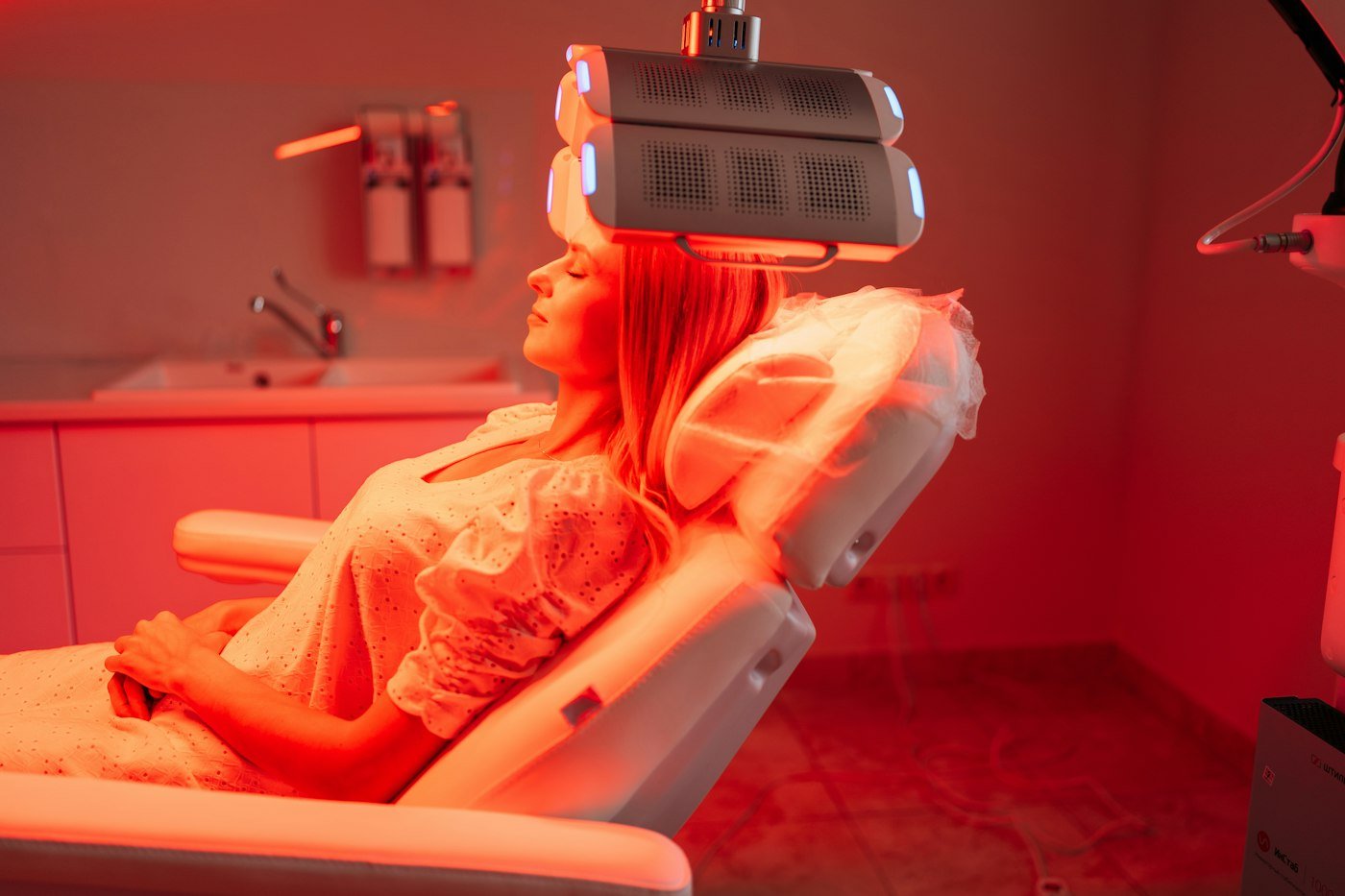
The idea dates back to the 1960s. A Hungarian physician, Endre Mester, noticed that low-level laser light seemed to help wounds heal faster in mice. NASA later explored red LEDs for plant growth and astronaut wound care, which helped spark commercial interest.
How Could Light Change Your Skin?
The leading theory centers on your cells’ power plants, the mitochondria. An enzyme inside them, called cytochrome c oxidase, absorbs red and near-infrared light. When it does, cells appear to produce more energy (in the form of ATP) and release signaling molecules that calm inflammation.
In the skin, that extra energy seems to nudge fibroblasts, the cells that build collagen and elastin. Collagen is the scaffolding that keeps skin firm. We lose about 1 percent of it per year starting in our twenties, and sun exposure speeds the loss. More collagen activity, in theory, means smoother, plumper skin.
That mechanism is biologically plausible and supported by lab research. The real question is how much difference it makes on an actual face.
What the Human Studies Show
The landmark controlled trial
One of the most cited studies, published in 2014 in Photomedicine and Laser Surgery, enrolled 136 volunteers. Participants received twice-weekly full-body light sessions for 30 sessions, while a control group received no treatment. The treated groups showed better skin complexion and feeling, less roughness, and higher collagen density as measured by ultrasound. The control group did not change.
The improvements were real but subtle. Think “fresher and smoother” rather than “ten years younger.” Participants also knew whether they were being treated, which can color how people rate their own skin.
The 2026 dermatology review
A team of dermatologists from the University of Colorado and other centers published a review in the Journal of Drugs in Dermatology this September, comparing marketing claims with the scientific literature. Their conclusions, in plain terms:
- Red light has reasonable support for mild sun-related aging, acne, certain kinds of hair thinning, and wound healing.
- Benefits are modest and gradual, and they depend on steady, ongoing use.
- It works best as a supporting treatment, not a stand-alone fix.
- Advertising often exaggerates how fast, how dramatic, and how long-lasting the results are.
- Many consumer devices have not been independently tested to show they deliver the doses used in studies.
Claim Check: Red Light Therapy
| Marketing claim | What the evidence says |
|---|---|
| “Reduces fine lines” | Modest support after weeks of regular sessions |
| “Boosts collagen” | Supported in lab work and measured in small human studies |
| “Calms acne” | Some support, often combined with blue light |
| “Visible results in days” | Overstated: studies run 8 to 15 weeks |
| “Works as well as a laser or Botox” | Not supported: effects are much gentler |
| “Reverses aging from within” | Not supported: no evidence for whole-body anti-aging |
Home Devices vs. the Clinic
Most positive studies used professional equipment with carefully measured output. Home masks and wands are usually weaker, which means you may need more sessions to see the same effect, if you see it at all. A few practical tips:
- Look for FDA clearance. This is not proof of dramatic results, but it shows the device met basic safety and performance standards.
- Check the wavelengths. Reputable brands list them clearly, usually around 630 to 660 nm (red) and 830 to 850 nm (near-infrared).
- Be wary of miracle language such as “cellular rejuvenation” or “biohack your age.”
- Commit for at least 8 to 12 weeks before judging results, and take honest before-and-after photos in the same lighting.
Is It Safe?
For most people, yes. Red light does not cause sunburn or raise skin cancer risk the way UV does. Still, keep a few precautions in mind:
- Protect your eyes. Bright LEDs close to the face can be hard on the eyes. Use the goggles provided, and talk to an eye doctor if you have retinal disease.
- Check your medications. Some drugs, such as certain antibiotics, acne medicines, and diuretics, make skin more sensitive to light.
- Use caution with melasma or darker skin tones prone to discoloration. Ask a dermatologist first.
- Do not treat unexplained spots or growths. Have any changing mole checked before using light devices on it.
Smart Anti-Aging Habits That Pair Well
Red light works best as one piece of a bigger routine. The most powerful anti-aging step is still free: daily broad-spectrum sunscreen, since UV light is the main driver of wrinkles and spots. Our guide to balancing the benefits and risks of sunlight explains how to get the good without the damage.
Nutrition also matters. Vitamin C, protein, and colorful plant foods all support collagen. See our roundup of collagen-rich foods for healthier skin. Add good sleep, no smoking, and regular exercise, and you have a routine that a light device can gently build on.
The Bottom Line
Red light therapy is not a fountain of youth, but it is also not a scam. The best evidence points to gentle, gradual improvements in skin texture, tone, and fine lines for people who use it consistently. If you enjoy the ritual and choose a reputable device, it can be a pleasant addition to good sun protection and healthy habits. Just keep your expectations as realistic as your before-and-after photos.
Frequently Asked Questions
How often should I use red light therapy?
Most studies used sessions two to five times per week. Follow your device’s instructions, since output varies widely between products.
When will I see results?
Expect to wait at least eight weeks. Many studies measured results after three months of steady use.
Can I use red light with my skincare products?
Yes, but apply it to clean skin. Avoid using it right after retinoids or acids if your skin is irritated, and skip products that increase light sensitivity.
Does red light therapy help hair growth?
There is some evidence for androgenetic (pattern) hair thinning. Results vary, and a dermatologist can help you decide if it is worth trying.
Sources
- Barton NE, Ly TA, de Moraes GR, et al. Red Light Therapy in Cosmetic Dermatology: Marketing Claims Backed by Evidence? Journal of Drugs in Dermatology, 2026.
- Wunsch A, Matuschka K. A controlled trial to determine the efficacy of red and near-infrared light treatment in patient satisfaction, reduction of fine lines, wrinkles, skin roughness, and intradermal collagen density increase. Photomedicine and Laser Surgery, 2014.
- Hamblin MR. Mechanisms and applications of the anti-inflammatory effects of photobiomodulation. AIMS Biophysics, 2017.
This article is for educational purposes and is not medical advice. Consult a dermatologist before starting a new skin treatment.





