










Ask in any natural health group what helps achy joints, and turmeric will be one of the first answers. The golden spice that colors curry has been used in Indian and Chinese traditional medicine for thousands of years. Today it is one of the best-selling supplements in the world.
Unlike many herbal remedies, turmeric has actually been tested in a good number of clinical trials, especially for knee osteoarthritis. The results are genuinely encouraging, though not miraculous. Here is what you need to know to use it wisely.
Key Takeaways
- The main active compounds in turmeric are called curcuminoids, with curcumin the best known.
- A placebo-controlled trial in Annals of Internal Medicine found a turmeric extract reduced knee osteoarthritis pain more than placebo over 12 weeks.
- Several meta-analyses suggest turmeric extracts may relieve arthritis pain about as well as some common pain relievers, with fewer stomach side effects.
- Curcumin is poorly absorbed, so formulation matters. Sprinkling turmeric on food is unlikely to match study doses.
- Supplements are not risk-free. Rare cases of liver injury and interactions with blood thinners have been reported.
Meet the Golden Root
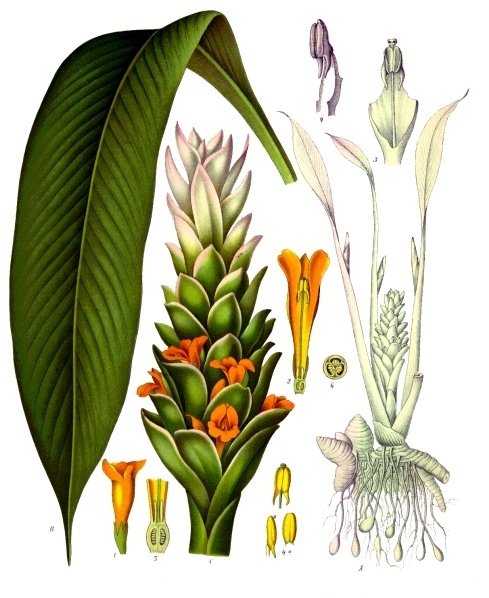
Turmeric comes from the underground stem, or rhizome, of Curcuma longa, a leafy plant related to ginger. The rhizomes are boiled, dried, and ground into the bright yellow-orange powder found in spice racks. In Ayurvedic medicine, turmeric has long been used for wounds, digestive troubles, and painful joints.
The spice contains dozens of compounds, but the curcuminoids make up only about 3 to 5 percent of turmeric powder by weight. Most studies use concentrated extracts rather than kitchen turmeric.
How Might Turmeric Ease Pain?
Osteoarthritis is the “wear and tear” form of arthritis, but it is not purely mechanical. Low-grade inflammation in the joint lining contributes to pain, swelling, and the breakdown of cartilage.
In laboratory studies, curcumin dampens several inflammatory pathways, including a master switch called NF-kB and enzymes like COX-2, which is the same enzyme targeted by drugs such as celecoxib. It also acts as an antioxidant. Whether these effects happen strongly enough in the human body is the key question, which is why clinical trials matter.
What the Clinical Trials Show
The Tasmanian knee trial
Researchers at the University of Tasmania in Australia ran one of the more carefully designed studies. They recruited 70 adults with painful knee osteoarthritis and visible swelling inside the joint on ultrasound. Half took two capsules daily of a water-based Curcuma longa extract, and half took identical-looking placebo capsules, for 12 weeks.
- Pain: The turmeric group reported significantly less knee pain than the placebo group.
- Pain medication: People taking turmeric used fewer rescue pain medicines.
- Joint swelling and cartilage: MRI scans showed no difference between the groups.
- Safety: Side effects were similar in both groups.
The researchers described the benefit as moderate and called for larger, longer trials. In other words, turmeric seemed to ease symptoms, but it did not appear to change the underlying joint damage in this short study.
The bigger picture
Several meta-analyses have pooled the results of smaller trials. A 2016 analysis in the Journal of Medicinal Food found that turmeric extracts, typically around 1,000 mg of curcumin a day, reduced arthritis pain more than placebo and performed similarly to common pain relievers like ibuprofen and diclofenac in head-to-head comparisons. Many of the trials were small, short, and funded by supplement makers, so the evidence is promising rather than definitive.
Turmeric Claims: Evidence Check
| Claim | Evidence |
|---|---|
| Eases knee osteoarthritis pain | Moderate: multiple trials and meta-analyses |
| Works as well as NSAIDs | Possible: small head-to-head trials |
| Rebuilds cartilage | Not shown in human imaging studies |
| Cooking with turmeric has the same effect | Unlikely: food amounts are far lower than study doses |
The Absorption Problem
Curcumin is notoriously hard for the body to absorb. Much of it passes straight through the gut, and what is absorbed is quickly broken down by the liver. A few strategies help:
- Black pepper. Piperine, the compound that makes pepper hot, slows curcumin’s breakdown. One classic study found it raised blood levels about twentyfold.
- Fat. Curcumin dissolves in fat, so taking it with a meal containing some oil or fat improves uptake.
- Special formulations. Many products bind curcumin to phospholipids, use nanoparticles, or combine it with other compounds to boost absorption.
Golden milk and curries are delicious and healthy, but they deliver much less curcumin than research supplements. Our turmeric recipe guide and these zesty ginger and turmeric shots are great ways to enjoy the spice, just with realistic expectations.
Safety: Natural Doesn’t Mean Risk-Free
Turmeric as a spice is very safe. Concentrated supplements deserve more caution:
- Liver injury. The U.S. National Institutes of Health LiverTox database lists turmeric as a rare cause of liver injury, and cases have increased as high-absorption products have become popular. Stop taking it and see a doctor if you notice dark urine, yellowing skin or eyes, or unusual fatigue.
- Bleeding risk. Turmeric may thin the blood slightly. Talk to your doctor if you take warfarin, clopidogrel, or other blood thinners, or before surgery.
- Gallbladder problems. It can stimulate bile flow, which may worsen gallstones.
- Stomach upset. High doses can cause nausea, diarrhea, or heartburn.
- Pregnancy. Food amounts are fine, but supplements are not recommended.
- Quality. Supplements are loosely regulated. Some imported turmeric products have been found contaminated with lead. Look for third-party testing seals.
A Smart Approach to Joint Pain
Turmeric works best as part of a bigger plan. The strongest evidence for knee osteoarthritis supports exercise, strengthening the thigh muscles, and weight loss if needed. Even a 5 to 10 percent drop in body weight can noticeably reduce knee pain. Our guide to natural pain relief strategies covers many more options, and our science check on DMSO for pain and inflammation looks at another popular remedy.
The Bottom Line
Turmeric is one of the better-studied natural pain remedies. For knee osteoarthritis, a well-made extract may offer moderate pain relief, possibly with fewer stomach problems than standard anti-inflammatory pills. It is not a cure, does not appear to rebuild cartilage, and supplements carry real, if uncommon, risks. If you want to try it, choose a tested product, give it 8 to 12 weeks, and let your doctor know, especially if you take other medications.
Frequently Asked Questions
How long does turmeric take to work for joint pain?
Most studies measured benefits after 4 to 12 weeks. It is not a quick fix like a pain reliever.
How much should I take?
Studies commonly used about 500 to 1,000 mg of curcuminoids or extract per day. Follow the product label and check with your doctor, especially if you have liver problems or take medications.
Can I take turmeric with ibuprofen?
Both may affect bleeding and the stomach. Talk to your doctor or pharmacist before combining them regularly.
Does turmeric help rheumatoid arthritis?
Small studies are promising, but rheumatoid arthritis is an autoimmune disease that needs proper medical treatment to prevent joint damage. Turmeric should only be an add-on, with your rheumatologist’s approval.
Sources
- Wang Z, Jones G, Winzenberg T, et al. Effectiveness of Curcuma longa Extract for the Treatment of Symptoms and Effusion-Synovitis of Knee Osteoarthritis: A Randomized Trial. Annals of Internal Medicine, 2020.
- Daily JW, Yang M, Park S. Efficacy of Turmeric Extracts and Curcumin for Alleviating the Symptoms of Joint Arthritis: A Systematic Review and Meta-Analysis of Randomized Clinical Trials. Journal of Medicinal Food, 2016.
- Shoba G, et al. Influence of piperine on the pharmacokinetics of curcumin in animals and human volunteers. Planta Medica, 1998.
- National Institutes of Health. LiverTox: Turmeric.
This article is for educational purposes and is not medical advice. Talk to your healthcare provider before starting supplements, especially if you take medications or have liver or gallbladder conditions.





