











Long before anyone had seen a cell, let alone the tiny power plants inside one, the pomegranate was treated as something special. Limestone carvings from the Achaemenid era of ancient Persia show it as a symbol of peace and love. Persian and Islamic medical textbooks went further, listing the fruit for complaints of the digestion, lungs, eyes, skin, and teeth, and for healing wounds. It was food and medicine at once, which is how traditional healers have often thought about what grows around them.
Modern research has now picked up an unexpected thread of that story. The most interesting pomegranate compound for healthy aging may not be in the fruit at all. It appears only after your gut bacteria go to work on what you ate. That compound is called urolithin A, and it has been tested in people for its effects on aging muscles and immune cells.
Key Takeaways
- Pomegranates, walnuts, and berries contain ellagitannins, which certain gut bacteria convert into urolithin A.
- Urolithin A encourages cells to clear out worn mitochondria, a process that tends to slow with age.
- In a trial of 88 middle-aged adults, four months of daily urolithin A improved leg muscle strength by roughly 10 to 12 percent.
- A 2025 trial in Nature Aging found more of the “fresh” immune cells that usually dwindle with age after just four weeks.
- Results in older adults were more mixed, and the trials so far have links to the company developing the supplement.
- Your microbiome decides how much you make, so feeding it well matters as much as the fruit itself.
A Partnership Between Plant and Microbe
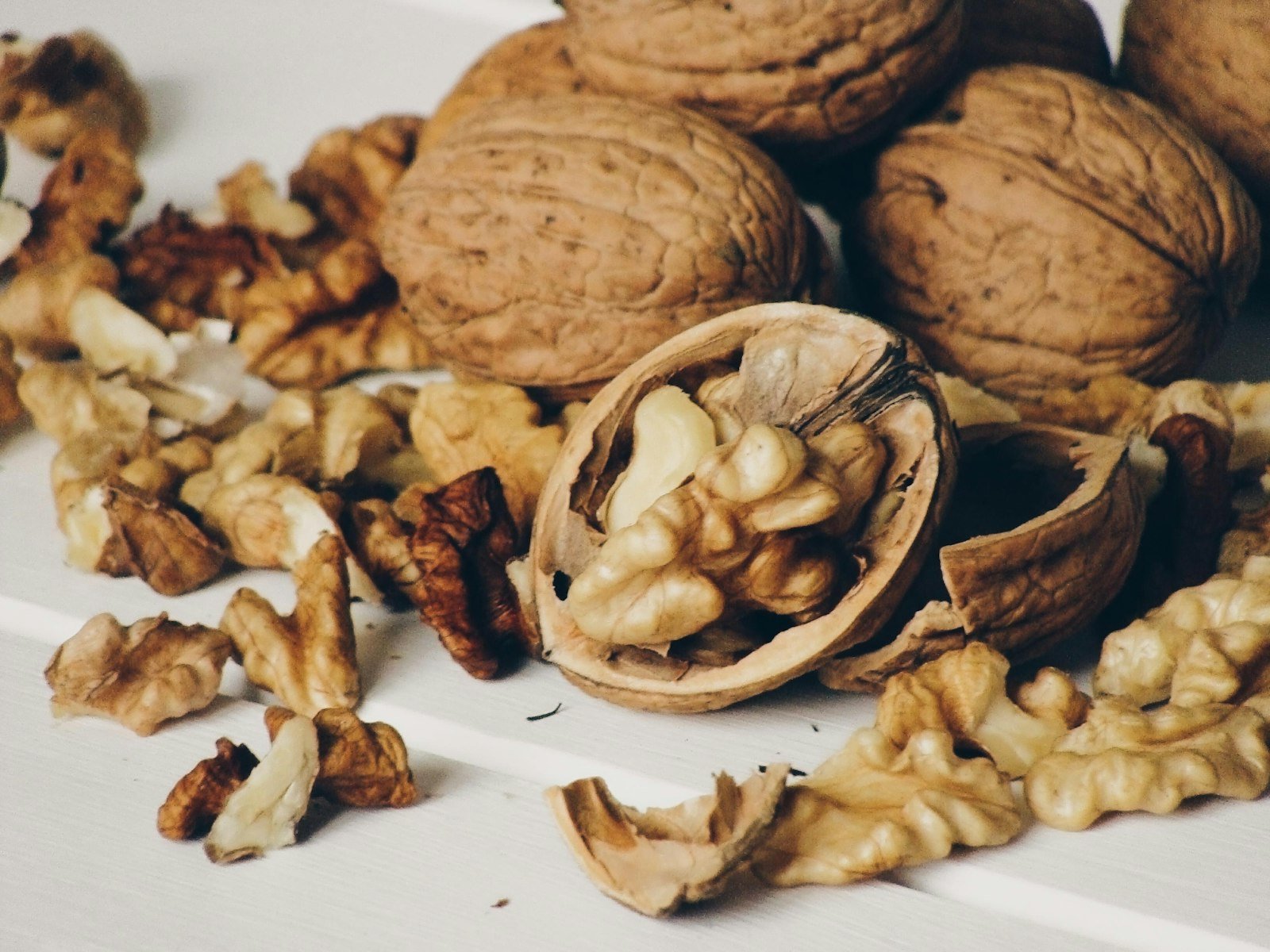
Pomegranates, walnuts, strawberries, raspberries, and blackberries are all rich in ellagitannins and ellagic acid. Your body absorbs these large plant molecules poorly. Instead, they travel to the colon, where specialized bacteria break them down step by step into smaller compounds called urolithins, which can then enter the bloodstream.
A 2022 review in Molecular Nutrition & Food Research identified bacteria from groups such as Gordonibacter and Ellagibacter as key players in this chain. It is a good example of the body working as a whole system: the fruit supplies the raw material, the microbes do the chemistry, and the benefit shows up in distant tissues like muscle.
Why Mitochondria Matter
Mitochondria produce most of the energy your cells use. Over time, some become damaged and work less well. Healthy cells recycle these worn-out units through a cleanup process called mitophagy, and that housekeeping tends to become less efficient with age. Urolithin A has drawn attention because it appears to switch this cleanup on. That makes it relevant to energy-hungry tissues such as muscle, and to immune cells, which depend on well-running mitochondria to respond to threats.
What the Human Trials Found
Three randomized, placebo-controlled trials give the clearest picture so far. All three used purified urolithin A in doses far higher than a serving of fruit would provide, so they tell us about the molecule rather than about pomegranates directly.
The Evidence at a Glance
| Study | Who and how long | Daily dose | Main findings |
|---|---|---|---|
| Singh et al., Cell Reports Medicine, 2022 | 88 adults aged 40 to 64; 4 months | 500 mg or 1,000 mg | Hamstring strength up 12% (500 mg) and 9.8% (1,000 mg); better mitochondrial and inflammation markers. Gains in peak oxygen use and walking distance were not statistically significant. |
| Liu et al., JAMA Network Open, 2022 | 66 adults aged 65 to 90; 4 months | 1,000 mg | Main goals (walking distance, muscle energy output) not met. Hand and leg muscle endurance better at 2 months; some blood markers improved. |
| Denk et al., Nature Aging, 2025 | 50 healthy middle-aged adults; 4 weeks | 1,000 mg | More naive CD8+ T cells than placebo, signs of improved mitochondrial activity in those cells, and lower inflammatory signals. |
Muscle Strength in Midlife
The Canadian trial in middle-aged adults offers the most encouraging muscle result. Participants improved leg strength over four months compared with placebo, including gains of about 10.5 percent in knee flexion at both doses. Since muscle naturally begins to decline in midlife, this is an appealing window for support.
A More Complicated Picture After 65
The Seattle trial in older adults is a useful reality check. Walking distance rose in both the urolithin A group (about 61 meters) and the placebo group (about 43 meters), and the difference was not significant. Muscle endurance looked better at two months, but by four months the placebo group had caught up. Researchers did see reductions in several blood markers tied to mitochondrial stress, and side effects were similar between groups, with no serious adverse events.
Refreshing the Aging Immune System
The newest study may be the most intriguing. As we age, we tend to have fewer “naive” T cells, the immune cells held in reserve to recognize threats the body has not met before. In the 2025 trial, four weeks of urolithin A raised naive CD8+ T cells compared with placebo, and lowered inflammatory signals such as IL-6 and TNF. Those are immune markers rather than proof of fewer infections, and the study was small, but it opens an exciting line of research.
One point deserves plain mention. The muscle trials and the earlier absorption study were sponsored by or closely tied to Amazentis, the Swiss company that makes a urolithin A supplement, and company scientists also appear among the authors of the 2025 immune paper. Industry funding does not make results wrong, but independent replication would strengthen the case.
Why You and Your Neighbor May Respond Differently
Eating the same pomegranate does not produce the same result in everyone. Scientists sort people into “urolithin metabotypes.” Roughly 10 percent of people appear to make no urolithins at all, and the balance of the remaining types shifts with age, according to the 2022 review.
A study of 100 healthy adults showed how much this matters. Only 12 percent had detectable urolithin A at the start, and only about 40 percent converted significantly after drinking pomegranate juice. A 500 mg supplement delivered more than six times the blood exposure of the juice. That helps explain the interest in purified products, but food brings something a capsule does not: fiber, a wide family of polyphenols, and nourishment for the very microbes doing the work.
How to Bring This Into Your Week
- Eat the fruit often in season. Fall and winter are pomegranate time. Score the skin, break the fruit apart in a bowl of water, and scatter the seeds over salads, yogurt, or grain bowls.
- Add a small handful of walnuts. Mixed nuts have been studied at about 30 grams a day, and a daily handful of nuts has its own long record in longevity research.
- Rotate your berries. Raspberries, strawberries, and blackberries all contribute ellagitannins. Frozen berries work well through the winter.
- Feed the microbes. A varied diet supports a varied gut community. Try eating 30 plants a week and including fermented foods.
- Keep your muscles working. Exercise is one of the strongest known signals for healthy mitochondria. Even 30 to 60 minutes of strength training a week can make a difference.
- If you try a supplement, read closely. Look for the amount of urolithin A itself, since the trials used 500 to 1,000 mg daily. Pomegranate extract is a different product and depends on your microbes.
Urolithin A also fits nicely beside other nutrition strategies for aging well, such as the omega-3, vitamin D, and exercise combination tested in the DO-HEALTH trial.
The Bottom Line
The pomegranate’s old reputation as a healing food has found a fascinating modern echo. Urolithin A, made by gut bacteria from compounds in pomegranates, walnuts, and berries, has improved muscle strength in middle-aged adults and shifted immune markers in a promising direction. The evidence is still young, findings in older adults are mixed, and we do not yet know how much benefit everyday food amounts provide. Even so, these foods are delicious, nourishing, and easy to enjoy, and they support the gut partnership that makes the whole process possible.
Frequently Asked Questions
Does pomegranate juice give me urolithin A?
It can, depending on your gut bacteria. In one study, about 40 percent of people converted its compounds significantly after a glass of juice. Whole seeds also add fiber, which juice lacks.
Can I find out whether I produce urolithin A?
Some commercial tests measure it, but they are not a routine part of health care. For most people, eating a varied diet rich in these foods is a simple place to start.
How quickly might effects appear?
Immune changes were measured after four weeks, while the muscle studies ran for four months. Those timelines apply to purified doses, so food effects may differ.
Is this the same as taking an antioxidant?
Not quite. Pomegranates do contain antioxidants, but researchers are interested in urolithin A mainly because it appears to prompt the cell’s cleanup of worn mitochondria.
A note on safety: These trials enrolled generally healthy adults, so they tell us little about concentrated supplements during pregnancy, serious illness, or alongside prescription medicines. If any of those apply, check with a pharmacist first. Pomegranate juice also contains natural sugar, so whole seeds are a better fit if you are watching your blood sugar.
Sources
- Singh A, et al. Urolithin A improves muscle strength, exercise performance, and biomarkers of mitochondrial health in a randomized trial in middle-aged adults. Cell Reports Medicine, 2022.
- Liu S, et al. Effect of urolithin A supplementation on muscle endurance and mitochondrial health in older adults: a randomized clinical trial. JAMA Network Open, 2022;5(1):e2144279.
- Denk D, et al. Effect of the mitophagy inducer urolithin A on age-related immune decline: a randomized, placebo-controlled trial. Nature Aging, 2025;5(11):2309-2322.
- Singh A, et al. Direct supplementation with urolithin A overcomes limitations of dietary exposure and gut microbiome variability in healthy adults to achieve consistent levels across the population. European Journal of Clinical Nutrition, 2021.
- García-Villalba R, et al. Urolithins: a comprehensive update on their metabolism, bioactivity, and associated gut microbiota. Molecular Nutrition & Food Research, 2022;66:2101019.
- Pomegranate: a review of the heavenly healer’s past, present, and future.
This article is for educational purposes and is not a substitute for personalized advice from a qualified health practitioner.





