












Strength has always been part of healthy living. Farmers hauled water and grain, builders lifted stone, and families carried children, firewood, and harvests every day. Ancient traditions honored this, too. The Greeks trained with stone weights called halteres, Persian wrestlers swung heavy wooden clubs known as meels, and Indian strongmen built their bodies with clubs and squats in the traditional akhara. Strength was not a hobby; it was simply what bodies did.
Modern life has taken most of that daily lifting away. And that matters, because muscle is far more than a matter of looks. It is a metabolic organ that helps manage blood sugar, protects the joints, supports bones, and keeps us steady on our feet as we age. The encouraging news from research is that you don’t need hours in a gym to get the benefits. A surprisingly small dose seems to go a long way.
Key Takeaways
- A 2022 review of 16 studies in the British Journal of Sports Medicine linked muscle-strengthening activity to a 10 to 17% lower risk of early death, heart disease, cancer, and type 2 diabetes.
- The biggest benefit for longevity, heart disease, and cancer appeared at roughly 30 to 60 minutes a week.
- Combining strength work with aerobic activity like walking was linked to even lower risks.
- A 2026 Penn State trial found a daily four-minute routine of push-ups, chair stands, band rows, and step-ups improved strength and balance in adults over 65.
- Bodyweight moves, resistance bands, and household objects all count. You can start at home today.
Why Muscle Matters So Much
After about age 30, most people gradually lose muscle mass and strength unless they do something to maintain it. This slow loss, called sarcopenia when it becomes significant, speeds up in later decades. It is one reason older adults may find it harder to climb stairs, rise from a chair, or recover from a fall.
Muscle also plays a big role in whole-body health:
- Blood sugar balance. Muscle is the body’s largest storage site for glucose. Working muscles pull sugar out of the blood, which helps explain why strength training is linked to lower diabetes risk.
- Bone strength. The pull of muscle on bone signals the skeleton to stay dense and strong.
- Balance and independence. Strong legs and hips are the foundation of steady walking and fall prevention.
- Mood and energy. Many people find that regular strength work lifts their mood, improves sleep, and makes daily tasks feel easier.
What the Research Shows
The 30 to 60 minute sweet spot
In 2022, Japanese researchers led by Haruki Momma pooled 16 long-term studies that tracked people’s strength-training habits and their health over time. Muscle-strengthening activity was linked to a 10 to 17% lower risk of death from any cause, heart disease, total cancer, type 2 diabetes, and lung cancer.
The most interesting finding was the shape of the curve. For death from any cause, heart disease, and cancer, the greatest benefit appeared at about 30 to 60 minutes of strength training per week. Beyond that, the extra benefit was unclear. For diabetes, risk dropped sharply up to about an hour a week. People who combined strength training with aerobic exercise had an even lower risk of dying from any cause, heart disease, or cancer than those who did neither. Because these were observational studies, they show strong links rather than proof, but they point to an encouraging message: a modest, realistic amount of strength work is worth doing.
Four minutes a day, even after 65
What if even 30 minutes a week feels like too much? A trial published in PLOS One in 2026 by Christopher Sciamanna and colleagues at Penn State College of Medicine tested a tiny daily routine called FAST-2 in 97 adults aged 65 and older (average age 74) who had some difficulty getting around and were doing very little exercise. Each day, participants did four moves for 30 seconds each with 30 seconds of rest: push-ups (against a wall or counter if needed), chair stands, rows with an elastic band, and stepping on a small step. That is just four minutes.
After 12 weeks, the exercise group could do about four more chair stands in 30 seconds, held a one-leg balance about 3.6 seconds longer, and rose from sitting 2.3 seconds faster. They stuck with the routine on 81% of days, which is remarkable for an exercise program.
The Evidence at a Glance: Strength Training and Health
| Study | Who and how many | Key finding |
|---|---|---|
| Momma et al., British Journal of Sports Medicine (2022) | 16 prospective cohort studies | 10 to 17% lower risk of early death, heart disease, cancer, and diabetes; greatest benefit at about 30 to 60 min per week |
| Sciamanna et al., PLOS One (2026) | 97 adults aged 65+, 12 weeks | A 4-minute daily routine improved chair stands by 4.2, single-leg balance by 3.6 seconds, with 81% adherence |
Sources: BJSM (PMID 35228201); PLOS One (DOI: 10.1371/journal.pone.0336748).
How to Start: A Simple Weekly Plan
- Pick two or three days a week. Two to three sessions of 15 to 20 minutes lands you right in the 30 to 60 minute range. Leave a day between sessions so muscles can recover and grow.
- Choose five foundational moves. These cover the whole body:
- Squat or chair stand: Sit down and stand up from a sturdy chair without using your hands.
- Push: Push-ups against a wall, a kitchen counter, or the floor.
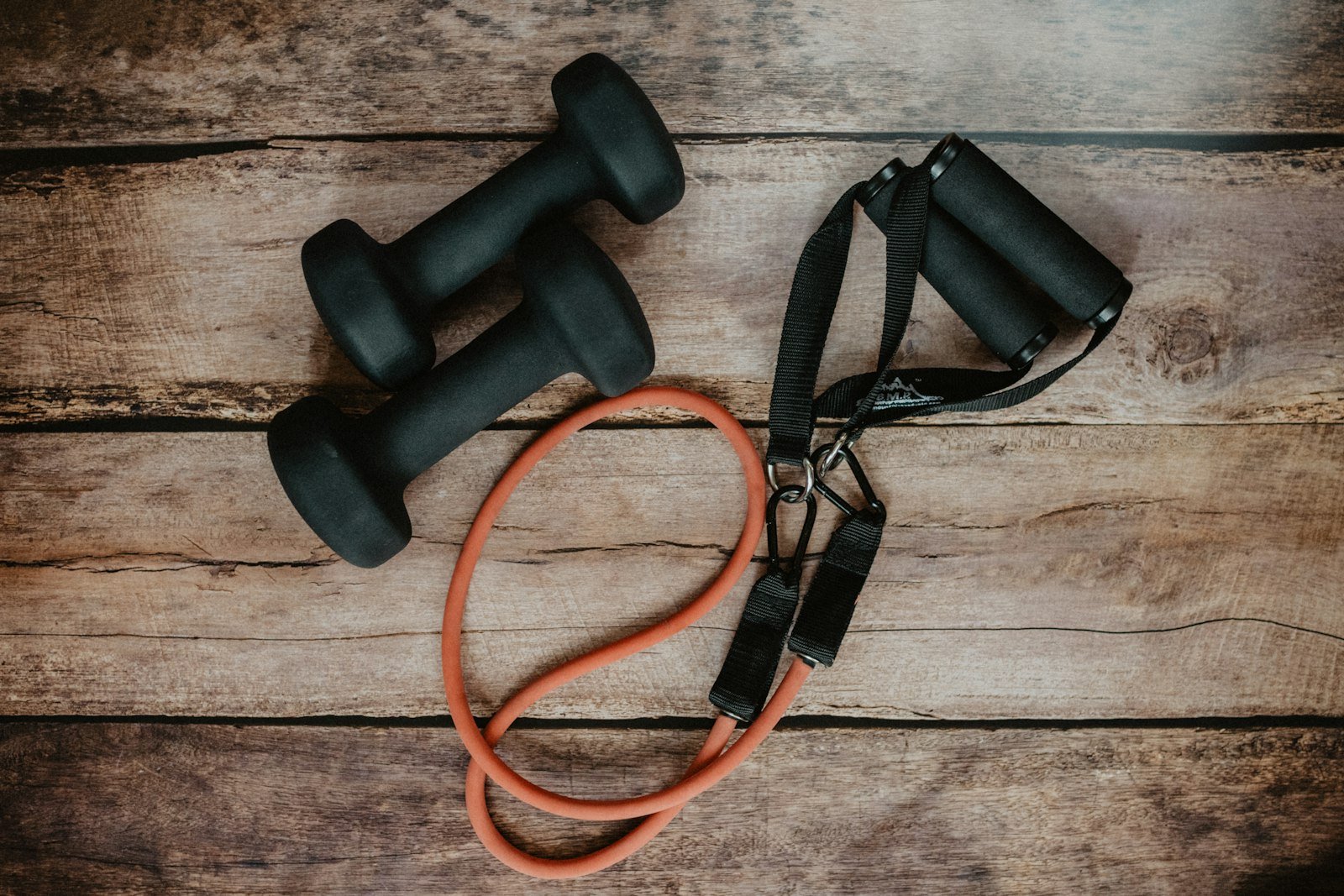
- Pull: Rows with a resistance band looped around a sturdy post or door anchor.
- Hinge: Hip hinges or glute bridges lying on your back.
- Carry: Walk around the house holding a heavy bag of groceries or a pair of dumbbells, standing tall.
- Do 1 to 3 sets of 8 to 12 repetitions. Choose a level where the last two or three reps feel challenging but you can keep good form.
- Progress slowly. Every week or two, add a few reps, slow the movement down, use a firmer band, or move from a wall push-up to a counter push-up. Gradual challenge is what builds strength.
- Short on time? Try the four-minute version. On busy days, do the Penn State-style circuit: 30 seconds each of push-ups, chair stands, band rows, and step-ups, with 30 seconds of rest between. Our article on exercise snacks explains why short bursts add up.
- Pair it with movement you enjoy. Walking, dancing, or gardening on other days covers the aerobic side. Try Japanese interval walking for an easy, research-backed routine.
- Add balance work. Practices like tai chi complement strength training beautifully by building steadiness and calm.
Feed Your Muscles
Strength training works best alongside good nutrition. Include a source of protein at each meal, such as eggs, fish, yogurt, poultry, tofu, or beans and lentils. Colorful vegetables, fruits, and whole grains supply the minerals and antioxidants that support recovery. Some people also explore supplements; our explainer on creatine covers one of the best-studied options. And don’t forget sleep, when much of the body’s repair work happens.
The Bottom Line
You don’t need to become a bodybuilder to benefit from strength training. Research suggests that 30 to 60 minutes a week, spread over two or three sessions, is linked to a meaningfully lower risk of early death, heart disease, cancer, and diabetes. And for older adults or anyone starting from scratch, even four minutes a day can build strength and balance in a matter of weeks. Like the farmers, builders, and athletes of old, make lifting part of your life, at your own pace.
Frequently Asked Questions
Do I need a gym membership?
No. Bodyweight exercises, resistance bands, and household items like water jugs or a loaded backpack work very well, especially for beginners.
Is it too late to start in my 70s or 80s?
Not at all. The Penn State trial participants averaged 74 years old and had mobility limitations, yet they gained strength and balance in 12 weeks. Muscle responds to training at every age.
Will strength training make me bulky?
Very unlikely. Building large muscles takes years of heavy, high-volume training and specific eating. Moderate strength training mainly makes you firmer, stronger, and more capable.
Is more always better?
Not necessarily. In the 2022 review, the benefits for longevity seemed to level off beyond about an hour a week. Consistency matters more than volume.
Should I do strength or cardio?
Both, if you can. People who did both had lower risks than those who did either one alone or neither.
Safety note: If you have a heart condition, uncontrolled high blood pressure, recent surgery, or joint problems, start with the gentlest versions of each move and stop if you feel chest pain, dizziness, or sharp joint pain. Breathe steadily and avoid holding your breath while lifting.
Sources
- Momma H, Kawakami R, Honda T, Sawada SS. Muscle-strengthening activities are associated with lower risk and mortality in major non-communicable diseases: a systematic review and meta-analysis of cohort studies. British Journal of Sports Medicine, 2022;56(13):755. https://bjsm.bmj.com/content/56/13/755
- Sciamanna C, et al. (FAST-2 randomized trial of a 4-minute daily strength routine in adults 65+). PLOS One, 2026. https://doi.org/10.1371/journal.pone.0336748
- ScienceDaily. Just 4 minutes a day can dramatically improve strength after 65. October 2026. https://www.sciencedaily.com/releases/2026/10/261020085025.htm
- UPI Health News. Muscle-strengthening activities cut risk of death from some diseases, study finds. https://www.upi.com/Health_News/2022/02/28/muscle-strengthening-activities-death-risk-study/2411646077961/
This article is for educational purposes and is not a substitute for personalized advice from a qualified health practitioner.