












Visit a park in China at sunrise and you will see groups of people, many of them in their seventies and eighties, moving together in slow, flowing patterns. This is tai chi, a practice that grew out of Chinese martial arts and Taoist philosophy centuries ago. Sometimes called “meditation in motion,” it blends gentle movement, deep breathing, and focused attention.
Tai chi may look effortless, but research shows it delivers powerful benefits, especially for one of the biggest threats to healthy aging: falls.
Key Takeaways
- Tai chi combines slow, continuous movement with breathing and mindfulness.
- A 2023 review of 24 randomized trials found tai chi reduced the risk of falling by about 24% in older adults.
- It improves balance, leg strength, walking speed, and flexibility.
- Benefits extend to mood, sleep, blood pressure, and arthritis pain.
- It can be adapted for almost any fitness level, including seated versions.
Why Falls Matter
About one in four adults over 65 falls each year, and falls are a leading cause of injury and lost independence in later life. Many falls come from declining balance, weak leg muscles, slower reflexes, and fear of falling, which itself makes people move less and lose more strength. Tai chi addresses all of these at once.
What the Research Shows
In September 2023, researchers published a meta-analysis in Frontiers in Public Health that pooled 24 randomized controlled trials of tai chi in older adults.
Tai Chi’s Benefits for Older Adults
| Outcome | Result |
|---|---|
| Risk of being a faller (18 trials, about 5,500 people) | About 24% lower |
| Number of falls per person | Fewer |
| Standing on one leg | About 10 seconds longer |
| Timed “up and go” test | Faster |
| Walking speed and reach | Improved |
Source: Chen et al., Frontiers in Public Health, 2023.
Benefits appeared in both healthy older adults and those at high risk of falling, and they grew with longer and more frequent practice.
How Tai Chi Works
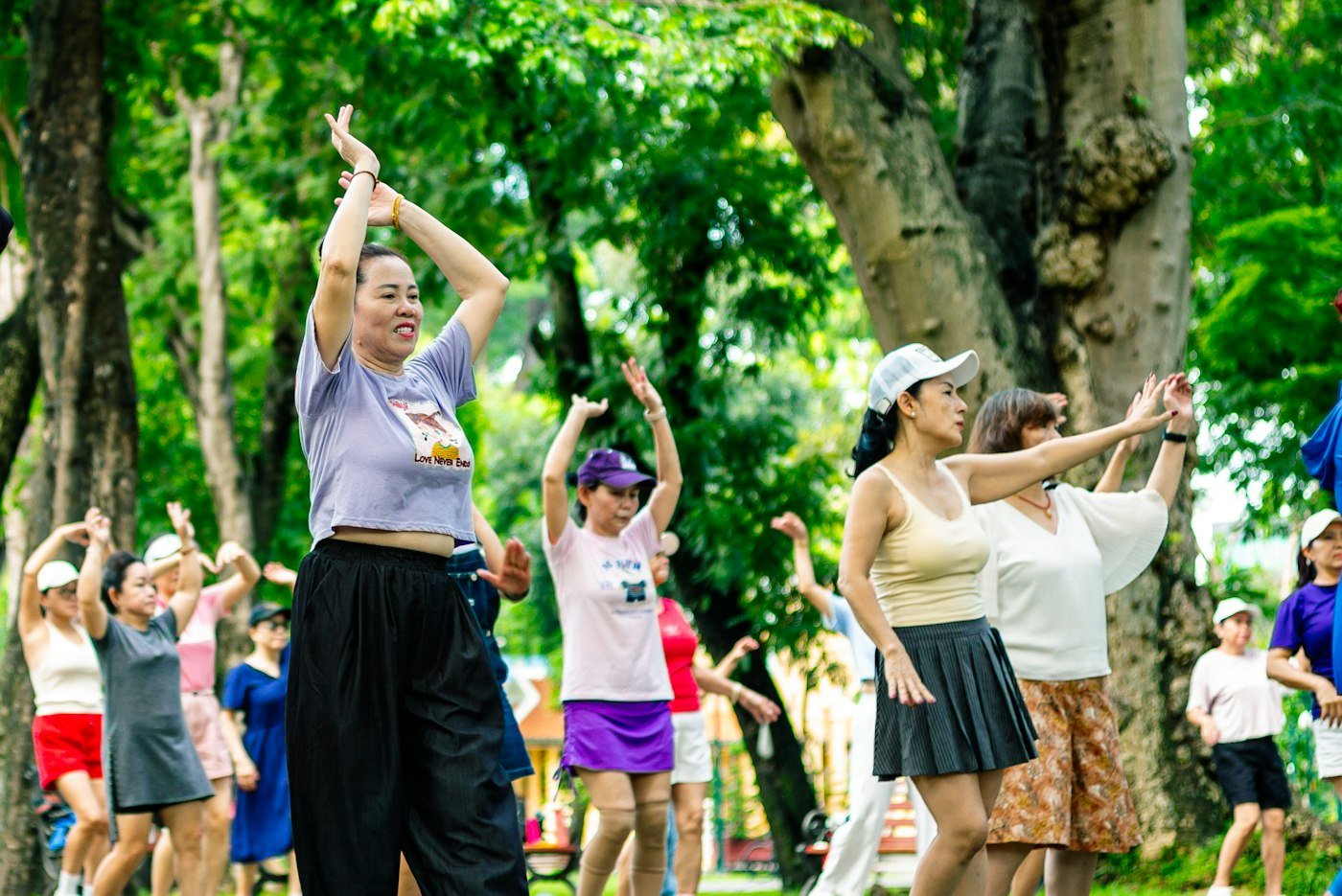
- Weight shifting: Tai chi constantly moves weight from one leg to the other, training the exact balance skills needed to recover from a stumble.
- Leg strength: Slow, bent-knee postures build strength in the thighs and hips.
- Body awareness: Paying close attention to movement sharpens proprioception, the sense of where your body is in space.
- Confidence: As balance improves, fear of falling fades, so people stay more active.
- Calm mind: Slow breathing and focus activate the relaxation response.
In Traditional Chinese Medicine, tai chi is also understood to cultivate the flow of qi, the body’s vital energy, supporting health in a holistic way.
Beyond Balance
Research has linked regular tai chi with:
- Less pain and stiffness in knee osteoarthritis and fibromyalgia
- Lower blood pressure
- Better sleep quality
- Reduced anxiety and depression
- Improved heart and lung fitness
- Better thinking skills in older adults
How to Get Started
- Find a class. Community centers, senior centers, YMCAs, and parks often offer beginner classes. Programs such as “Tai Ji Quan: Moving for Better Balance” were designed specifically for fall prevention.
- Try online videos if classes are not available. Look for beginner Yang-style routines, which research suggests may be especially effective for balance.
- Practice two to three times a week, about 45 to 60 minutes per session, for at least 12 weeks.
- Start gently. Keep knees soft and only bend as deeply as is comfortable.
- Wear comfortable clothing and flat shoes, or practice barefoot on a safe surface.
- Use a chair if needed. Seated tai chi still provides many benefits.
Combine With Other Healthy Habits
Tai chi pairs well with walking, strength work, and good nutrition for strong muscles and bones. Explore Japanese interval walking, the brain-boosting benefits of yoga for older adults, and the joy of dancing for brain health.
The Bottom Line
Tai chi is a beautiful example of ancient wisdom meeting modern science. This gentle practice cuts the risk of falls by about a quarter while improving balance, strength, mood, and overall well-being. It is suitable for nearly everyone, requires no equipment, and can be practiced for a lifetime.
Frequently Asked Questions
Am I too old or too stiff to start?
No. Tai chi was practically designed for people of all ages and abilities. Many people start in their seventies or eighties.
How long until I notice improvements?
Many people feel calmer right away. Balance improvements usually appear within 8 to 12 weeks of regular practice.
Is tai chi the same as qigong?
They are related. Qigong is a broader family of Chinese breathing and movement practices; tai chi is a specific flowing sequence that grew from martial arts.
A note on safety: If you have severe balance problems or joint injuries, practice near a sturdy chair or wall and choose a class with an experienced instructor who can adapt movements for you.
Sources
- Chen W, Li M, Li H, Lin Y, Feng Z. Tai Chi for fall prevention and balance improvement in older adults: a systematic review and meta-analysis of randomized controlled trials. Frontiers in Public Health, 2023.
- Li F, Harmer P, Fitzgerald K, et al. Effectiveness of a Therapeutic Tai Ji Quan Intervention vs a Multimodal Exercise Intervention to Prevent Falls Among Older Adults at High Risk of Falling. JAMA Internal Medicine, 2018.
This article is for educational purposes and is not a substitute for personalized advice from a qualified health practitioner.