












Long before migraine had a name in medical textbooks, healers in India were teaching that the head and the breath are deeply connected. Classical yoga texts describe pranayama, the art of guiding the breath, as a way to steady a restless mind and cool an overheated system. In Ayurveda, many headaches are linked to an excess of pitta, the fiery principle, and the traditional answer is cooling breath, rest, regular routines, and calm movement rather than force.
Modern neurology has started to catch up. In 2020, doctors at the All India Institute of Medical Sciences (AIIMS) in New Delhi published a randomized trial in the journal Neurology showing that adding a regular yoga practice to standard migraine care cut the number of headaches roughly in half over three months. A later pooled analysis of several trials pointed in the same direction. Here is what the research shows, why yoga may help a migraine-prone nervous system, and a gentle routine you can start this week.
Key Takeaways
- In the AIIMS CONTAIN trial, people who added yoga to their usual migraine care saw monthly headaches fall from about 9.1 to 4.7, a 48% drop, compared with a 12% drop in the group on medical care alone.
- The yoga group also used about 47% fewer pills by the end of the study, and reported less pain intensity and less disruption to daily life.
- A 2022 meta-analysis of five randomized trials (356 participants) found yoga meaningfully reduced headache frequency and headache impact.
- An earlier Indian trial found yoga raised vagal (calming) tone and lowered sympathetic (stress) activity in people with migraine, offering a likely explanation for the benefit.
- Yoga worked best as a steady, regular practice added to existing care, not as a replacement for it.

Why Migraine Needs a Whole-Body Approach
Migraine is a neurological condition, not simply a strong headache. Attacks often bring throbbing pain on one side of the head, sensitivity to light and sound, nausea, and a wiped-out feeling that can linger for a day or two afterward. Many people can name their triggers: poor sleep, skipped meals, stress, hormonal shifts, dehydration, or a sudden let-down after a busy week.
What those triggers have in common is that they push the nervous system out of balance. Researchers increasingly describe the migraine brain as highly sensitive and quick to react to change. That is exactly why traditional systems such as Ayurveda emphasize rhythm and regularity, and why a practice that trains the body to settle itself may help. Yoga combines gentle movement, slow breathing, and deep relaxation in a single session, touching muscles, breath, stress hormones and sleep all at once.
What the Research Shows
The CONTAIN Trial: Yoga as an Add-On to Migraine Care
The most important study so far comes from the neurology department at AIIMS, led by Dr. Anand Kumar with senior author Dr. M.V. Padma Srivastava. The team enrolled 160 adults aged 18 to 50 with episodic migraine, meaning they had between 4 and 14 headaches a month. Half received standard medical care, which included medication plus lifestyle advice on sleep, regular meals and exercise. The other half received the same care plus yoga. In total, 114 people completed the study.
The yoga program was practical and realistic. Each session lasted about an hour and combined breathing exercises, relaxation techniques and postures. Participants practiced with an instructor three days a week for the first month, then continued at home five days a week for the next two months.
After three months, the difference between the groups was striking. Headache frequency in the yoga group fell from an average of 9.1 to 4.7 attacks a month, a 48% reduction. The medical-care-only group went from 7.7 to 6.8, a 12% reduction. People doing yoga also reported lower pain intensity, less interference with daily life on two standard migraine disability scales, and a 47% drop in the number of pills they needed, compared with about 12% in the comparison group.
The researchers were candid about the study’s limits: it ran for only three months, headaches were self-reported in diaries, and there was no “sham yoga” group for comparison. Even so, it was a well-designed randomized trial published in one of the leading neurology journals, and its message was clear: yoga is a useful companion to standard migraine care.
The Bigger Picture: A 2022 Meta-Analysis
One trial is encouraging; a pattern across several is more convincing. In 2022, a research team led by Qi Wu of the First Hospital of Changsha in China pooled five randomized controlled trials with 356 participants for the Journal of Clinical Neuroscience. Compared with control groups, yoga significantly reduced how often people had headaches and improved scores on the HIT-6, a widely used questionnaire that measures how much headaches interfere with life. The effect on pain intensity leaned in yoga’s favor but fell just short of statistical significance, a reminder that yoga’s clearest strength appears to be reducing how often attacks happen.
The Nervous System Connection
Why would breathing and stretching affect migraine? A 2014 Indian study published in the International Journal of Yoga offers a clue. Ravikiran Kisan and colleagues randomized 60 people with migraine to conventional care alone or conventional care plus yoga, practiced five days a week for six weeks. Both groups improved, but headache frequency and intensity fell more in the yoga group. Tests of the autonomic nervous system showed that yoga raised vagal tone, the body’s “rest and digest” signal, while lowering sympathetic, or “fight or flight,” activity.
That shift matters because stress is one of the most common migraine triggers, and an overactive stress response may keep the nervous system primed for attacks. Slow, steady breathing is one of the most direct ways to activate the vagus nerve, a theme we explored in our article on the cyclic sigh breathing technique.
The Evidence at a Glance
| Study | Who Took Part | Yoga Program | Main Findings |
|---|---|---|---|
| Kumar et al., Neurology, 2020 (CONTAIN) | 160 adults with episodic migraine (114 completed) | 1-hour sessions: 3x/week supervised for 1 month, then 5x/week at home for 2 months | Headaches down 48% vs 12%; pill use down 47% vs about 12%; less pain and disability |
| Wu et al., Journal of Clinical Neuroscience, 2022 | 5 randomized trials, 356 participants | Varied yoga programs | Significant drop in headache frequency and headache impact (HIT-6) |
| Kisan et al., International Journal of Yoga, 2014 | 60 people with migraine | Yoga 5 days a week for 6 weeks, plus usual care | Greater drop in frequency and intensity; higher vagal tone, lower stress activity |
A Gentle Yoga Routine for Migraine-Prone Days
The routine below follows the same building blocks used in the research: breath, gentle postures and deep relaxation. It is designed for the days between attacks, when the goal is to build resilience. Aim for 20 to 30 minutes at first, and work toward longer sessions five days a week, as in the CONTAIN trial.
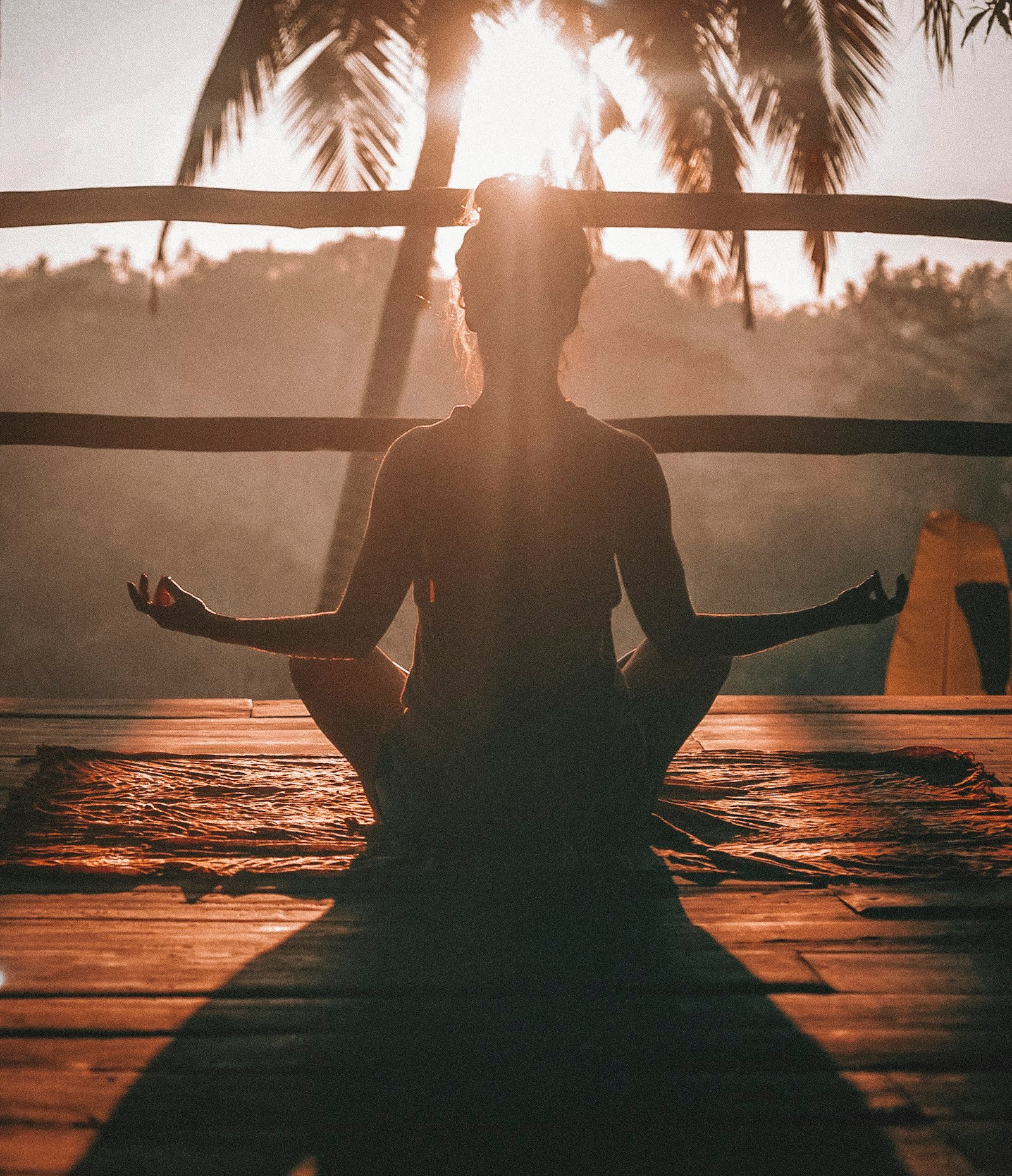
Step 1: Settle the Breath (5 minutes)
Sit comfortably on a cushion or chair with a tall, relaxed spine. Breathe slowly through the nose, letting the exhale grow a little longer than the inhale, for example in for four counts and out for six. Then try alternate-nostril breathing (nadi shodhana): close the right nostril with your thumb and inhale through the left, close the left and exhale through the right, then reverse. Keep it soft and unhurried.
Step 2: Humming Bee Breath (2 to 3 minutes)
Bhramari, or humming bee breath, is a traditional practice for calming the mind. Inhale through the nose, then exhale with a gentle, low hum, keeping the jaw loose. Many people find the soft vibration soothing for the face and forehead. Stop if the sound feels irritating.
Step 3: Release the Neck and Shoulders (5 minutes)
Tension in the upper back and neck is common in people with migraine. Slowly tip one ear toward the shoulder and breathe for five breaths, then switch sides. Roll the shoulders gently backward. Move into cat-cow on hands and knees, arching and rounding the spine in time with your breath.
Step 4: Restful Postures (5 to 10 minutes)
Choose two or three poses that keep the head level or supported:
- Child’s pose, with the forehead resting on a folded blanket or block.
- Supported bridge, with a block or firm cushion under the lower back.
- Legs up the wall, lying on your back with your legs resting against a wall.
- Seated forward fold, with knees bent and the chest resting on a pillow.
Step 5: Deep Relaxation (5 to 10 minutes)
Finish lying on your back in savasana, with a pillow under the knees and perhaps a soft cloth over the eyes. Scan slowly from the toes to the crown of the head, softening each area. If you enjoy this part, guided yoga nidra recordings are a lovely way to go deeper. It can also improve sleep, which we covered in our look at yoga for insomnia.
Build Around the Practice
Yoga works best as part of a steady daily rhythm, which is exactly what both Ayurveda and modern migraine experts recommend. Keep regular sleep and meal times, drink water through the day, and keep a simple headache diary so you can see your progress. Supportive nutrition can help too; magnesium is one of the best-studied nutrients for migraine, and you can find food sources in our guide to magnesium, the calming mineral. Some people also pair yoga with other traditional therapies such as acupuncture, which has research support for headache pain, or warming ginger.
The Bottom Line
Yoga is one of the most promising natural additions to migraine care. In a well-designed trial from AIIMS, an hour of breathing, postures and relaxation a few days a week cut monthly headaches nearly in half and reduced the need for pain pills, and a pooled analysis of five trials found a similar drop in headache frequency. The benefits seem to come from calming an overactive stress response and restoring balance to the nervous system, an idea the yogis of ancient India would recognize. Start gently, practice regularly between attacks, and let yoga become one steady part of your overall approach.
Frequently Asked Questions
How long does it take for yoga to help with migraine?
In the CONTAIN trial, results were measured after three months of regular practice, and the 2014 Kisan study saw improvements after six weeks of practice five days a week. Think in terms of weeks to months of steady practice rather than a quick fix.
Should I do yoga during a migraine attack?
The research focused on regular practice between attacks to reduce how often they happen. During an attack, most people do better with rest in a dark, quiet room. Very gentle breathing or lying in a supported relaxation pose may feel comforting, but skip any active postures.
What type of yoga is best for migraine?
The studies used gentle programs built around breathing, relaxation and simple postures rather than vigorous or heated styles. Hatha, restorative, and yin-style classes are good matches. Hot yoga and intense flows may be harder on people sensitive to heat, dehydration or exertion.
Can yoga replace my migraine medication?
In the research, yoga was added to standard care, not used in place of it. People in the yoga group naturally needed fewer pills over time, but any changes to prescribed medication should be made together with the practitioner who prescribed it.
A note on safety: Keep the head level or supported, and avoid headstands, shoulder stands and other full inversions, breath holding and heated rooms if they tend to bring on your headaches. A sudden, severe headache unlike your usual migraines, or one with weakness, confusion or vision loss, needs prompt medical attention rather than yoga.
Sources
- Kumar A, Bhatia R, Sharma G, et al. Effect of yoga as add-on therapy in migraine (CONTAIN): A randomized clinical trial. Neurology. 2020;94(21). PubMed
- American Academy of Neurology. For better migraine treatment, try adding some downward dogs. ScienceDaily, May 2020. ScienceDaily
- Hoffman M. Add-on yoga may benefit patients with migraine. NeurologyLive, June 2020. NeurologyLive
- Wu Q, et al. Effectiveness of yoga therapy for migraine: A meta-analysis of randomized controlled studies. Journal of Clinical Neuroscience. 2022. Summary: HealthDay via Physician’s Weekly
- Kisan R, Sujan MU, Adoor M, et al. Effect of yoga on migraine: A comprehensive study using clinical profile and cardiac autonomic functions. International Journal of Yoga. 2014;7(2):126-132. PubMed
This article is for educational purposes and is not a substitute for personalized advice from a qualified health practitioner.