











In yoga, the breath is far more than air. It is prana, life force. Ancient yogic texts describe pranayama, the art of guiding the breath, as a bridge between body and mind: calm the breath, and you calm the mind. Long before brain scans and heart rate monitors, yogis discovered that changing how we breathe can change how we feel.
Modern science is now confirming this wisdom. A Stanford University study found that one simple breathing pattern, the cyclic sigh, practiced for just five minutes a day, boosted mood and reduced anxiety more than mindfulness meditation alone.
Key Takeaways
- Cyclic sighing is a double inhale through the nose followed by a long, slow exhale through the mouth.
- In a one-month Stanford study of 111 people, five minutes a day of cyclic sighing produced the greatest daily improvement in positive mood of all the techniques tested.
- All of the structured breathing practices reduced anxiety and negative mood.
- Cyclic sighing was the only practice that slowed people’s resting breathing rate, a sign of a calmer nervous system.
The Stanford Breathing Study
Researchers led by psychiatrist Dr. David Spiegel and neuroscientist Dr. Andrew Huberman, with Dr. Melis Yilmaz Balban, published the study in Cell Reports Medicine in 2023. They asked 111 healthy volunteers to practice one of four techniques for five minutes daily for a month:
- Cyclic sighing, emphasizing long exhales
- A breathing pattern emphasizing inhales
- Equal-length inhales and exhales (similar to box breathing)
- Mindfulness meditation, simply observing the breath without changing it
What the Study Found
- All four practices reduced anxiety and negative mood.
- The breathing groups gained more positive mood each day than the meditation group.
- Cyclic sighing produced the largest boost in positive mood, and the effect grew over the month.
- Only cyclic sighing significantly slowed resting breathing rate.
The researchers concluded that structured breathing may have a more direct and rapid effect on the body than mindfulness alone. Ancient pranayama practitioners would not be surprised.
Why Long Exhales Calm the Body
Each time you breathe out, your heart rate slows slightly, thanks to the vagus nerve, the main nerve of the “rest and digest” parasympathetic nervous system. Long, slow exhales amplify this effect, signaling to the brain that you are safe.
The double inhale also helps reopen tiny air sacs in the lungs that collapse during shallow breathing, improving the release of carbon dioxide. In fact, humans and other mammals naturally sigh this way, often without noticing, when they are stressed or about to fall asleep. Cyclic sighing simply makes this natural reset intentional.
How to Practice the Cyclic Sigh
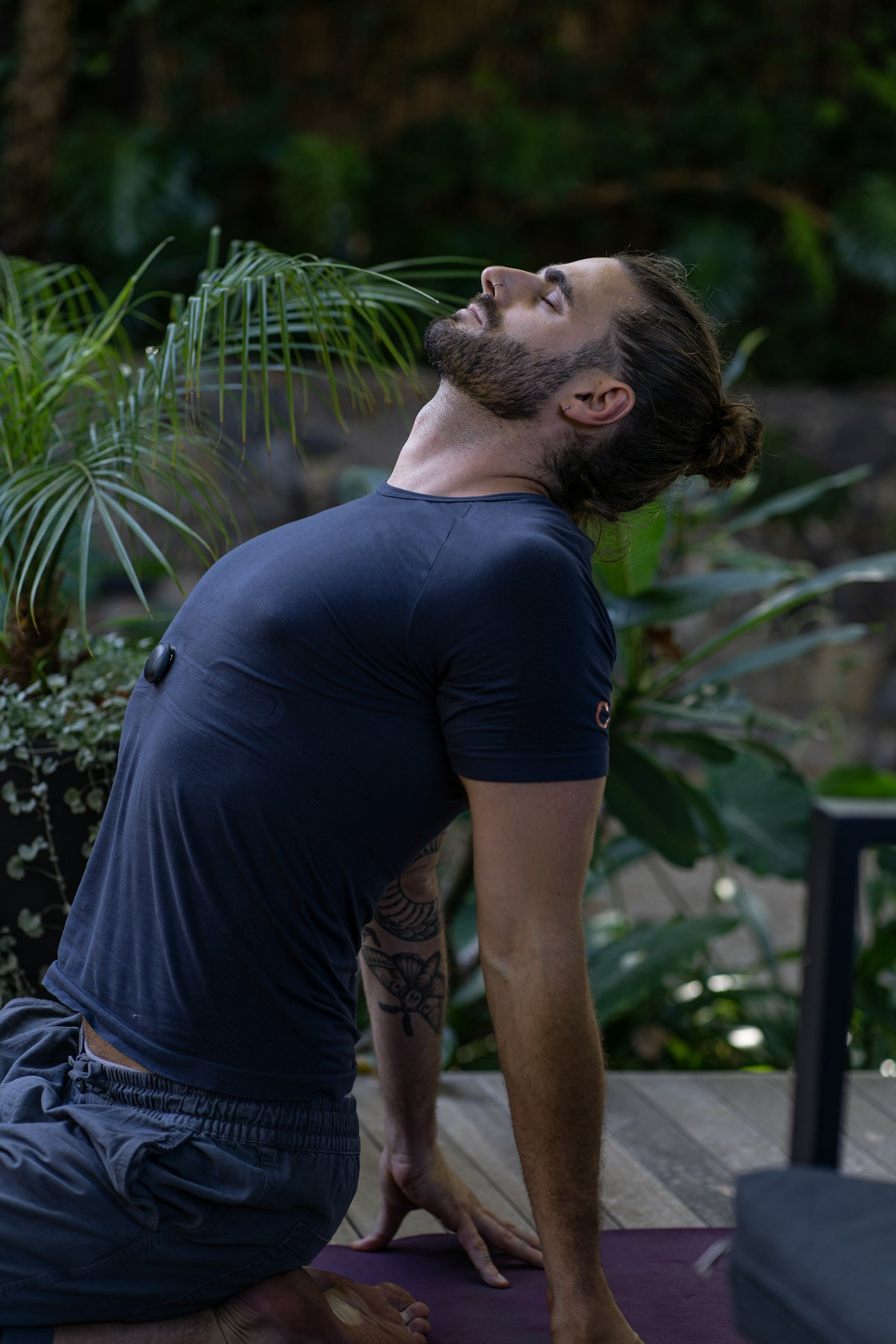
- Sit comfortably with a tall spine, or lie down. Relax your shoulders.
- Inhale through your nose until your lungs feel fairly full.
- Take a second, shorter inhale through the nose to top up your lungs completely.
- Exhale slowly through your mouth, letting all the air out. Make the exhale noticeably longer than the two inhales combined.
- Repeat at a relaxed pace for about five minutes.
Many people feel calmer after just one to three cycles. Try it before stressful meetings, after a difficult conversation, before bed, or as the opening to your yoga practice.
Other Calming Pranayama Practices
- Nadi shodhana (alternate nostril breathing): Breathe in through one nostril and out through the other, alternating. Traditionally used to balance the mind.
- Bhramari (humming bee breath): Exhale while making a gentle humming sound. The vibration is deeply soothing.
- Dirga (three-part breath): Fill the belly, then ribs, then chest, and exhale in reverse.
- Extended exhale: Inhale for a count of four, exhale for a count of six to eight.
Breath as Part of a Whole Yoga Practice
Breathing practices are just one of the eight limbs of classical yoga. Combined with gentle postures, meditation, and time in nature, they form a complete system for calming the nervous system and supporting physical and emotional health. Explore our articles on yoga for chronic back pain, yoga for older adults, and forest bathing.
The Bottom Line
The yogis were right: the breath is a powerful key to the mind. Just five minutes a day of cyclic sighing, a double inhale followed by a long, slow exhale, can lift your mood, ease anxiety, and calm your nervous system. It is free, takes no equipment, and is available to you any moment of the day.
Frequently Asked Questions
How quickly does it work?
Many people feel calmer within a minute or two. Regular daily practice builds stronger effects over weeks.
Can I do it lying in bed?
Yes. It is a lovely way to wind down before sleep.
Is this the same as hyperventilating?
No. Cyclic sighing is slow and emphasizes the exhale, which calms the body. If you feel lightheaded, slow down and breathe more gently.
A note on practice: Breathing exercises are gentle and safe for most people. If you have a lung condition or feel dizzy, keep the breaths soft and stop if you feel uncomfortable.
Sources
- Balban MY, Neri E, Kogon MM, et al. Brief structured respiration practices enhance mood and reduce physiological arousal. Cell Reports Medicine, 2023.
- Stanford Medicine. Cyclic sighing can help breathe away anxiety. 2023.
- Greater Good Science Center, UC Berkeley. A five-minute breathing exercise for anxiety and mood.
This article is for educational purposes and is not a substitute for personalized advice from a qualified health practitioner.