












Low back pain is one of the most common reasons people visit a doctor, and one of the leading causes of disability worldwide. For many, it never quite goes away. Pills offer limited relief and carry real risks, especially opioids. So it is good news that one of the most effective treatments is also one of the most ancient: yoga.
In 2017, the American College of Physicians updated its guidelines to recommend non-drug treatments, including yoga, as a first choice for chronic low back pain. That recommendation was built on a growing body of clinical trials. Here is what they show and how to begin safely.
Key Takeaways
- Chronic low back pain is pain lasting 12 weeks or longer.
- U.S. medical guidelines recommend non-drug treatments such as exercise, yoga, tai chi, and mindfulness as first-line options.
- A 2017 trial of 320 adults found 12 weeks of weekly yoga classes improved pain and function about as much as physical therapy.
- People in the yoga and physical therapy groups were less likely to be using pain medication at 12 weeks than those given only educational materials.
- Gentle, adapted yoga is generally safe, but some poses should be modified or avoided with certain back problems.
Why Back Pain Is So Stubborn
For most people with chronic low back pain, doctors cannot point to one specific cause on a scan. This is called “non-specific” back pain. It usually involves a mix of factors: weak or tight muscles, stiffness, poor movement habits, stress, fear of movement, and changes in how the nervous system processes pain signals.
That complexity is one reason yoga can help. It combines several helpful ingredients at once: strengthening, stretching, body awareness, breathing, and relaxation.
The Landmark Yoga vs. Physical Therapy Trial
Researchers led by Dr. Robert Saper at Boston University wanted to know whether yoga could match physical therapy, the standard referral for chronic back pain. Funded by the National Institutes of Health, they enrolled 320 adults with chronic low back pain. Most were from low-income and racially diverse communities, groups often left out of research.
Participants were randomly assigned to one of three groups for 12 weeks:
- Yoga: one 75-minute class a week with a specially designed back-friendly program, plus practice at home.
- Physical therapy: up to 15 one-hour individual sessions, plus home exercises.
- Education: a self-care book and newsletters about managing back pain.
What Happened
| Outcome | Yoga | Physical therapy |
|---|---|---|
| Pain and function at 12 weeks | Improved | Improved by a similar amount |
| Pain medication use vs. education | Lower | Lower |
| Benefits at one year | Maintained | Maintained |
Source: Saper et al., Annals of Internal Medicine, 2017.
The researchers concluded that yoga was “noninferior” to physical therapy, meaning it was not meaningfully worse. Improvements lasted through a full year, and people who attended more classes or sessions tended to improve more. Both active treatments beat the education-only approach on medication use, though the differences in pain compared with education were modest.
Other evidence
A 2022 Cochrane review, which pooled 21 trials with more than 2,200 people, found that yoga probably produces small but meaningful improvements in back-related function and pain compared with no exercise, with effects similar to other forms of exercise. In other words, yoga is not magic, but it is a solid, evidence-backed choice. For many people, the best exercise is simply the one they enjoy enough to keep doing.
Why Yoga Helps
- Strengthens core and hip muscles that support the spine.
- Improves flexibility in the hamstrings, hips, and back, which can ease strain.
- Reduces fear of movement. Gently moving through safe poses teaches the body and brain that movement is not dangerous.
- Calms the nervous system. Slow breathing and relaxation can turn down the “volume” of pain signals.
- Builds body awareness, helping people notice and correct posture and movement habits.
Gentle Poses to Start With
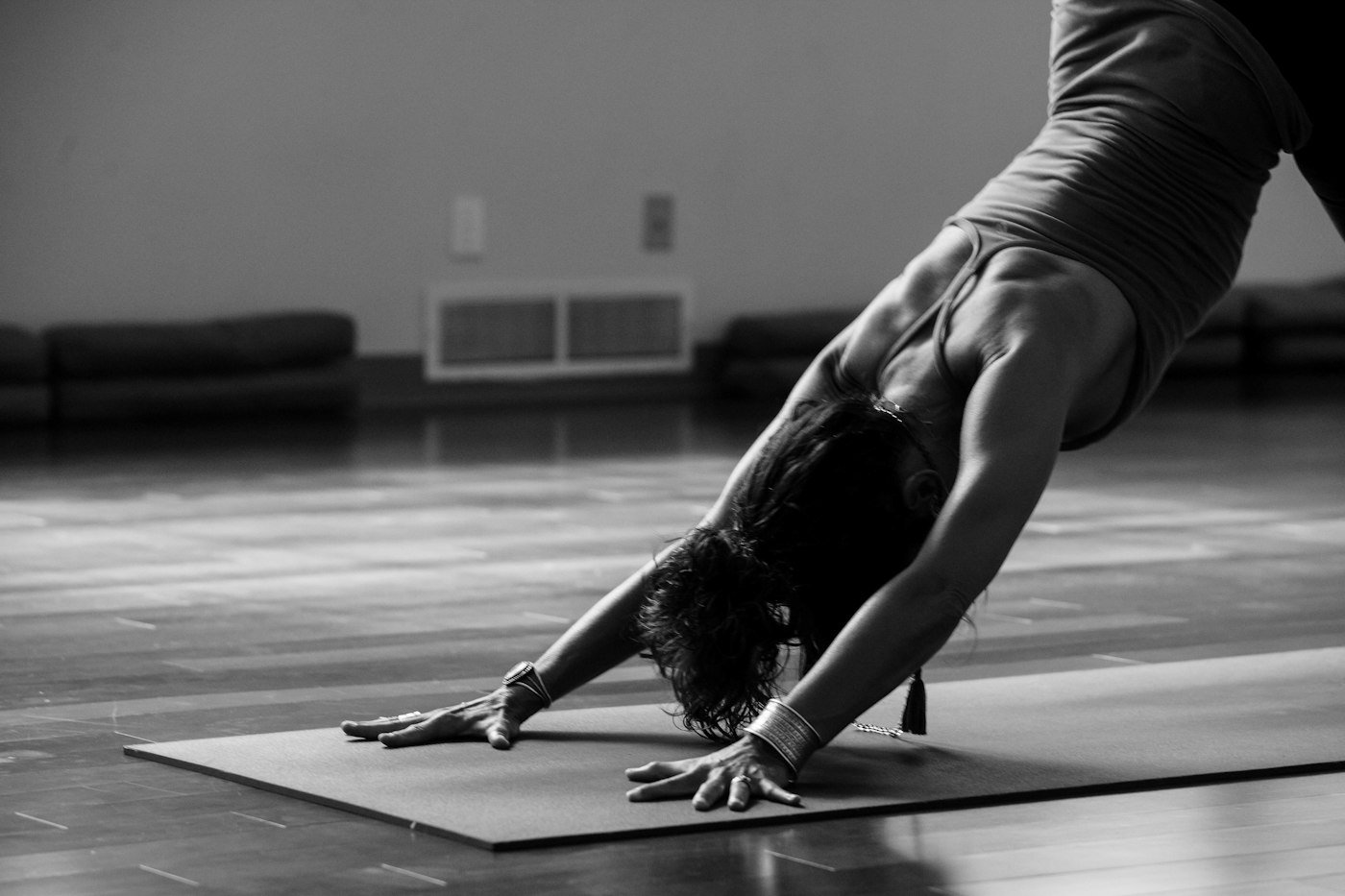
These poses are commonly included in back-friendly yoga programs. Move slowly, breathe steadily, and stop if anything causes sharp or radiating pain.
- Cat-Cow: On hands and knees, slowly round your back toward the ceiling, then gently let your belly drop and lift your chest. Repeat 5 to 10 times to warm up the spine.
- Child’s Pose: From hands and knees, sit your hips back toward your heels and stretch your arms forward. Rest and breathe for 30 to 60 seconds.
- Knees-to-Chest: Lying on your back, hug one or both knees toward your chest to gently stretch the lower back.
- Bridge: Lying on your back with knees bent, press through your feet to lift your hips. Hold briefly, then lower slowly. This strengthens the glutes and hamstrings.
- Supine Twist: Lying on your back, let both bent knees fall gently to one side while your shoulders stay down. Switch sides.
- Relaxation (Savasana): Rest on your back with a pillow under your knees, focusing on slow breathing for a few minutes.
Safety tips
- Look for classes labeled gentle, therapeutic, or yoga for back pain, and tell the instructor about your condition.
- Avoid deep forward folds, deep backbends, and intense twisting until you have built strength and know how your back responds.
- If you have a herniated disc, osteoporosis, spinal stenosis, or recent surgery, ask your doctor or physical therapist which poses to avoid.
- See a doctor promptly if back pain comes with leg weakness, numbness in the groin area, loss of bladder or bowel control, fever, or unexplained weight loss.
Combining Approaches
Yoga works well alongside other natural strategies. Our guide to natural remedies for back pain and inflammation covers heat, movement, and lifestyle tips, while our evidence review of turmeric for joint pain looks at a popular anti-inflammatory spice. If you are an older adult, read about the benefits of yoga for older adults.
The Bottom Line
Yoga has earned its place as a recommended treatment for chronic low back pain. A major clinical trial found weekly classes worked about as well as physical therapy, with benefits lasting a year, and it may help some people reduce their reliance on pain medication. Start gently, practice regularly, and choose a teacher who understands back pain. Your spine may thank you.
Frequently Asked Questions
How often should I practice?
The trial used one weekly class plus home practice. Short daily sessions of 10 to 20 minutes can also help.
How soon will I feel better?
Many people notice improvements within 6 to 12 weeks of regular practice.
Can yoga make back pain worse?
It can if poses are too intense or done with poor form. Gentle, guided practice is generally safe. Stop any pose that causes sharp or shooting pain.
Is chair yoga effective?
Chair yoga is a great option for people with limited mobility, balance concerns, or who find getting to the floor difficult.
Sources
- Saper RB, Lemaster C, Delitto A, et al. Yoga, Physical Therapy, or Education for Chronic Low Back Pain: A Randomized Noninferiority Trial. Annals of Internal Medicine, 2017.
- Qaseem A, Wilt TJ, McLean RM, Forciea MA. Noninvasive Treatments for Acute, Subacute, and Chronic Low Back Pain: A Clinical Practice Guideline From the American College of Physicians. Annals of Internal Medicine, 2017.
- Wieland LS, Skoetz N, Pilkington K, et al. Yoga for chronic non-specific low back pain. Cochrane Database of Systematic Reviews, 2022.
- National Center for Complementary and Integrative Health. Yoga Similar to Physical Therapy in Helping Low-Back Pain.
This article is for educational purposes and is not medical advice. Check with your doctor or physical therapist before starting yoga if you have a back condition.





