






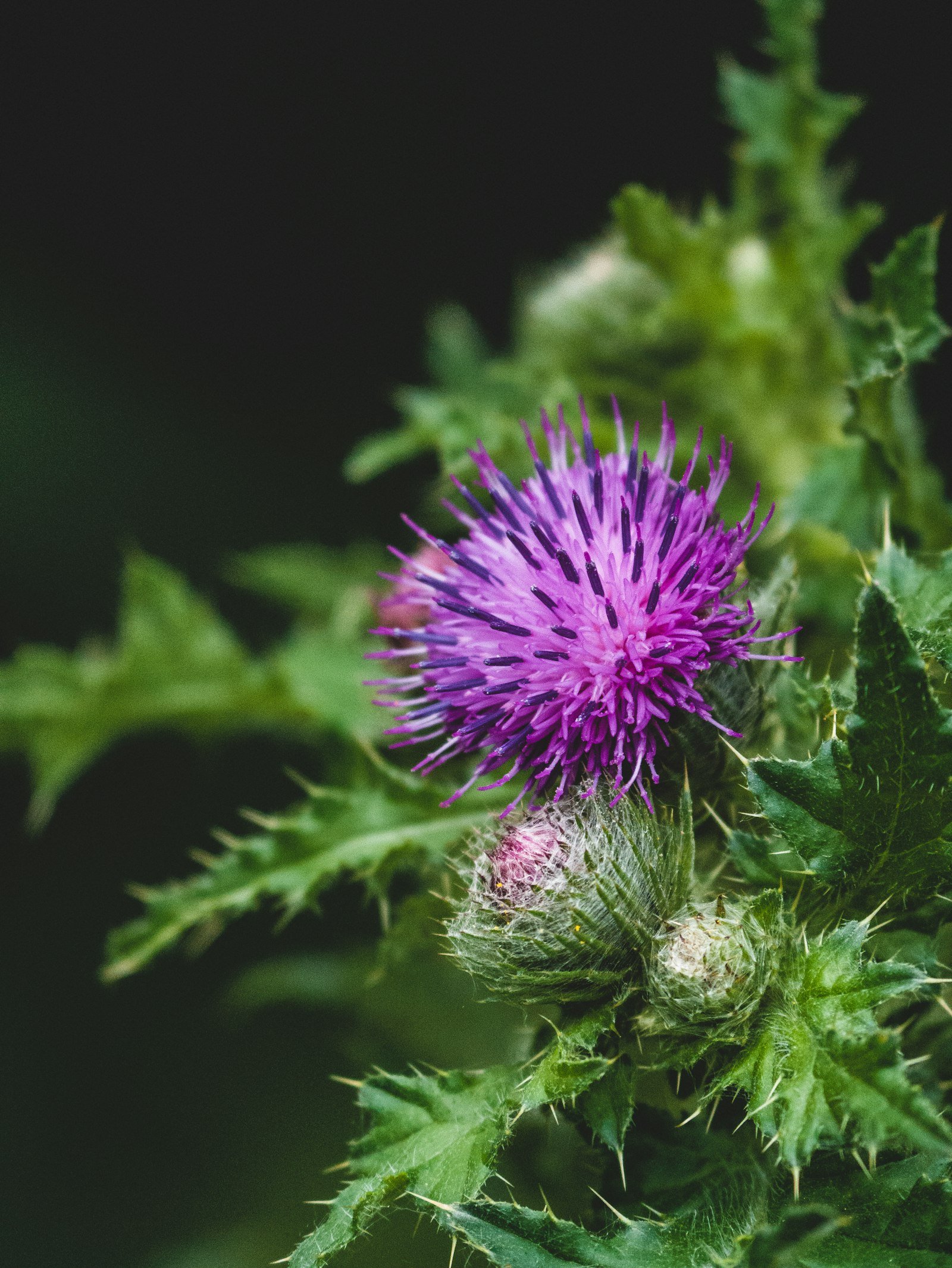
Walk along a sunny roadside in southern Europe in early summer and you may spot a tall, prickly plant with a crown of purple petals and leaves streaked with milky-white veins. This is milk thistle (Silybum marianum). Folk legend says the white marbling came from drops of the Virgin Mary’s milk, which is why it is also called “Mary’s thistle.” For centuries, European herbalists turned to its seeds when the liver and gallbladder needed help, and it remains one of the most popular liver herbs in the world today.
When people talk about “detox,” the liver deserves most of the credit. It filters your blood, breaks down alcohol, medications and environmental chemicals, and packages waste so the body can carry it out. Supporting the liver is the most sensible kind of detox there is. So does milk thistle actually help? A growing body of clinical research offers an encouraging, if nuanced, answer.
Key Takeaways
- Milk thistle seeds contain silymarin, a group of plant compounds with antioxidant and anti-inflammatory activity that concentrate in the liver.
- A 2024 review of 26 randomized trials with 2,375 patients found silymarin lowered the liver enzymes ALT and AST and improved fatty liver grades in people with fatty liver disease.
- In a 48-week Malaysian trial, 22% of people taking silymarin showed less liver scarring on biopsy, compared with 6% on placebo.
- Results across studies are mixed, so milk thistle works best as one part of a liver-friendly lifestyle, not as a stand-alone fix.
- It is generally well tolerated, but quality varies between products and people allergic to ragweed or daisies should be cautious.
A Liver Herb With Deep Roots
Milk thistle is native to the Mediterranean, and it has a long history in European folk medicine for liver and gallbladder complaints. The U.S. National Center for Complementary and Integrative Health (NCCIH) notes that it was used historically for liver disorders and also by nursing mothers hoping to boost milk supply. Monastery gardens grew it, country herbalists brewed its crushed seeds into teas, and by the 20th century German researchers had isolated the active complex they named silymarin.
That traditional reputation is what drew modern scientists in. Today, silymarin is one of the most studied plant extracts for the liver, and it is widely sold as a standardized supplement.
How Silymarin Works in the Body
Silymarin is not one compound but a family of flavonolignans, the best known being silybin (also called silibinin). Laboratory and animal studies suggest several ways it may support liver cells:
- Antioxidant protection. The liver produces a lot of free radicals as it processes fats and chemicals. Silymarin helps neutralize them and supports the liver’s own antioxidant, glutathione.
- Calming inflammation. Chronic, low-grade inflammation drives much of the damage in fatty liver disease. Silymarin dampens several inflammatory signals.
- Slowing scar formation. Early research suggests it may slow the activity of the cells that lay down scar tissue (fibrosis) in an injured liver.
These mechanisms matter most for fatty liver disease, now called metabolic dysfunction-associated steatotic liver disease (MASLD). It affects a large share of adults worldwide and often develops quietly alongside weight gain, insulin resistance and high blood sugar.
What the Research Shows
The big picture: a 2024 review of 26 trials
In 2024, researchers Li, Duan, Li and Lu published a systematic review and meta-analysis in the Annals of Hepatology that pooled 26 randomized controlled trials involving 2,375 people with fatty liver disease. Compared with control groups, people taking silymarin had significantly lower ALT and AST, the two blood markers doctors most often use to gauge liver cell stress. Silymarin users were also more likely to show improvement in the degree of fat in the liver.
The authors were candid about limits. The trials used different doses, formulations and treatment lengths (from 8 to 48 weeks), and many combined silymarin with diet or exercise advice. So the overall direction is encouraging, but the exact size of the benefit is hard to pin down.
A closer look at scarring: the Malaysian biopsy trial
One of the most careful studies came from the University of Malaya. In a double-blind trial published in Clinical Gastroenterology and Hepatology in 2017, Wah-Kheong Chan and colleagues gave 99 people with nonalcoholic steatohepatitis (the inflammatory form of fatty liver) either 700 mg of silymarin three times a day or a placebo for 48 weeks, and checked their livers with biopsies before and after.
Silymarin did not significantly beat placebo on the main overall disease score. But on fibrosis, the measure many liver specialists care about most, the difference was striking: 22.4% of the silymarin group showed less scarring, compared with 6.0% of the placebo group. Fibrosis is the stage of liver disease that most strongly shapes long-term health, so this finding has kept researchers interested.
An honest note on mixed results
Not every study has been positive. NCCIH points out that trials in hepatitis C, alcohol-related liver disease and other conditions have given conflicting results, and two studies it funded found no benefit. That is common in herbal research, where products and doses vary widely. The fair takeaway is that milk thistle shows real promise, especially for fatty liver, and works best alongside the habits that most strongly protect the liver.
The Evidence at a Glance
| Study | Who was studied | What they found |
|---|---|---|
| Li et al., Annals of Hepatology, 2024 | 26 randomized trials, 2,375 people with fatty liver disease | Lower ALT and AST liver enzymes and better fatty liver grades with silymarin |
| Chan et al., Clinical Gastroenterology and Hepatology, 2017 | 99 adults with steatohepatitis, 48 weeks, biopsy-confirmed | Reduced scarring in 22.4% vs. 6.0% on placebo; overall disease score not significantly different |
| NCCIH summary | Review of liver research to date | Results mixed across liver conditions; generally well tolerated |
Milk Thistle Works Best With a Liver-Loving Lifestyle
Traditional healers never treated a single herb as the whole answer, and neither should we. The liver responds powerfully to everyday habits:
- Eat more fiber and plants. Vegetables, beans and whole grains help regulate blood sugar and fat storage. Our article on how oat and barley fiber may help clear PFAS shows how fiber supports the body’s own clearance pathways.
- Add cruciferous vegetables. Broccoli, cabbage and especially broccoli sprouts switch on the liver’s detox enzymes.
- Feed your gut. The gut and liver talk constantly. Fermented foods like kimchi and kefir have been shown to calm inflammation.
- Move daily and limit alcohol and added sugar. Even modest weight loss reduces liver fat substantially.
For a broader overview of cleansing the gut, liver, lungs and lymph, see our comprehensive guide to natural detoxing.
How to Use Milk Thistle: Practical Steps
- Choose a standardized extract. Look for a product that states its silymarin content on the label and carries a third-party quality seal (such as USP or NSF). NCCIH warns that some products contain less silymarin than claimed, so quality matters.
- Follow the label dose. Clinical trials have used a wide range of doses. The Malaysian trial used 700 mg three times daily under medical supervision; many over-the-counter products suggest less. Starting with the label dose is sensible.
- Give it time. Studies ran from two months to nearly a year. Think in terms of a steady, months-long habit rather than a quick cleanse.
- Try the traditional tea. Lightly crush a teaspoon of seeds and steep in hot water for 10 to 15 minutes. Silymarin dissolves poorly in water, so tea is a gentle, traditional option rather than the dose used in trials.
- Track your progress. If you have fatty liver, ask for your liver enzymes to be rechecked at your next routine blood test so you can see how your overall plan is working.
The Bottom Line
Milk thistle has earned its place in herbal tradition. Modern research, including a review of 26 trials and a biopsy study showing less scarring, suggests silymarin can help ease liver stress in people with fatty liver disease. The evidence is not uniform, and the best results come when the herb is paired with a fiber-rich, plant-forward diet, regular movement and less alcohol and sugar. Used that way, this prickly purple thistle can be a thoughtful addition to your liver-care routine.
Frequently Asked Questions
Can milk thistle “cleanse” my liver after a weekend of drinking?
There is no good evidence that milk thistle undoes the effects of a night of heavy drinking. Its research support is for longer-term use in chronic liver stress, especially fatty liver. The most effective liver “cleanse” after alcohol is simply giving your liver a break.
How long does milk thistle take to work?
Clinical trials lasted between 8 and 48 weeks. Changes in liver enzymes were typically measured after at least two to three months.
Can I eat milk thistle seeds whole?
Yes. Ground seeds can be sprinkled on oatmeal or blended into smoothies, much like flax. They provide fiber and some silymarin, though far less than a concentrated extract.
Is milk thistle safe for long-term use?
Trials lasting up to a year reported that it was generally well tolerated. The most common side effects are mild digestive complaints such as bloating, gas or loose stools.
Safety note: Milk thistle may cause allergic reactions in people sensitive to ragweed, chrysanthemums, marigolds or daisies. Little is known about its safety during pregnancy or breastfeeding. Because herbs and medicines can interact, check with your pharmacist or practitioner before combining milk thistle with prescription drugs.
Sources
- Li S, Duan F, Li S, Lu B. Administration of silymarin in NAFLD/NASH: A systematic review and meta-analysis. Annals of Hepatology. 2024;29:101174.
- Wah-Kheong C, et al. A randomized trial of silymarin for the treatment of nonalcoholic steatohepatitis. Clinical Gastroenterology and Hepatology. 2017;15:1940-1949.
- ClinicalTrials.gov. Silymarin for the Treatment of Non-Alcoholic Fatty Liver Disease (NCT02006498).
- National Center for Complementary and Integrative Health. Milk Thistle.
This article is for educational purposes and is not a substitute for personalized advice from a qualified health practitioner.





