











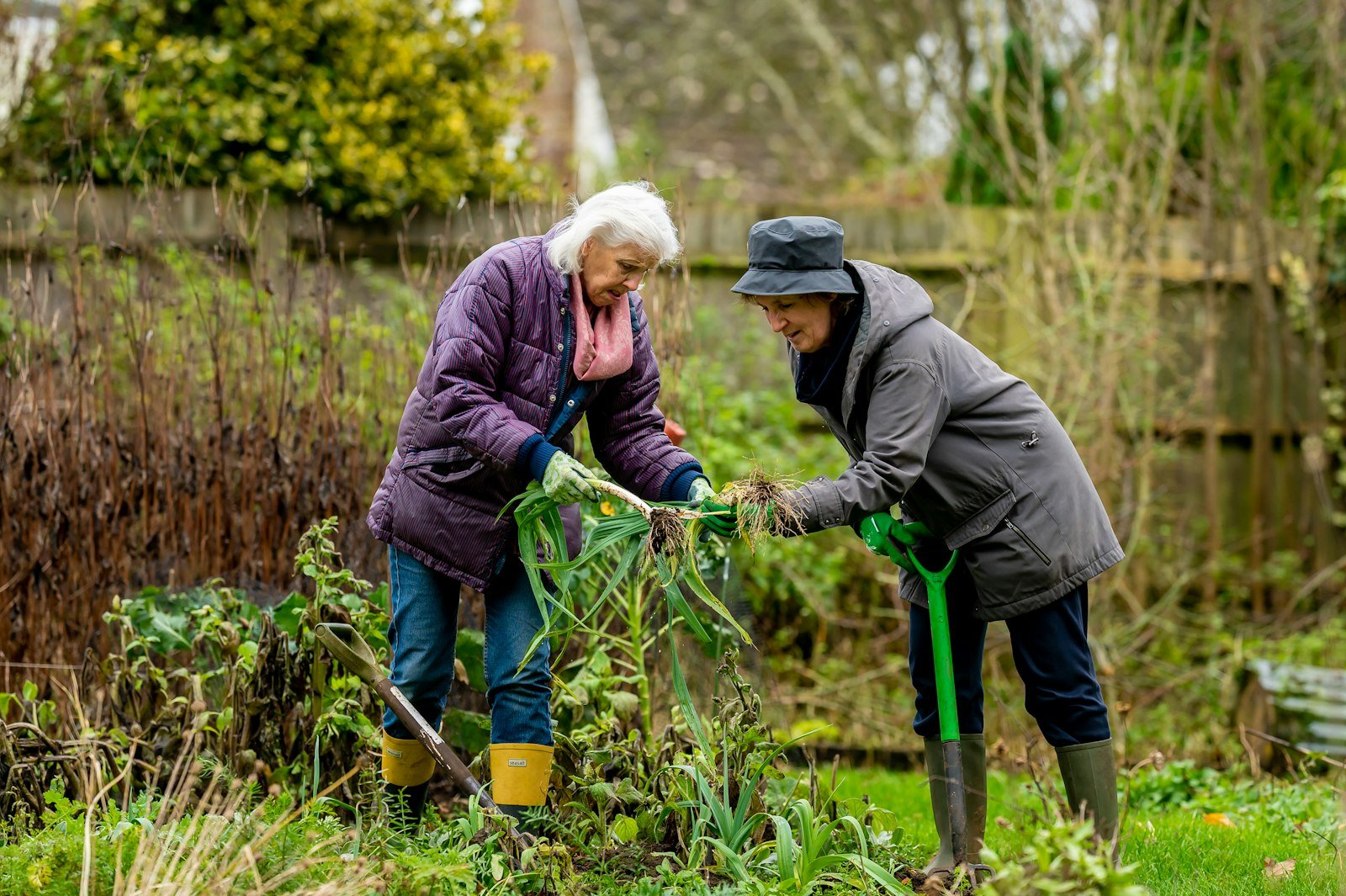
On the islands of Okinawa, where people have long been known for living into their nineties and beyond, there is a word for the thing that gets you out of bed in the morning: ikigai. It loosely translates as “a reason for being” or “a life worth living.” For an Okinawan grandmother it might be tending her vegetable plot, teaching a great-grandchild a folk song, or meeting her lifelong circle of friends. It is rarely grand. It is simply the felt sense that her days matter.
Japan is not alone in this idea. In Costa Rica’s Nicoya Peninsula, another region famous for long-lived elders, people speak of a plan de vida, a life plan. Ayurveda describes dharma, living in line with your true purpose, as one of the four aims of a healthy life. Indigenous traditions across the Americas often place the elder’s role as teacher and keeper of stories at the center of community health. Different words, same insight: a meaningful life is a healthier life.
For a long time, that sounded like folk wisdom. Today, large studies following tens of thousands of people suggest the old traditions were onto something real.
Key Takeaways
- In a Japanese study of more than 43,000 adults, people who said they lacked ikigai had about a 50% higher risk of dying over seven years than those who had it.
- A U.S. study of nearly 7,000 adults over 50 found that those with the weakest sense of purpose were more than twice as likely to die during follow-up as those with the strongest.
- Older adults with a high sense of purpose were about 2.4 times more likely to stay free of Alzheimer’s disease than those with a low sense of purpose in a Chicago study.
- Volunteering about two hours a week has been linked with lower mortality, more physical activity, and better well-being in adults over 50.
- Purpose is not fixed. It can be grown through small, practical steps, at any age.
What Is “Purpose,” Exactly?
Researchers usually define purpose in life as having goals and a sense of direction that make your days feel meaningful. It is measured with simple questionnaires, asking people how much they agree with statements such as “I have a sense of direction and purpose in my life” or “Some people wander aimlessly through life, but I am not one of them.”
Purpose is related to happiness, but it is not the same thing. Happiness is about how you feel in the moment. Purpose is about whether your life is pointed somewhere. You can have a hard week and still feel deeply purposeful, as any parent of a newborn or caregiver for an aging relative knows.
The Research: How Purpose Shows Up in the Body
The Ohsaki Study: Ikigai and a Longer Life
In 2008, researchers at Tohoku University published results from the Ohsaki Study in the journal Psychosomatic Medicine. They followed 43,391 Japanese adults for about seven years and asked a simple question at the start: do you have ikigai?
After adjusting for age, health, and lifestyle factors, people who said they did not have ikigai were about 1.5 times as likely to die during follow-up. The link was especially strong for deaths from cardiovascular disease, where risk was about 60% higher. The researchers did not find a clear link with cancer deaths, which is a useful reminder that purpose is one piece of a larger picture, not a cure-all.
The Health and Retirement Study: Purpose After 50
A team at the University of Michigan looked at the same question in the United States. Published in JAMA Network Open in 2019, their study used data from 6,985 adults over 50 in the national Health and Retirement Study.
Those with the lowest purpose scores were about 2.4 times as likely to die between 2006 and 2010 as those with the highest scores, even after accounting for factors like depression, optimism, and other psychological traits. As in Japan, the strongest signal was for heart, circulatory, and blood conditions. The authors concluded that purpose in life may be a modifiable factor worth paying attention to, much like diet or exercise.
Purpose and the Aging Brain
At Rush University in Chicago, Patricia Boyle and colleagues followed 951 older adults, with an average age of about 80, through the Rush Memory and Aging Project. Over up to seven years, 155 of them developed Alzheimer’s disease.
People with a greater sense of purpose were much less likely to be among them. Someone scoring at the high end of the purpose scale was about 2.4 times more likely to remain free of Alzheimer’s than someone at the low end. A strong sense of purpose was also linked with a lower risk of mild cognitive impairment, the stage that often comes before dementia. The study appeared in the Archives of General Psychiatry in 2010.
Giving Back: The Volunteering Connection
One of the most reliable ways people find purpose is by helping others. A 2020 study in the American Journal of Preventive Medicine, led by Eric Kim, then at Harvard’s T.H. Chan School of Public Health, followed nearly 13,000 adults over 50. Those who volunteered at least 100 hours a year, roughly two hours a week, had a lower risk of death and of developing physical limitations over four years. They were also more physically active and reported a greater sense of well-being afterward.
The Evidence at a Glance
| Study | Who Was Studied | What They Found |
|---|---|---|
| Ohsaki Study, Japan (Sone et al., 2008) | 43,391 adults, about 7 years | No ikigai linked to about 1.5 times the risk of death, and about 1.6 times the risk of cardiovascular death |
| Health and Retirement Study, U.S. (Alimujiang et al., 2019) | 6,985 adults over 50 | Lowest purpose linked to about 2.4 times the risk of death vs. highest purpose |
| Rush Memory and Aging Project (Boyle et al., 2010) | 951 older adults, up to 7 years | High purpose: about 2.4 times more likely to stay free of Alzheimer’s |
| Volunteering study (Kim et al., 2020) | Nearly 13,000 adults over 50, 4 years | About 2 hours a week of volunteering linked to lower mortality, fewer physical limitations, and better well-being |
These are observational studies, which show strong associations rather than proof of cause and effect.
Why Would Purpose Affect Health?
Traditional healers would say the answer is obvious: mind and body are one system. Modern science is filling in the details.
- Calmer stress responses. A sense of meaning seems to help people handle setbacks without staying stuck in a state of chronic stress, which takes a toll on the heart and blood vessels over time.
- Better daily habits. People with a reason to stay well tend to move more, eat better, and keep up with preventive care. The volunteering study, for example, found more physical activity among regular volunteers.
- Social connection. Purpose often involves other people, and loneliness is itself a well-known risk to health. You can read more in our recent roundup on the cost of loneliness.
- A mentally active life. Learning, teaching, creating, and solving problems keep the brain engaged, which may help explain the link with lower Alzheimer’s risk.
How to Grow Your Own Ikigai: 7 Practical Steps
The good news is that purpose is not something you either have or lack forever. Researchers consider it changeable, and traditional cultures have always treated it as something to cultivate. Here is a simple way to start.
- Use the ikigai questions. Take ten minutes with a notebook and answer four questions: What do I love? What am I good at? What does the world, or my community, need? What could I be valued or thanked for? Look for where your answers overlap.
- Start small and local. Purpose does not need to be a life mission. Watering a neighbor’s plants, cooking a weekly meal for a friend, or mentoring a younger coworker all count.
- Give two hours a week. The volunteering research points to roughly 100 hours a year as a meaningful threshold. A food bank, library, animal shelter, community garden, or place of worship are all good places to begin.
- Move with meaning. Pair purpose with activity. Join a community garden, a walking group that picks up litter, or a dance class with friends. You get the benefits of movement and connection at once.
- Find your “moai.” In Okinawa, a moai is a small group of lifelong friends who support one another. Schedule a regular meetup with two or three people who lift you up.
- Keep learning. Pick up a skill you can share: an instrument, a traditional recipe, a craft, a language. Teaching it to someone else deepens the sense of meaning.
- Reflect each morning. Before checking your phone, take one slow breath and name one thing you are looking forward to that day, or one person you can help. This tiny ritual trains the mind to look for meaning.
Time in nature can also be a powerful setting for reflection. Our guide to forest bathing pairs nicely with the ikigai questions above. And because purpose and mood are closely tied, regular movement helps too; see what the research says about exercise for mood.
The Bottom Line
The elders of Okinawa and Nicoya did not need a cohort study to tell them that a meaningful life is a longer one, but the science now agrees. Across Japan and the United States, people with a strong sense of purpose live longer, have healthier hearts, and keep sharper minds as they age. Purpose belongs alongside good food, movement, and sleep as part of a whole-person approach to health. Best of all, it costs nothing, and you can start growing it today with something as simple as helping a neighbor.
Frequently Asked Questions
Is it too late to find purpose in later life?
Not at all. Many of the studies above focused on adults over 50, and some on people in their eighties. Retirement, an empty nest, or a health change can be a natural moment to rediscover what matters to you.
Does my purpose need to be something big?
No. In the Japanese tradition, ikigai is often found in everyday things: a garden, a grandchild, a craft, a morning ritual. What matters is that it feels meaningful to you.
Do these studies prove that purpose causes better health?
They are observational, so they show strong links rather than final proof. But the findings are consistent across countries and hold up after researchers account for many other factors, which makes purpose a promising and low-risk area to invest in.
What if I feel stuck or low and can’t find any purpose?
That is a common human experience. Start with one small act of kindness or one short volunteer shift, and notice how it feels. If low mood lingers, talking with a counselor or trusted practitioner can help you reconnect with what matters.
How does purpose fit with other healthy habits?
Think of it as the glue. A reason to stay well makes it easier to eat well, move, and keep a steady sleep routine.
Sources
- Sone T, Nakaya N, Ohmori K, et al. Sense of life worth living (ikigai) and mortality in Japan: Ohsaki Study. Psychosomatic Medicine. 2008;70(6):709-715. doi:10.1097/PSY.0b013e31817e7e64
- Alimujiang A, Wiensch A, Boss J, et al. Association between life purpose and mortality among US adults older than 50 years. JAMA Network Open. 2019;2(5):e194270. doi:10.1001/jamanetworkopen.2019.4270
- Boyle PA, Buchman AS, Barnes LL, Bennett DA. Effect of a purpose in life on risk of incident Alzheimer disease and mild cognitive impairment in community-dwelling older persons. Archives of General Psychiatry. 2010;67(3):304-310. PMC2897172
- Kim ES, Whillans AV, Lee MT, Chen Y, VanderWeele TJ. Volunteering and subsequent health and well-being in older adults: an outcome-wide longitudinal approach. American Journal of Preventive Medicine. 2020. doi:10.1016/j.amepre.2020.03.004
- ScienceDaily. Volunteering improves health, well-being of older adults (June 2020). sciencedaily.com
- NPR Shots: coverage of the University of Michigan life-purpose and mortality study (May 25, 2019). npr.org
This article is for educational purposes and is not a substitute for personalized advice from a qualified health practitioner.