










For most of human history, people lived surrounded by trees, plants, and open sky. Today, the average person spends about 90% of their time indoors. Our bodies have not caught up with that change, and many of us feel it as stress, fatigue, and restlessness.
In 1982, Japan’s Forestry Agency gave a name to an ancient instinct: shinrin-yoku, which means “forest bathing” or “taking in the forest atmosphere.” It is not hiking or exercise. It is simply being in the forest slowly and mindfully, letting the senses soak it in. Decades of Japanese research now show this gentle practice has real, measurable effects on the body.
Key Takeaways
- Forest bathing means spending slow, mindful time among trees, engaging all the senses.
- Japanese field studies show time in forests lowers cortisol, pulse rate, and blood pressure compared with city environments.
- Research by Dr. Qing Li found that a forest trip increased the activity and number of natural killer (NK) cells, immune cells that fight viruses and tumor cells, with effects lasting days afterward.
- Trees release aromatic compounds called phytoncides that may contribute to these effects.
- Even 20 minutes in a park can help.
The Science of Trees and Health
Calming the stress response
Researchers led by Dr. Bum-Jin Park and Dr. Yoshifumi Miyazaki at Chiba University conducted field experiments in forests across Japan. Participants spent time walking and sitting in either forests or city centers. In the forests, they had lower levels of the stress hormone cortisol, lower pulse rates, lower blood pressure, and greater activity of the parasympathetic “rest and digest” nervous system. In short, the forest helped their bodies shift out of fight-or-flight mode.
Boosting immune cells
Dr. Qing Li of Nippon Medical School in Tokyo, one of the world’s leading forest medicine researchers, took groups of office workers on short trips into the forest. After the trips, their natural killer cells, the immune cells that destroy virus-infected cells and tumor cells, were more numerous and more active, along with higher levels of anti-cancer proteins. The boost lasted for days after returning to the city. A comparable trip to a city did not have the same effect.
What Forest Time Does for the Body
| Stress hormones | Lower cortisol |
| Heart and blood vessels | Lower pulse and blood pressure |
| Nervous system | More “rest and digest” activity |
| Immune system | More active natural killer cells |
| Mood | Less anxiety, anger, and fatigue; more vigor |
Phytoncides: the forest’s aromatherapy
Trees release natural aromatic oils called phytoncides to protect themselves from insects and germs. Evergreens such as pine, cedar, and cypress are especially rich in them. In one experiment, Dr. Li vaporized cypress oil in hotel rooms where volunteers slept, and their natural killer cell activity increased. That fragrant “forest smell” may be doing more than lifting our mood.
How to Forest Bathe
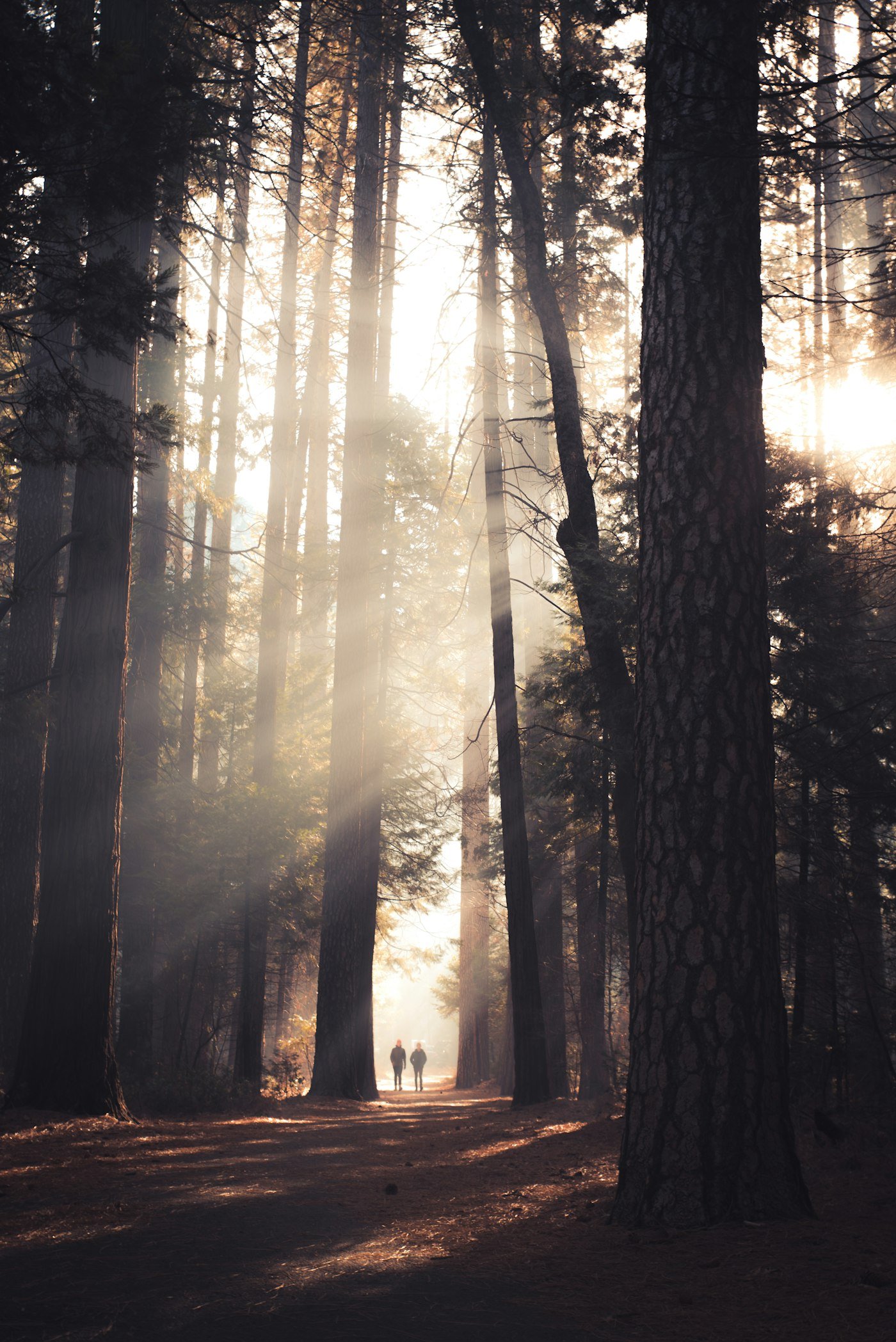
- Leave your phone in your pocket or switch it to silent.
- Walk slowly and aimlessly. There is no destination or goal.
- Engage every sense. Notice the shades of green, the sound of leaves and birds, the feel of bark, the smell of earth and pine, the taste of fresh air.
- Breathe deeply. Take slow breaths in through the nose.
- Pause often. Sit on a log, lean against a tree, or watch a stream.
- Stay a while. Dr. Li suggests about two hours for a full session, but even 20 minutes brings benefits.
No Forest Nearby? Bring Nature Closer
- Visit a local park, garden, or tree-lined street.
- Fill your home with plants.
- Diffuse essential oils from cypress, cedar, or pine.
- Open windows to let in fresh air and natural sounds.
- Eat lunch outside.
- Try gardening, which combines nature, movement, and grounding.
Time outdoors also brings the benefits of daylight. Learn more in our article on sunlight and health, and explore the related practice of grounding.
The Bottom Line
Forest bathing is one of the simplest, most enjoyable health practices there is. Japanese research shows that slow, mindful time among trees calms the stress response, lowers blood pressure, lifts mood, and may strengthen the immune cells that protect us. It costs nothing, requires no equipment, and reconnects us with the natural world we evolved in. Your prescription: go outside and breathe.
Frequently Asked Questions
How often should I forest bathe?
Weekly sessions are ideal. Research suggests around two hours a week in nature is linked to better health and well-being.
Is forest bathing the same as hiking?
No. Hiking focuses on distance and exercise. Forest bathing focuses on slowing down and sensing.
Can children benefit?
Yes. Time in nature is linked with better attention, mood, and sleep in children.
A note on safety: Stay on safe paths, dress for the weather, and check for ticks after time in wooded areas.
Sources
- Li Q. Effect of forest bathing trips on human immune function. Environmental Health and Preventive Medicine, 2010.
- Park BJ, Tsunetsugu Y, Kasetani T, et al. The physiological effects of Shinrin-yoku (taking in the forest atmosphere or forest bathing): evidence from field experiments in 24 forests across Japan. Environmental Health and Preventive Medicine, 2010.
- White MP, Alcock I, Grellier J, et al. Spending at least 120 minutes a week in nature is associated with good health and wellbeing. Scientific Reports, 2019.
This article is for educational purposes and is not a substitute for personalized advice from a qualified health practitioner.





