







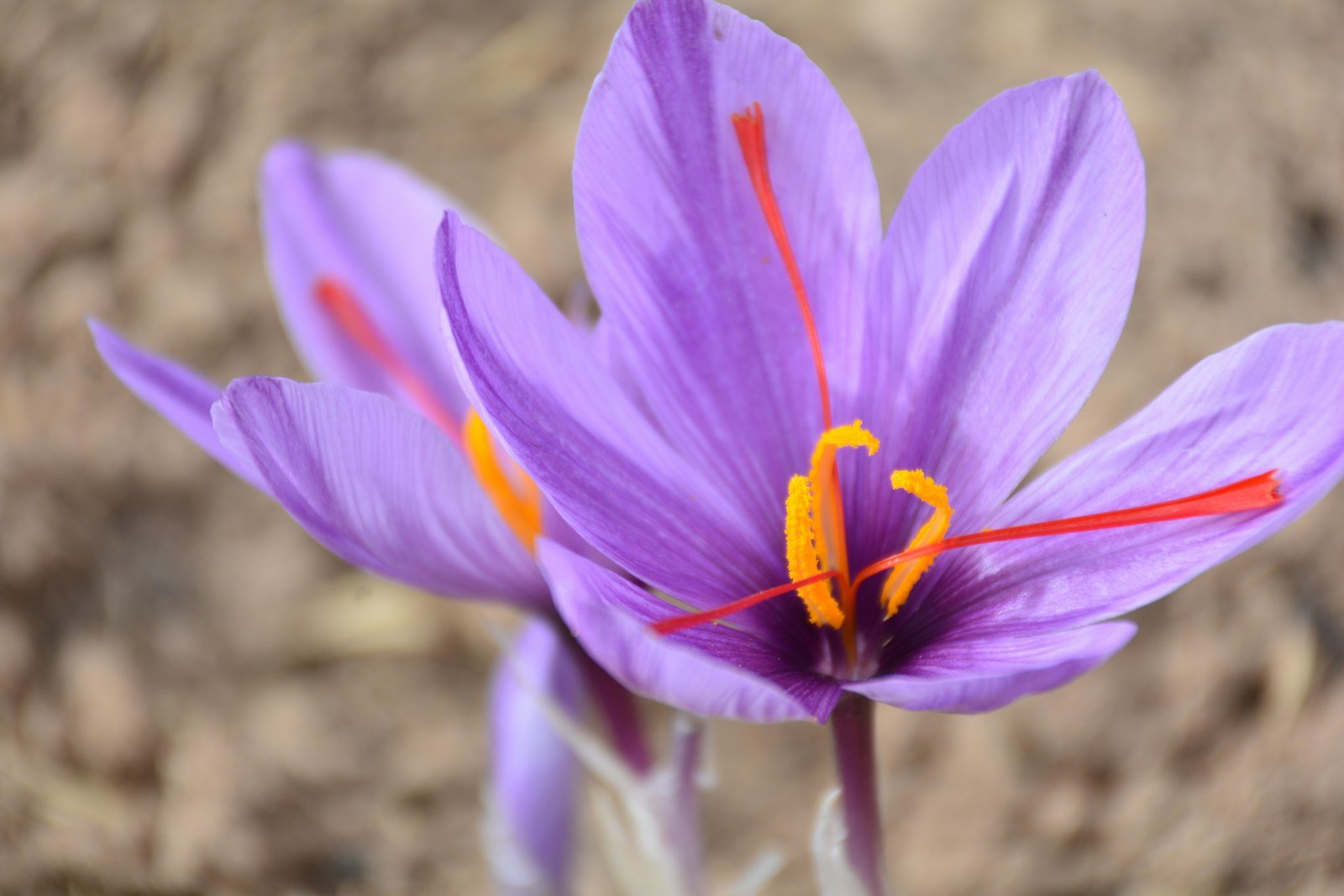
Every autumn, fields across Iran, Kashmir, and parts of Spain turn violet as the saffron crocus (Crocus sativus) blooms for just a few weeks. Pickers rise before dawn to gather the flowers by hand, and each blossom gives up only three slender crimson threads. Those threads are the stigmas of the flower, and once dried they become the most expensive spice in the world.
Long before saffron was a luxury ingredient in paella and biryani, it was medicine. Traditional Persian physicians prized it as a spice for lifting the spirits and strengthening the heart. In Ayurveda, where it is known as kesar, it has been used to calm the mind and support a bright, steady mood. In Traditional Chinese Medicine, where it is called zang hong hua, saffron has been used to invigorate the blood and ease emotional stagnation.
What makes saffron remarkable is that modern science has taken these old claims seriously, and the results have been encouraging. Over the past two decades, more than twenty clinical trials have tested saffron for low mood and anxiety. Here is what that research shows, and how you can bring this golden spice into your own wellness routine.
Key Takeaways
- Saffron has a long history in Persian, Ayurvedic, and Chinese medicine as a mood-lifting herb.
- A 2019 meta-analysis of 23 clinical trials found saffron produced large improvements in depressive and anxiety symptoms compared with placebo.
- In head-to-head trials, saffron performed about as well as standard antidepressants for mild to moderate depression.
- A 2025 trial of 202 adults with low mood found a standardized saffron extract improved mood within about five weeks.
- The studied dose is small: about 28 to 30 mg of extract per day, far below the gram-level amounts linked to toxicity.
- Saffron works best as one part of a whole-person approach that includes movement, sleep, sunlight, food, and connection.
Why a Spice Might Lift Your Mood
Saffron’s deep color and distinctive aroma come from a handful of active compounds. The most studied are crocin (the pigment that turns rice golden), safranal (responsible for its hay-like scent), and picrocrocin (which gives its slightly bitter taste). Quality extracts used in research are often standardized to these compounds.
Researchers believe these molecules influence mood in several ways at once, which fits the traditional view of saffron as a whole-body tonic rather than a single-target drug:
- Brain messengers: Laboratory work suggests saffron’s compounds affect serotonin, dopamine, and noradrenaline, the same chemical messengers targeted by many mood medications.
- Calming inflammation: Crocin and safranal act as antioxidants and anti-inflammatory agents. Growing evidence links chronic low-grade inflammation with low mood, so this may matter.
- Stress response: Saffron may help regulate the body’s stress system, the hormonal loop that releases cortisol when we feel under pressure.
These mechanisms are still being mapped, but they help explain why a small daily dose of a kitchen spice could have measurable effects on how people feel.
What the Clinical Research Shows
The big picture: 23 trials pooled together
The most thorough look at the evidence came in 2019, when a team led by Wolfgang Marx at Deakin University’s Food and Mood Centre in Australia published a systematic review and meta-analysis in Nutrition Reviews. They gathered 23 randomized controlled trials involving 1,237 participants. Most of the studies lasted around six weeks, and the most common dose was 30 mg of saffron per day.
Compared with placebo, saffron produced a large improvement in symptoms of depression, with a pooled effect size (Hedges’ g) of 0.99 across 14 studies. It also produced a large improvement in anxiety symptoms, with an effect size of 0.95 across six studies. For context, an effect size near 1.0 is considered large in mood research.
When saffron was compared directly with conventional antidepressants in five trials, there was no significant difference between them, suggesting comparable benefit for the people studied. And in four trials where saffron was added to an existing antidepressant, the combination outperformed the antidepressant plus placebo. That last finding fits the integrative idea that natural approaches can work alongside, not instead of, other care.
The authors were careful to point out limits. Most trials were small, short, and conducted in Iran, and the results varied considerably from study to study. Still, the overall pattern was consistently positive.
Saffron versus fluoxetine
One of the early studies that sparked this research came from Tehran University of Medical Sciences. In a 2005 pilot trial published in the Journal of Ethnopharmacology, Noorbala, Akhondzadeh, and colleagues randomly assigned 40 adults with mild to moderate depression to take either 30 mg per day of saffron extract or 20 mg per day of fluoxetine (Prozac) for six weeks. Saffron proved about as effective as fluoxetine, with no significant difference in side effects between the two groups. The researchers concluded that a larger trial was warranted, and many followed.
A 2025 trial in everyday low mood
Much of the newer research focuses on people who are not clinically depressed but are going through a gray stretch: low energy, low motivation, and a heavy mood. In 2025, Adrian Lopresti and colleagues published a 12-week trial in The Journal of Nutrition involving 202 adults aged 18 to 70 with subclinical depressive symptoms. Participants took either a standardized saffron extract (affron, 14 mg twice daily) or a placebo.
The saffron group showed a significantly greater reduction in depressive symptoms than placebo, with improvements in mood and stress appearing as early as five weeks. Among participants who started out with more disturbed sleep, saffron also eased sleep disturbance a little more than placebo did. The study was funded by the extract’s manufacturer, which is worth knowing, but it adds to a body of independent research pointing the same way.
The Evidence at a Glance
| Study | Who and how | What they found |
|---|---|---|
| Marx et al., Nutrition Reviews, 2019 | Meta-analysis of 23 trials, 1,237 people; usually 30 mg/day | Large benefit vs placebo for depression (g = 0.99) and anxiety (g = 0.95); similar to antidepressants in 5 trials |
| Noorbala et al., J Ethnopharmacol, 2005 | 40 adults, mild to moderate depression; 30 mg/day saffron vs 20 mg/day fluoxetine, 6 weeks | Saffron about as effective as fluoxetine; similar side effects |
| Lopresti et al., J Nutrition, 2025 | 202 adults with low mood; 14 mg extract twice daily vs placebo, 12 weeks | Greater drop in depressive symptoms; mood and stress gains by week 5 |
How to Use Saffron for Mood: Practical Steps
1. Choose a quality extract for a research-level dose
The trials used about 28 to 30 mg of saffron per day, usually split into two doses. That is a tiny amount, roughly a pinch of threads. Because saffron is so costly, it is one of the most commonly adulterated spices on the market. If you choose a supplement, look for a standardized extract that lists its crocin and safranal content and comes from a brand that uses third-party testing.
2. Give it time
Most studies ran six to twelve weeks, and improvements typically appeared after a few weeks of steady daily use. Keep a simple mood journal so you can notice gradual shifts that are easy to miss day to day.
3. Enjoy saffron in the kitchen
Culinary saffron will not match the standardized doses in trials, but it is a lovely way to honor the tradition. Steep a few threads in warm water or milk for ten minutes before adding them to rice, soups, stews, or baked goods. A warm cup of saffron milk with a little cardamom and honey is a classic Ayurvedic evening drink.
4. Pair it with the foundations of good mood
Saffron is most powerful as part of a bigger picture. Regular movement has some of the strongest evidence of any natural approach to low mood, as we covered in what 218 studies reveal about exercise for depression. Time outdoors, morning sunlight, and even gardening support mood in their own right. A gut-friendly diet rich in fermented foods may help too, given the close link between the gut and the brain.
5. Consider calming companions
If anxiety is part of the picture, saffron pairs naturally with other well-studied calming herbs. Our guide to lavender for anxiety covers another traditional plant with solid clinical trials behind it. Introduce one new herb at a time so you can tell what is helping.
The Bottom Line
Saffron is a rare example of a traditional remedy whose reputation has held up well under modern scrutiny. Across more than twenty randomized trials, a small daily dose of this crimson spice has eased symptoms of low mood and anxiety, often within a few weeks, and has performed similarly to standard antidepressants in mild to moderate cases. The research has limits, and larger, longer studies are still needed, but the evidence is strong enough to make saffron one of the most promising plant allies for emotional well-being. Used thoughtfully, alongside movement, sunlight, nourishing food, and connection, it can be a bright thread in your overall approach to feeling well.
Frequently Asked Questions
How long does saffron take to work for mood?
In clinical trials, improvements usually appeared within about four to six weeks of daily use. The 2025 Lopresti trial saw mood and stress benefits by week five.
Can I get enough saffron just by cooking with it?
Cooking with saffron is enjoyable and healthful, but it is hard to get a consistent 30 mg daily dose from cooking alone. Most studies used capsules of standardized extract for that reason.
Can saffron be taken with antidepressants?
Several trials tested saffron added to antidepressants, and the combination performed better than the medication alone. Even so, anyone on mood medication should talk with their prescriber before adding saffron, and should never stop or reduce a prescribed medication on their own.
Does saffron help with anxiety as well as depression?
Yes. The 2019 meta-analysis found a large benefit for anxiety symptoms across six trials, although there are fewer anxiety studies than depression studies.
Is saffron safe?
At the doses used in research, saffron has been well tolerated, with occasional mild effects such as nausea or headache. Problems are tied to much larger amounts, measured in grams rather than milligrams.
Safety note: Research doses (about 30 mg a day) are tiny compared with the amounts linked to harm; toxic effects have been reported at around 5 grams. Avoid saffron supplements during pregnancy, since high amounts can stimulate the uterus. Saffron may also add to the effect of blood thinners, so people taking anticoagulants or living with a bleeding disorder should check with their practitioner first.
Sources
- Marx W, Lane M, Rocks T, et al. Effect of saffron supplementation on symptoms of depression and anxiety: a systematic review and meta-analysis. Nutrition Reviews. 2019;77(8):557-571. https://doi.org/10.1093/nutrit/nuz023
- Noorbala AA, Akhondzadeh S, Tahmacebi-Pour N, Jamshidi AH. Hydro-alcoholic extract of Crocus sativus L. versus fluoxetine in the treatment of mild to moderate depression: a double-blind, randomized pilot trial. Journal of Ethnopharmacology. 2005;97(2):281-284. https://pubmed.ncbi.nlm.nih.gov/15707766/
- Lopresti AL, et al. An examination into the effects of a saffron extract (affron) on mood and general wellbeing in adults experiencing low mood: a randomized, double-blind, placebo-controlled trial. The Journal of Nutrition. 2025;155(7):2300-2311. https://doi.org/10.1016/j.tjnut.2025.05.024
- Saffron. Drugs.com Natural Products Database. https://www.drugs.com/npp/saffron.html
This article is for educational purposes and is not a substitute for personalized advice from a qualified health practitioner.