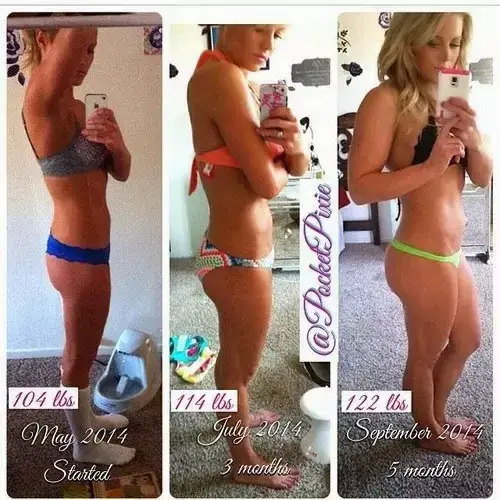












Skip breakfast, eat within an eight-hour window, and watch the pounds disappear. Intermittent fasting, especially the popular “16:8” version of time-restricted eating, has attracted millions of followers. Supporters credit it with weight loss, better blood sugar, more energy, and even longer life.
But does when you eat matter as much as how much you eat? Several well-designed clinical trials have now tested exactly that question. The answer is useful for anyone trying to lose weight, whether or not they choose to fast.
Key Takeaways
- Time-restricted eating (TRE) limits eating to a set window each day, such as 8 hours, followed by a 16-hour fast.
- In a 12-month trial published in the New England Journal of Medicine, adding an eating window to a calorie-controlled diet did not produce significantly more weight loss than calorie control alone.
- TRE seems to work mainly because it helps many people naturally eat fewer calories.
- That makes it a perfectly valid strategy if it suits your lifestyle, but not a magic metabolic switch.
- Some people should avoid fasting, including those with a history of eating disorders, people who are pregnant, and some people on diabetes medication.
The Popular Types of Intermittent Fasting
- Time-restricted eating (16:8, 14:10, etc.): Eating all meals within a daily window.
- 5:2 diet: Eating normally five days a week and very little (about 500 to 600 calories) on two days.
- Alternate-day fasting: Alternating normal eating days with very-low-calorie days.
Time-restricted eating is the most popular because it is simple: no counting, just watching the clock.
Why Fasting Was Thought to Be Special
Animal studies in the 2010s, especially work from Dr. Satchidananda Panda at the Salk Institute, showed that mice eating within a restricted window gained less weight and had better metabolic health than mice eating the same calories around the clock. The idea was that aligning eating with the body’s circadian rhythm improves metabolism, and that a longer daily fast encourages the body to burn fat.
The question was whether those benefits would hold up in humans when calories were carefully controlled.
What the Human Trials Found
Weight Loss After 12 Months (Liu et al., NEJM 2022)
| Group | Average weight loss |
|---|---|
| Calorie restriction + eating only 8 a.m. to 4 p.m. | 8.0 kg (17.6 lb) |
| Calorie restriction alone | 6.3 kg (13.9 lb) |
The difference was not statistically significant.
In this study from Nanfang Hospital in China and Tulane University, 139 adults with obesity were assigned to the same calorie targets: 1,500 to 1,800 calories a day for men and 1,200 to 1,500 for women. Half also limited eating to an eight-hour window. After a year, both groups lost similar amounts of weight and saw similar improvements in waist size, body fat, blood pressure, and blood sugar. The authors concluded that calorie restriction explained most of the benefit.
An earlier U.S. trial from the University of California, San Francisco, published in JAMA Internal Medicine in 2020, found similar results. People following a 16:8 schedule without other guidance lost only slightly more weight than a control group eating three meals a day, and the difference was not significant.
Other research suggests that when people use time-restricted eating without counting calories, they often lose weight simply because a shorter eating window cuts out late-night snacking and reduces overall intake.
So, Should You Try It?
The research does not say fasting does not work. It says it works about as well as other ways of eating less. That is actually good news, because it means you can choose the approach that fits your life:
- Fasting may suit you if you are not hungry in the morning, tend to snack late at night, or find it easier to follow a simple time rule than to count calories.
- Fasting may not suit you if you get very hungry, overeat during your eating window, train early in the morning, or find it disrupts family meals.
If you do try it, an earlier window, such as 8 a.m. to 4 p.m. or 9 a.m. to 5 p.m., may align better with your body clock than skipping breakfast and eating late. Our article on why consistent sleep timing matters explains more about circadian rhythms.
Tips for Success, With or Without Fasting

- Prioritize protein at each meal to stay full and protect muscle.
- Fill half your plate with vegetables for volume and fiber.
- Cut back on ultra-processed foods, which make overeating easy. See our guide to eating fewer ultra-processed foods.
- Stay hydrated. Water, black coffee, and plain tea are fine during the fasting period on most plans.
- Keep moving. Exercise helps preserve muscle during weight loss. Even short exercise snacks help.
- Focus on consistency over perfection.
Who should avoid intermittent fasting
- People with a current or past eating disorder
- Pregnant or breastfeeding women
- Children and teens
- People with type 1 diabetes, or anyone taking insulin or sulfonylureas, unless supervised by their doctor
- People with a history of low blood sugar or certain medical conditions
The Bottom Line
Intermittent fasting can be an effective weight loss tool, but the clock is not magic. The best trials show that time-restricted eating works mainly by helping people eat less, and that it performs about the same as traditional calorie control. If an eating window makes healthy eating easier for you, it is a great option. If it makes you miserable, there are equally effective paths. The best diet is the one you can stick with. For more strategies, explore our guide to the best ways to lose weight safely and sustainably.
Frequently Asked Questions
Does fasting boost metabolism?
Short fasts do not meaningfully raise metabolism. Most weight loss comes from eating fewer calories.
Will I lose muscle?
Any weight loss can include some muscle loss. Eating enough protein and doing strength training helps protect it.
Can I drink coffee while fasting?
Black coffee and plain tea are generally fine. Adding milk, cream, or sugar adds calories.
Is a 16:8 schedule safe long-term?
For most healthy adults it appears safe. Long-term heart health research is still developing, so focus on overall diet quality.
Sources
- Liu D, Huang Y, Huang C, et al. Calorie Restriction with or without Time-Restricted Eating in Weight Loss. New England Journal of Medicine, 2022.
- Lowe DA, Wu N, Rohdin-Bibby L, et al. Effects of Time-Restricted Eating on Weight Loss and Other Metabolic Parameters in Women and Men With Overweight and Obesity: The TREAT Randomized Clinical Trial. JAMA Internal Medicine, 2020.
- Laferrère B, Panda S. Calorie and Time Restriction in Weight Loss. New England Journal of Medicine, 2022.
This article is for educational purposes and is not medical advice. Talk to your doctor before starting a fasting plan, especially if you take medications or have a health condition.