











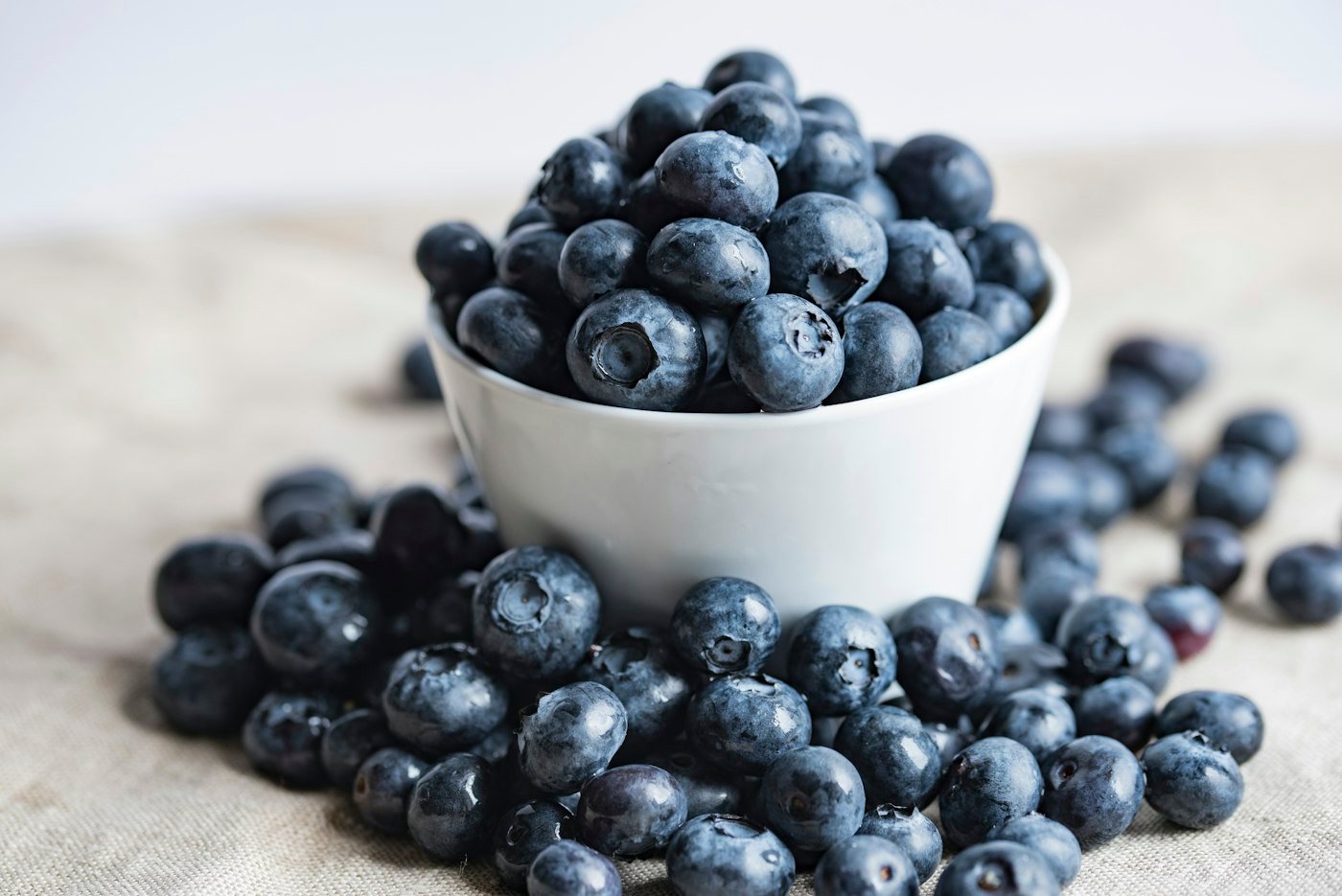
Native American tribes called them “star berries” because of the five-pointed star shape on each berry’s blossom end. Blueberries were dried for winter, used in medicines, and believed to be a gift from the Great Spirit during times of hunger. Wild blueberries are one of the few fruits native to North America, and they have been nourishing people on this continent for thousands of years.
Modern science agrees these little berries are special. Packed with deep blue anthocyanins, blueberries are among the most-studied foods for brain and heart health.
Key Takeaways
- Blueberries are rich in anthocyanins, plant pigments with powerful antioxidant and anti-inflammatory effects.
- In the Nurses’ Health Study, women who ate the most blueberries and strawberries delayed cognitive aging by up to 2.5 years.
- Another study of more than 93,000 young and middle-aged women found eating three or more servings of blueberries and strawberries per week was linked with a 32% lower risk of heart attack.
- A 2026 pilot study found blueberries changed gut microbial genes linked to mood-regulating brain chemicals in older adults.
The Power of Anthocyanins
The deep blue-purple color of blueberries comes from anthocyanins, a family of flavonoids that plants use to protect themselves from sun and stress. In our bodies, these compounds:
- Neutralize free radicals that damage cells
- Calm chronic inflammation
- Help blood vessels relax and stay flexible
- Can cross into the brain, where they accumulate in areas linked to learning and memory
- Feed beneficial gut bacteria
Berries for a Sharper Brain
In 2012, Dr. Elizabeth Devore and colleagues at Harvard’s Brigham and Women’s Hospital published an analysis of more than 16,000 women from the Nurses’ Health Study in the Annals of Neurology. Women who ate the most blueberries and strawberries showed slower cognitive decline, delaying brain aging by up to two and a half years.
Smaller clinical trials, including work by Dr. Robert Krikorian at the University of Cincinnati, have found that daily blueberry supplementation improved memory and brain activation in older adults with early memory complaints.
Berries for a Healthy Heart
In 2013, researchers from Harvard and the University of East Anglia published a study in Circulation following more than 93,000 women aged 25 to 42 for 18 years. Those who ate three or more servings of blueberries and strawberries per week had a 32% lower risk of heart attack than those who ate them less than once a month. Clinical trials have also found that daily blueberries can improve blood vessel function and lower blood pressure.
A New Look at Berries and Mood
In October 2026, researchers at the Hebrew SeniorLife Marcus Institute for Aging Research published a small pilot study in The Journal of Nutrition, Health and Aging. Older adults with mild depressive symptoms took blueberry powder (equal to about two cups of fresh berries) or a placebo daily for three months. The blueberry group showed greater reductions in depressive symptoms, though with only 18 participants the difference was not statistically significant. Intriguingly, blueberries changed gut microbial genes, including one involved in producing GABA, a calming brain messenger. It is early research, but it adds to growing interest in the gut-brain connection.
Wild vs. Cultivated Blueberries
Wild (lowbush) blueberries are smaller and contain more anthocyanins per serving than the larger cultivated (highbush) variety. Both are excellent. Frozen blueberries are picked at peak ripeness and keep their nutrients well, making them an affordable year-round option.
Easy Ways to Eat More Blueberries
- Top oatmeal, yogurt, or kefir with a handful.
- Blend frozen blueberries into smoothies.
- Toss them into salads with greens, walnuts, and goat cheese.
- Snack on them straight from the freezer like candy.
- Simmer frozen berries into a quick compote for pancakes.
- Aim for about a cup a day, the amount used in many studies.
Part of a Brain-Healthy Lifestyle
Blueberries shine brightest alongside other brain-supporting habits: extra virgin olive oil, leafy greens, fish, nuts, regular movement, and good sleep. Read about olive oil for longevity, dancing for brain health, and how fermented foods support the gut-brain connection.
The Bottom Line
The “star berries” honored by Native American tribes truly deserve their superfood status. Large studies link blueberries to slower brain aging and fewer heart attacks, and new research is exploring their effects on mood through the gut. Fresh or frozen, a daily handful is one of the simplest and tastiest gifts you can give your body.
Frequently Asked Questions
Are frozen blueberries as healthy as fresh?
Yes. Freezing preserves anthocyanins well, and frozen berries are often more affordable.
Does cooking destroy the benefits?
Some anthocyanins are lost with heat, but cooked blueberries still provide benefits. Mix raw and cooked for variety.
Are blueberry supplements worthwhile?
Whole berries offer fiber and a full range of nutrients. Freeze-dried blueberry powder, used in many studies, is a convenient option.
Sources
- Devore EE, Kang JH, Breteler MM, Grodstein F. Dietary intakes of berries and flavonoids in relation to cognitive decline. Annals of Neurology, 2012.
- Cassidy A, Mukamal KJ, Liu L, et al. High anthocyanin intake is associated with a reduced risk of myocardial infarction in young and middle-aged women. Circulation, 2013.
- ScienceDaily. Eating blueberries every day may have a surprising effect on your mood. October 2026.
This article is for educational purposes and is not a substitute for personalized advice from a qualified health practitioner.





