










Homer called it “liquid gold.” Ancient Greek athletes rubbed it on their skin, Hippocrates prescribed it for dozens of ailments, and Mediterranean grandmothers have poured it generously over vegetables, bread, and beans for thousands of years. Some of the longest-lived people on Earth, in places like Ikaria in Greece and Sardinia in Italy, cook with it every day.
Modern science is catching up with this ancient wisdom. Extra virgin olive oil is turning out to be one of the most powerful anti-aging foods we know, not because of one magic ingredient, but because of how it nourishes the whole body.
Key Takeaways
- A Harvard study following more than 90,000 adults for 28 years found that people who consumed more than half a tablespoon of olive oil daily had lower death rates from heart disease, cancer, and neurodegenerative disease.
- Swapping butter, margarine, or mayonnaise for olive oil was linked with an 8 to 34% lower risk of death.
- Extra virgin olive oil is rich in polyphenols, natural plant compounds that protect cells from oxidative stress and inflammation, two main drivers of aging.
- Quality matters. Look for fresh, cold-pressed extra virgin oil in dark bottles.
What the Research Shows
In 2022, Dr. Marta Guasch-Ferré and colleagues at the Harvard T.H. Chan School of Public Health published a landmark study in the Journal of the American College of Cardiology. They followed 60,582 women and 31,801 men for 28 years, tracking their diets every four years.
More Than 1/2 Tablespoon of Olive Oil a Day vs. Rarely or Never
| Cause of death | Lower risk |
|---|---|
| Neurodegenerative disease (such as Alzheimer’s) | 29% |
| Cardiovascular disease | 19% |
| Respiratory disease | 18% |
| Cancer | 17% |
Source: Guasch-Ferré et al., JACC, 2022.
Just as interesting: when people replaced about 10 grams a day (less than a tablespoon) of butter, margarine, mayonnaise, or dairy fat with olive oil, their risk of death from all causes dropped by 8 to 34%. It is a simple kitchen swap with a remarkable payoff.
These findings echo the famous PREDIMED trial in Spain, where people following a Mediterranean diet enriched with extra virgin olive oil had about 30% fewer heart attacks, strokes, and cardiovascular deaths than those told to follow a low-fat diet.
Why Olive Oil Fights Aging
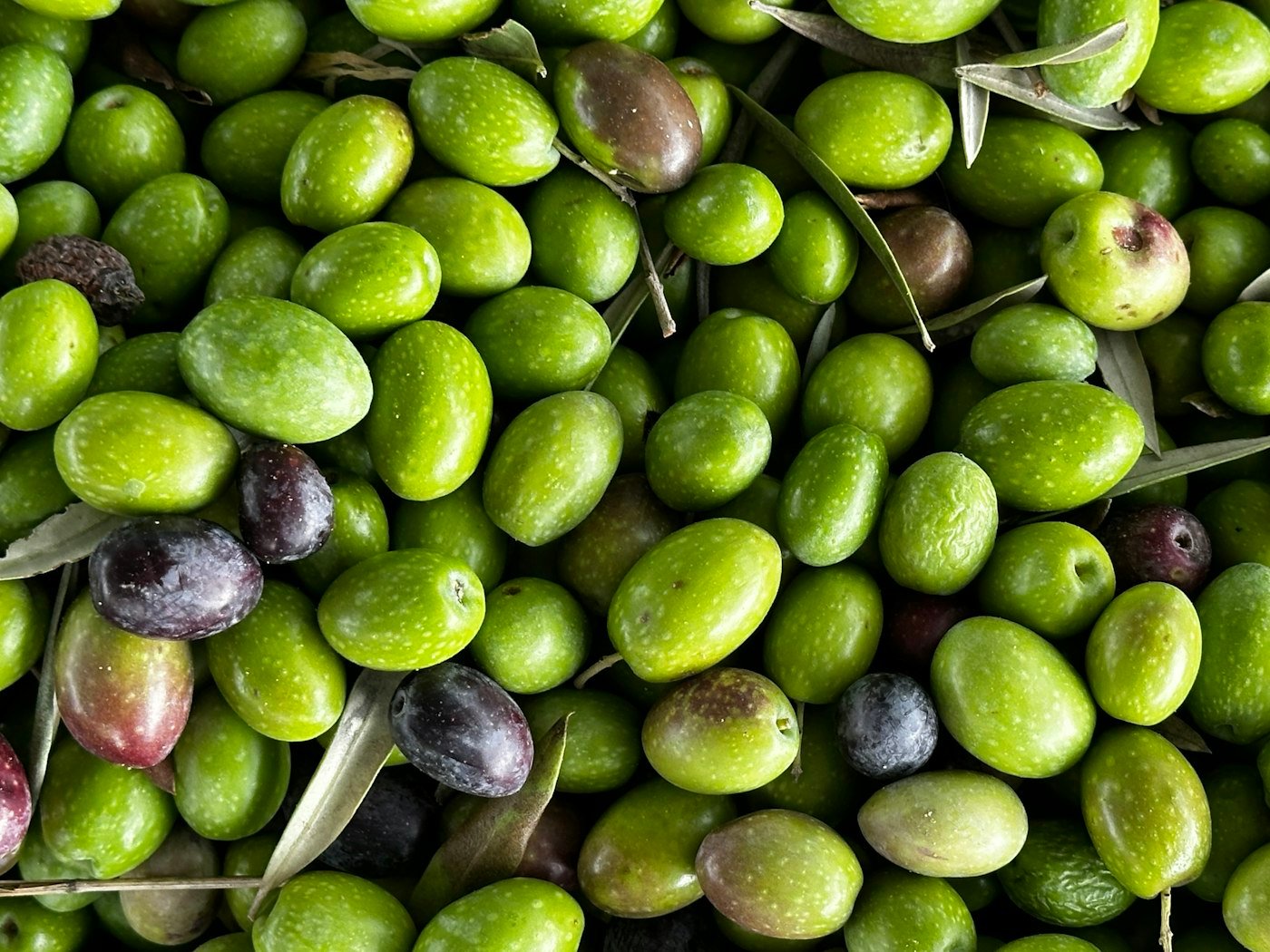
Aging is driven in large part by two processes: oxidative stress, the wear and tear caused by unstable molecules called free radicals, and chronic low-grade inflammation, sometimes called “inflammaging.” Extra virgin olive oil works against both.
- Polyphenols such as hydroxytyrosol and oleuropein are powerful antioxidants that protect cell membranes, blood vessels, and even DNA.
- Oleocanthal, the compound that gives fresh olive oil its peppery throat tickle, has natural anti-inflammatory effects that researchers have compared to a gentle version of ibuprofen.
- Monounsaturated fat (oleic acid) supports healthy cholesterol balance and flexible blood vessels.
- Brain protection. Lab research suggests olive oil polyphenols may help the brain clear the protein deposits linked to Alzheimer’s disease.
- Skin health. The antioxidants and vitamin E in olive oil nourish the skin from the inside out.
How to Choose a Great Olive Oil
- Choose “extra virgin.” It is mechanically pressed without heat or chemicals and keeps the most polyphenols. “Light” and “pure” olive oils are refined and lose much of their goodness.
- Check the harvest date. Fresher is better. Aim to use it within about 18 months of harvest.
- Pick dark glass or tins to protect the oil from light.
- Taste it. A high-polyphenol oil tastes grassy, slightly bitter, and peppery. That bite is a good sign.
- Look for quality seals such as PDO (Protected Designation of Origin) or certification from olive oil councils.
Easy Ways to Enjoy More Olive Oil
- Drizzle it over salads, roasted vegetables, soups, and beans.
- Use it instead of butter on bread or potatoes.
- Cook with it. Extra virgin olive oil is more heat-stable than many people think, thanks to its natural antioxidants, and works well for everyday sautéing.
- Try the Mediterranean habit of a spoonful with breakfast, on toast with tomato, or in a smoothie.
Olive oil is at its best as part of a whole-food diet full of vegetables, legumes, and whole grains. For more on this way of eating, see our guides to foods that support youthful skin and eating fewer ultra-processed foods. For a non-dietary anti-aging approach, read about red light therapy for aging skin.
The Bottom Line
The Mediterranean peoples knew something we are only now proving: a daily drizzle of good olive oil is one of the simplest, most delicious things you can do for a long and healthy life. It protects the heart, the brain, and the cells of the whole body. Treat it as both food and medicine.
Frequently Asked Questions
How much olive oil should I have each day?
Benefits in the Harvard study appeared at just over half a tablespoon a day. In the PREDIMED trial, people used about four tablespoons daily as part of their cooking and meals.
Will olive oil make me gain weight?
It is calorie-dense, so use it to replace other fats rather than adding on top. Studies of Mediterranean diets rich in olive oil have not shown weight gain.
Can I cook with extra virgin olive oil?
Yes. Its natural antioxidants help protect it during everyday cooking such as sautéing and roasting.
Sources
- Guasch-Ferré M, Li Y, Willett WC, et al. Consumption of Olive Oil and Risk of Total and Cause-Specific Mortality Among U.S. Adults. Journal of the American College of Cardiology, 2022. Summary via ScienceDaily.
- Estruch R, Ros E, Salas-Salvadó J, et al. Primary Prevention of Cardiovascular Disease with a Mediterranean Diet Supplemented with Extra-Virgin Olive Oil or Nuts. New England Journal of Medicine, 2018.
- Beauchamp GK, Keast RSJ, Morel D, et al. Ibuprofen-like activity in extra-virgin olive oil. Nature, 2005.
This article is for educational purposes and is not a substitute for personalized advice from a qualified health practitioner.





