











Most people trying to lose weight focus on willpower: resisting the cookies, skipping the chips, saying no to dessert. But willpower is tiring, and it tends to run out at the end of a long day. There is a better way.
Behavioral research shows that our surroundings strongly influence what and how much we eat, often without our noticing. Change your environment, and healthy choices become the easy, natural default. This tutorial walks you through a complete kitchen reset in seven steps.
Key Takeaways
- We tend to eat what we see and what is easy to reach.
- Stocking your kitchen with whole foods and making them visible makes healthy eating the default.
- Simple changes like smaller plates, a fruit bowl, and prepped vegetables reduce mindless eating.
- A whole-food pantry saves money and time while supporting natural weight loss.
Step 1: Clear the Counters
Look at your kitchen counters right now. What do you see? We tend to eat what we see, so what sits on your counter quietly shapes your choices all day long.
Do this: Put away cereal boxes, cookies, chips, and sugary drinks. Replace them with a bowl of fresh fruit, a basket of tomatoes, onions, and garlic, and a pitcher of water.
Step 2: Rethink Your Pantry
Go through your pantry shelf by shelf. Move highly processed snacks, sugary cereals, and refined products to a high or hard-to-reach shelf, or gradually phase them out. Learn why this matters in our guide to ultra-processed foods.
Your Whole-Food Pantry Shopping List
| Category | Stock up on |
|---|---|
| Whole grains | Rolled oats, brown rice, quinoa, barley, whole-wheat pasta |
| Legumes | Dried or canned beans, lentils, chickpeas |
| Nuts and seeds | Almonds, walnuts, pumpkin seeds, chia, flax |
| Healthy fats | Extra virgin olive oil, avocado, nut butters (no added sugar) |
| Flavor boosters | Herbs, spices, garlic, ginger, vinegar, mustard, lemon |
| Canned staples | Tomatoes, sardines, salmon, beans (low sodium) |
| Teas | Green, peppermint, ginger, hibiscus |
Step 3: Make Glass Jars Your Friend
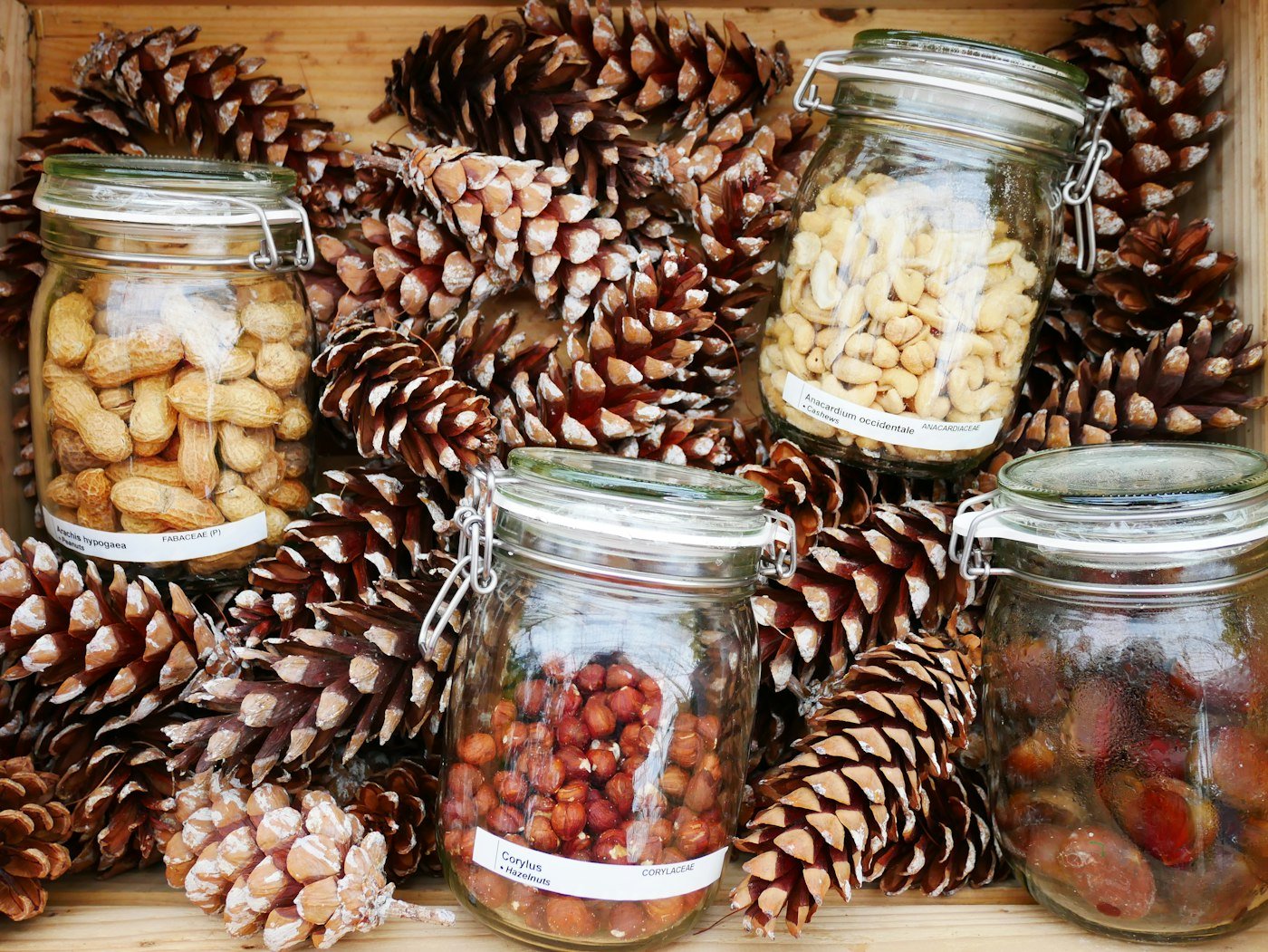
Store beans, grains, nuts, and seeds in clear glass jars at eye level. When you can see healthy foods, you are more likely to use them. Glass also keeps food fresh and avoids plastic packaging.
Step 4: Reorganize Your Refrigerator
- Put produce front and center at eye level, not hidden in the crisper drawer.
- Wash and chop vegetables as soon as you get home: carrots, peppers, cucumbers, celery, and snap peas, ready to grab.
- Keep a container of cooked grains and beans for quick meals.
- Stock protein-rich foods like eggs, plain yogurt, kefir, and leftover chicken or fish.
- Add fermented foods like sauerkraut and kimchi. See why in our fermented foods article.
- Move treats to opaque containers on lower shelves.
Step 5: Downsize Your Dishes
Plates have grown larger over the decades, and bigger plates encourage bigger portions. Use 9-to-10-inch dinner plates, smaller bowls, and tall, narrow glasses for anything other than water. This simple swap helps your portions match your body’s needs without feeling deprived. Pair it with our plate method tutorial.
Step 6: Prep Once, Eat All Week
Set aside an hour or two on the weekend to:
- Cook a big pot of grains and a batch of beans or lentils.
- Roast two trays of vegetables.
- Make a jar of olive oil and vinegar dressing.
- Wash and portion fruit and snack vegetables.
- Prepare a protein such as baked chicken, boiled eggs, or tofu.
With these building blocks ready, you can assemble healthy bowls, salads, and plates in minutes.
Step 7: Create a Calm Eating Space
Make your table a place for eating, not working or scrolling. Clear away clutter, add a plant or flowers, and keep phones out of reach during meals. A calm, distraction-free setting supports mindful eating, which research links with healthier weight. Learn how in Slow Down and Savor.
Your Kitchen Reset Checklist
- ☐ Counters cleared, fruit bowl out
- ☐ Processed snacks moved out of sight
- ☐ Whole-food staples stocked in clear jars
- ☐ Produce washed, chopped, and at eye level
- ☐ Smaller plates and bowls in use
- ☐ Weekly prep session scheduled
- ☐ Phone-free eating space created
The Bottom Line
Lasting weight loss is easier when your environment works for you instead of against you. By resetting your kitchen to make whole, nourishing foods visible and convenient, you let healthy habits become natural and automatic. Start with one step this week, and build from there. For more ideas, explore our 50 strategies for easy weight loss.
Frequently Asked Questions
Do I have to throw away all my snacks?
No. Simply moving treats out of sight and replacing them gradually is enough to make a difference.
What if my family isn’t on board?
Create a designated shelf for your foods and lead by example. Prepped fruit and vegetables often win everyone over.
Is eating whole foods more expensive?
Beans, lentils, oats, rice, frozen vegetables, and seasonal produce are among the most affordable foods available.
Sources
- Hollands GJ, Shemilt I, Marteau TM, et al. Portion, package or tableware size for changing selection and consumption of food, alcohol and tobacco. Cochrane Database of Systematic Reviews, 2015.
- Harvard T.H. Chan School of Public Health. Healthy Eating Plate.
This article is for educational purposes and is not a substitute for personalized advice from a qualified health practitioner.