












Protein has had its moment in the spotlight for years. Now a humbler nutrient is having its turn. On TikTok and Instagram, “fibermaxxing” encourages people to pack as much fiber as possible into their meals: chia seeds in everything, beans at breakfast, mountains of berries.
Nutrition experts are, for once, mostly cheering. That is because Americans are deeply short on fiber, and the health benefits of eating more are among the best-documented in nutrition science. But there is a right way and a wrong way to do it. Here is what you need to know.
Key Takeaways
- More than 95% of Americans fall short of recommended fiber intake.
- Adults generally need about 22 to 34 grams a day, depending on age and sex.
- A major Lancet review found people who ate the most fiber had 15 to 30% lower rates of death, heart disease, stroke, type 2 diabetes, and colorectal cancer.
- The best sources are beans, lentils, whole grains, vegetables, fruits, nuts, and seeds.
- Going from low to very high fiber too quickly can cause bloating and discomfort. Increase gradually and drink water.
What Is Fiber, Exactly?
Dietary fiber is the part of plant foods your body cannot digest. Instead of being absorbed in the small intestine, it travels to the colon, where it does some of its most important work. There are two main types:
- Soluble fiber dissolves in water to form a gel. Found in oats, barley, beans, apples, and psyllium, it helps lower cholesterol and slows the rise in blood sugar after meals.
- Insoluble fiber adds bulk and helps food move through the gut. Found in wheat bran, whole grains, nuts, and vegetable skins, it helps prevent constipation.
Many fibers are also prebiotics, meaning they feed the beneficial bacteria in your gut. Those bacteria ferment fiber into short-chain fatty acids such as butyrate, which nourish the cells lining the colon and help regulate inflammation.
Why Fiber Matters So Much
In 2019, researchers from the University of Otago in New Zealand, commissioned by the World Health Organization, published a landmark review in The Lancet. They analyzed 185 observational studies and 58 clinical trials. People who ate the most fiber had a 15 to 30% lower risk of:
- Death from any cause
- Coronary heart disease and stroke
- Type 2 diabetes
- Colorectal cancer
Clinical trials in the same review showed that higher fiber intake also lowered body weight, blood pressure, and cholesterol. The greatest benefits were seen at about 25 to 29 grams a day, with hints of further benefit above that.
How Much Do You Need?
Recommended Daily Fiber for Adults
| Age | Women | Men |
|---|---|---|
| 19 to 30 | 28 g | 34 g |
| 31 to 50 | 25 g | 31 g |
| 51 and older | 22 g | 28 g |
Based on the Dietary Guidelines for Americans.
Most Americans eat only about half of this. A big reason is the dominance of ultra-processed foods, which make up more than half of the calories in a typical American diet and are usually stripped of fiber. Read our guide to eating fewer ultra-processed foods for more on that connection.
The Best High-Fiber Foods
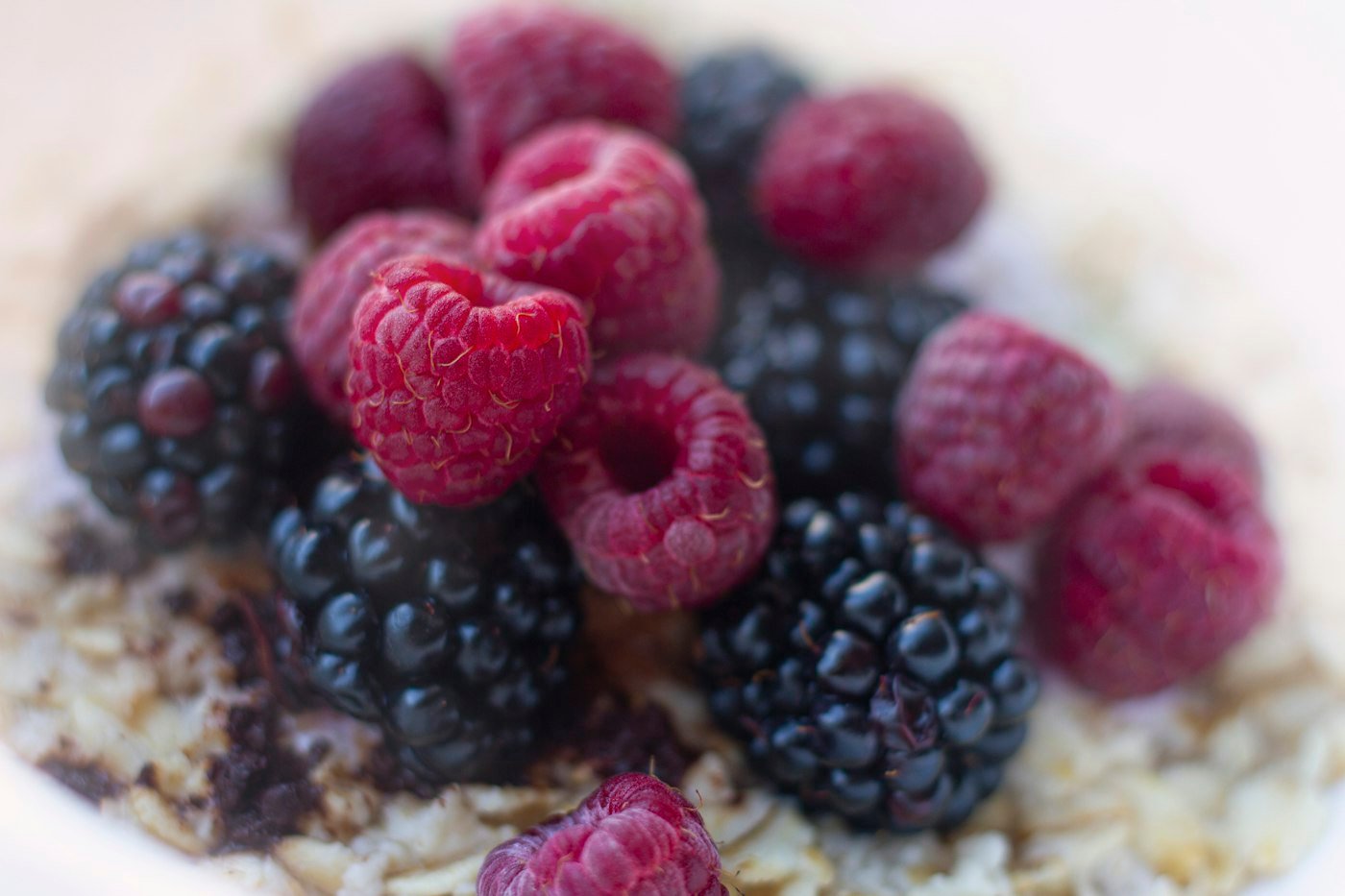
Fiber All-Stars (approximate)
| Food | Serving | Fiber |
|---|---|---|
| Lentils, cooked | 1 cup | 15 g |
| Black beans, cooked | 1 cup | 15 g |
| Chia seeds | 2 tablespoons | 10 g |
| Raspberries | 1 cup | 8 g |
| Pear, with skin | 1 medium | 5 to 6 g |
| Broccoli, cooked | 1 cup | 5 g |
| Avocado | 1/2 fruit | 5 g |
| Rolled oats, dry | 1/2 cup | 4 g |
| Almonds | 1 ounce | 3.5 g |
Values based on USDA FoodData Central; amounts vary by brand and preparation.
Easy ways to “fibermax” sensibly
- Add a spoonful of chia or ground flaxseed to oatmeal, yogurt, or smoothies.
- Toss a can of rinsed beans or lentils into soups, salads, and pasta sauces.
- Swap white bread, rice, and pasta for whole-grain versions.
- Keep the skins on potatoes, apples, and pears.
- Snack on fruit, nuts, or vegetables with hummus.
- Aim to include a plant food at every meal and snack.
Can You Overdo It?
Some influencers promote 50, 60, or even 70+ grams a day. Experts point out there is no documented extra benefit from doubling or tripling recommended amounts, and jumping up fast can cause problems:
- Gas, bloating, and cramps, especially if you increase quickly.
- Constipation, if you do not drink enough water.
- Reduced absorption of some minerals and medications at very high intakes. Take medications at least an hour or two apart from fiber supplements.
Increase your fiber by about 5 grams a week, drink plenty of fluids, and give your gut a couple of weeks to adjust. If you have Crohn’s disease, a history of bowel obstruction, recent intestinal surgery, or gastroparesis, talk to your doctor before making big changes.
Food First, Supplements Second
Fiber supplements like psyllium can help, especially for constipation or cholesterol. But whole foods deliver a variety of fiber types plus vitamins, minerals, and protective plant compounds that pills and powders cannot match. Fiber is also central to a healthy gut. See our article on how to reset your gut health with small lifestyle changes, and our guide to natural remedies for constipation.
The Bottom Line
Fibermaxxing is one of the rare social media food trends built on solid science. Most of us would benefit from eating considerably more fiber, and the payoff could include a healthier heart, steadier blood sugar, better digestion, and a lower risk of colorectal cancer. Aim to reach the recommended amount through beans, whole grains, fruits, vegetables, nuts, and seeds. Increase gradually, drink water, and remember that more is not always better.
Frequently Asked Questions
Does fiber help with weight loss?
Fiber helps you feel full on fewer calories and is linked to lower body weight in studies. It is a helpful tool, not a magic bullet.
Is juice a good source of fiber?
No. Juicing removes most of the fiber. Whole fruits and vegetables are much better sources.
How do I know if I’m getting enough?
A food-tracking app for a few days can give you a quick estimate. Regular, comfortable bowel movements are also a helpful sign.
Are “net carbs” related to fiber?
Yes. Net carbs subtract fiber from total carbohydrates. High-fiber carbohydrate foods are generally healthy choices even on lower-carb diets.
Sources
- Reynolds A, Mann J, Cummings J, et al. Carbohydrate quality and human health: a series of systematic reviews and meta-analyses. The Lancet, 2019.
- University of Colorado Anschutz. Can a “fibermaxxing” social media trend reverse America’s abysmal intake? January 2026.
- U.S. Department of Agriculture. Dietary Guidelines for Americans.
- U.S. Department of Agriculture. FoodData Central.
This article is for educational purposes and is not medical or dietary advice. Talk to your doctor or a registered dietitian before making major diet changes, especially if you have a digestive condition.





