










Nuts are some of the oldest foods people have ever gathered. Archaeologists have found cracked nutshells and stone tools at sites tens of thousands of years old. In Ayurveda, soaked almonds eaten in the morning are a time-honored tonic for strength and a clear mind. Traditional Chinese Medicine has long valued walnuts for nourishing the kidneys and the brain, and around the Mediterranean, a handful of almonds or hazelnuts has always been part of everyday eating.
For a while, modern nutrition advice pushed nuts aside as “too fatty.” Then researchers started following large groups of people for decades, and the results were hard to ignore. Today, nuts stand out as one of the most consistently protective foods in nutrition science. Here is what the research shows, and how to make a daily handful a simple habit.
Key Takeaways
- In a Harvard study of nearly 119,000 adults, people who ate a one-ounce serving of nuts every day were 20% less likely to die during the study than those who ate none.
- A review of 20 long-term studies covering more than 800,000 people linked about 28 grams of nuts a day (a small handful) with a 22% lower risk of early death and a 29% lower risk of coronary heart disease.
- In the PREDIMED trial in Spain, a Mediterranean diet with a daily serving of mixed nuts was linked to a 28% lower rate of heart attacks, strokes, and heart-related deaths.
- Nuts deliver healthy fats, fiber, plant protein, magnesium, vitamin E, and polyphenols in one small package.
- Plain, unsalted, raw or dry-roasted nuts are the best everyday choice.
What Makes Nuts So Nourishing
A small handful of nuts packs a remarkable range of nutrients that work together:
- Healthy fats. Most of the fat in nuts is unsaturated. Walnuts are especially rich in alpha-linolenic acid, a plant omega-3.
- Fiber. Nuts help feed your gut bacteria and slow digestion. (If you are working on your fiber intake, see our guide to getting more fiber the smart way.)
- Minerals. Almonds and cashews are good sources of magnesium, a mineral many people fall short on. Our article on magnesium-rich foods explains why it matters.
- Vitamin E and polyphenols. These antioxidants help protect cells and blood vessels from oxidative stress.
- Plant protein and arginine. Arginine helps the body make nitric oxide, which keeps blood vessels relaxed and flexible.
Together, these nutrients appear to support healthier cholesterol levels, calmer inflammation, and steadier blood sugar, which may explain why nuts show up again and again in research on long, healthy lives.
The Research: Three Landmark Studies
1. The Harvard cohorts: a daily handful and a longer life
In 2013, researchers led by Ying Bao of Brigham and Women’s Hospital and Harvard Medical School published a major analysis in the New England Journal of Medicine. They followed 76,464 women in the Nurses’ Health Study and 42,498 men in the Health Professionals Follow-up Study, tracking their diets and health over about three million person-years.
The more often people ate nuts, the lower their risk of dying during the study. Compared with people who never ate nuts, those who ate them less than once a week had a 7% lower death rate, and those who ate a one-ounce serving seven or more times a week had a 20% lower rate. Nut eaters were less likely to die from cancer, heart disease, and respiratory disease.
To be fair, nut lovers in the study also tended to smoke less and exercise more, and the research was funded in part by a tree nut organization. The researchers adjusted for these lifestyle factors, and the link held.
2. A worldwide review: more than 800,000 people
In 2016, Dagfinn Aune and colleagues at Imperial College London pooled data from 20 long-term studies involving 819,448 people across the world, publishing their findings in BMC Medicine. Eating about 28 grams of nuts a day, roughly a handful, was linked to:
- a 29% lower risk of coronary heart disease
- a 21% lower risk of cardiovascular disease
- a 15% lower risk of cancer
- a 22% lower risk of early death from any cause
The team estimated that low nut intake may have contributed to millions of deaths worldwide in a single year. Because these were observational studies, they show strong associations rather than proof, but the consistency across countries and populations is striking.
3. PREDIMED: putting nuts to the test
The strongest evidence comes from a randomized trial. In PREDIMED, 7,447 Spanish adults at high risk of heart disease were assigned to one of three diets: a Mediterranean diet with extra virgin olive oil, a Mediterranean diet with a daily serving of mixed walnuts, almonds, and hazelnuts, or a lower-fat control diet. Over a median of 4.8 years, the nut group had a 28% lower rate of heart attacks, strokes, and cardiovascular deaths than the control group (hazard ratio 0.72), according to the corrected results published in 2018. The olive oil group did similarly well, as we described in our article on olive oil and longevity.
Nuts and Health: The Evidence at a Glance
| Study | Who was studied | Key result |
|---|---|---|
| Bao et al., NEJM, 2013 | 118,962 U.S. nurses and health professionals | Daily nut eaters: 20% lower death rate |
| Aune et al., BMC Medicine, 2016 | 819,448 people in 20 cohort studies | 28 g/day: 29% lower heart disease, 22% lower early death |
| PREDIMED, NEJM, 2018 | 7,447 Spanish adults at high heart risk | Mediterranean diet plus nuts: 28% fewer major cardiovascular events |
Sources: New England Journal of Medicine; BMC Medicine; American College of Cardiology summary of PREDIMED.
Which Nuts Are Best?
The honest answer: the ones you enjoy and will eat regularly. Each has its own strengths:
- Walnuts: the richest in plant omega-3 fats.
- Almonds: high in vitamin E, calcium, and magnesium.
- Pistachios: rich in lutein and other eye-friendly antioxidants, and slower to eat in the shell.
- Hazelnuts and pecans: loaded with polyphenols.
- Peanuts: technically legumes, but they were counted alongside tree nuts in the Harvard research and are an affordable option.
A rotating mix gives you the widest range of nutrients. Nuts pair beautifully with other longevity foods, like the beans and lentils we covered in our guide to legumes.
How to Eat a Handful a Day
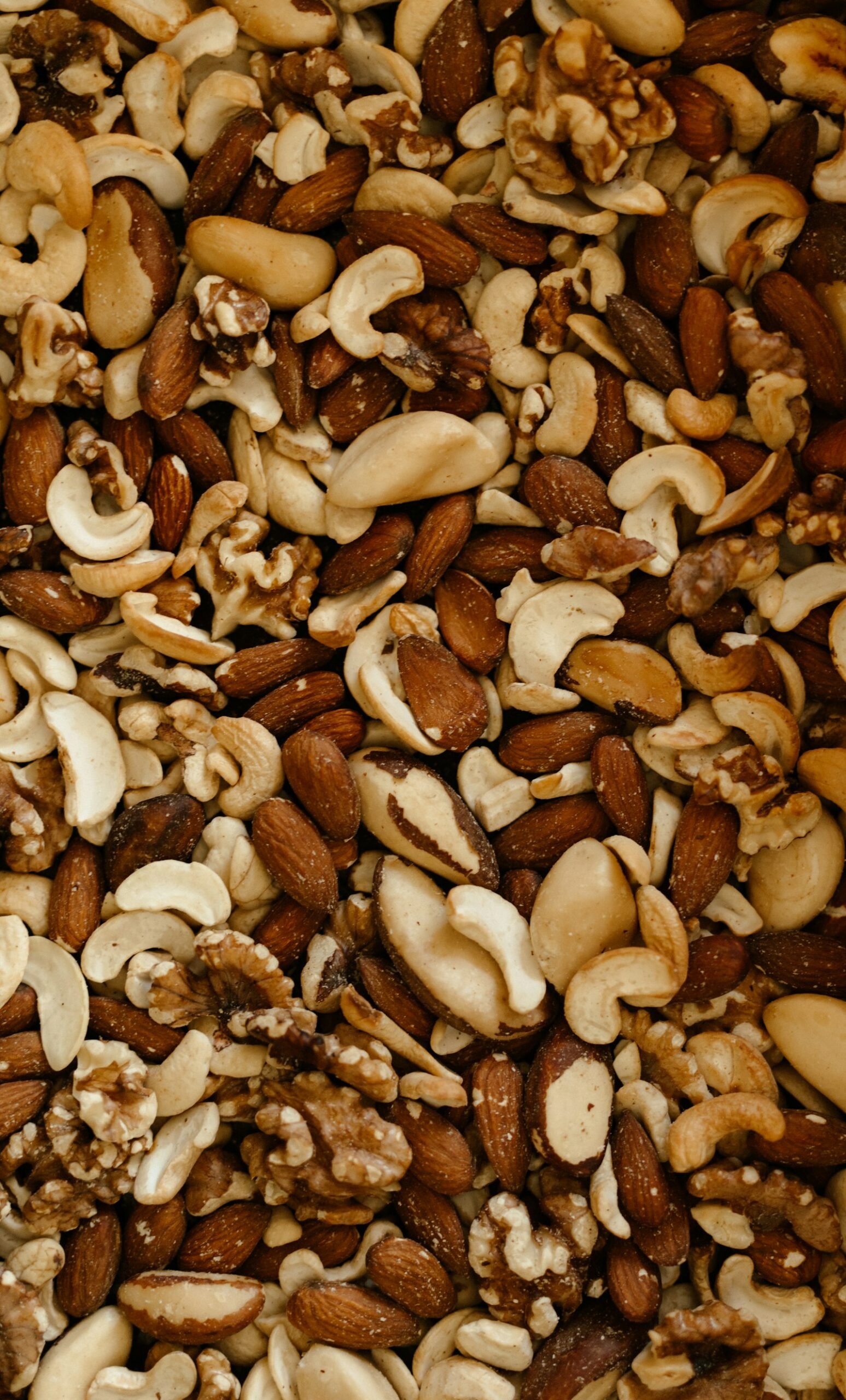
- Know your portion. One ounce (about 28 grams) is roughly a small handful: about 23 almonds, 14 walnut halves, or 49 pistachios.
- Choose plain nuts. Raw or dry-roasted, unsalted nuts are best. Candied, honey-roasted, or heavily salted versions add sugar and sodium.
- Try the Ayurvedic way. Soak 8 to 10 almonds overnight in water, slip off the skins in the morning, and eat them with breakfast. Many people find soaked nuts easier to digest.
- Swap, don’t just add. Use nuts in place of chips, crackers, or sweets so the extra calories replace less nourishing snacks. Swapping out packaged snacks is one of the easiest ways to cut back on ultra-processed foods.
- Sprinkle them everywhere. Toss chopped walnuts on oatmeal, almonds on salads, pistachios on roasted vegetables, or stir nut butter into a smoothie.
- Store them well. Nut oils can turn rancid. Keep nuts in an airtight container in a cool, dark place, or in the fridge for longer storage.
The Bottom Line
Few foods have as much long-term research behind them as nuts. A daily handful has been linked with lower rates of heart disease, cancer, and early death across hundreds of thousands of people, and a major randomized trial showed real protection for the heart. Traditional cultures have treated nuts as strengthening foods for centuries. Modern science agrees: a small handful a day is one of the easiest, tastiest investments you can make in a longer, healthier life.
Frequently Asked Questions
Won’t nuts make me gain weight?
Nuts are calorie-dense, but they are also filling, and some of their fat is not fully absorbed. In the Harvard study, regular nut eaters actually tended to be leaner. The key is keeping portions to about a handful and using nuts in place of less healthy snacks.
Are roasted nuts as healthy as raw?
Dry-roasted nuts keep most of their benefits. Avoid nuts roasted in extra oil or coated in sugar or lots of salt.
Does nut butter count?
Yes, as long as it is just nuts (and maybe a little salt). About two tablespoons is roughly equal to one serving. Skip brands with added sugar and hydrogenated oils.
What if I have a nut allergy?
Seeds such as pumpkin, sunflower, and hemp seeds provide many of the same nutrients, including healthy fats, magnesium, and protein.
A note on allergies: tree nut and peanut allergies can be severe. If you or a family member has a known nut allergy, avoid nuts entirely and choose seeds instead.
Sources
- Bao Y, et al. Association of Nut Consumption with Total and Cause-Specific Mortality. New England Journal of Medicine, 2013. News release via EurekAlert!; study details via Natural Medicine Journal
- Aune D, et al. Nut consumption and risk of cardiovascular disease, total cancer, all-cause and cause-specific mortality: a systematic review and dose-response meta-analysis of prospective studies. BMC Medicine, 2016. Full text
- Estruch R, et al. Primary Prevention of Cardiovascular Disease with a Mediterranean Diet Supplemented with Extra-Virgin Olive Oil or Nuts. New England Journal of Medicine, 2018. Summary via American College of Cardiology
- BMC On Medicine blog. Wise to go nuts? 2016. blogs.biomedcentral.com
This article is for educational purposes and is not a substitute for personalized advice from a qualified health practitioner.





