







Nearly every healing tradition has treated male vitality as a sign of the health of the whole body. In Ayurveda, vajikarana is one of the eight branches of medicine, devoted to strength, vigor, and reproductive health through food, herbs, and daily habits. Traditional Chinese Medicine links sexual vitality to the energy of the kidneys, which it nourishes with rest, warmth, movement, and balanced eating. Neither tradition treats the problem as separate from the rest of a man’s life.
Modern research has reached a surprisingly similar conclusion. An erection is, at its core, a blood-flow event. It depends on healthy, flexible blood vessels, good nerve signaling, strong pelvic muscles, and balanced hormones. The same things that harm the heart, such as inactivity, excess weight, high blood pressure, and poor diet, also harm erectile function. That means the everyday choices that protect your heart can also help restore vitality.
Key Takeaways
- In a two-year Italian trial published in JAMA, 31% of obese men with erectile dysfunction (ED) regained normal function through weight loss, a healthier diet, and more exercise, compared with about 5% of men given general advice.
- A review of exercise studies found that about 40 minutes of moderate-to-vigorous aerobic exercise, four times a week for six months, helped reduce erectile problems.
- In a randomized trial of 55 men, pelvic floor exercises restored normal erectile function in 40% and improved it in another 35.5%.
- A Harvard study of more than 25,000 men linked flavonoid-rich foods such as blueberries, strawberries, and citrus to a lower risk of developing ED.
- Combining a flavonoid-rich diet with regular exercise was linked to a 21% lower risk.
Why Erections Mirror Your Whole-Body Health
When a man becomes aroused, nerves signal the lining of the blood vessels in the penis, called the endothelium, to release nitric oxide. This gas relaxes the smooth muscle in the vessel walls, so blood can rush in and fill the erectile tissue. Strong pelvic floor muscles then help trap that blood and keep the erection firm.
The arteries in the penis are much narrower than those in the heart. When blood vessels start to stiffen or the endothelium stops making enough nitric oxide, these small vessels often show the effects first. That’s why ED is often seen as an early warning sign of cardiovascular health. It’s also why natural approaches that support blood vessels, such as movement, a plant-rich diet, and a healthy weight, can make a real difference.
What the Research Shows
Lifestyle Change Restored Function for Nearly One in Three
In a landmark trial published in JAMA in 2004, Katherine Esposito and colleagues at the University of Naples studied 110 obese men aged 35 to 55 who had ED but no diabetes or high blood pressure. Half received a detailed program aimed at losing at least 10% of their body weight. It included calorie guidance, personal counseling, and more physical activity, such as walking, swimming, or aerobic games. The other half received general advice on healthy eating and exercise.
After two years, 17 of the 55 men in the lifestyle group, about 31%, had regained normal erectile function, compared with just 3 men in the control group. Weight and body mass index dropped in the lifestyle group, and their erectile function scores rose, while the control group stayed about the same.
The Right Dose of Exercise
In 2018, Helle Gerbild and colleagues reviewed intervention studies on physical activity and erectile function in the journal Sexual Medicine. Looking across 10 studies, they found that physical activity helped men whose ED was linked to inactivity, obesity, high blood pressure, metabolic syndrome, or heart disease. Their recommended dose was supervised aerobic exercise at moderate to vigorous intensity for 40 minutes, four times a week, kept up for six months. That’s about 160 minutes a week, close to the standard guideline for heart health.
Pelvic Floor Training
Most people think of pelvic floor exercises, also called Kegels, as something for women. But men have the same muscles, and two of them, the bulbocavernosus and ischiocavernosus, play a direct role in erections. In a randomized trial published in BJU International in 2005, physiotherapist Grace Dorey taught 55 men with ED of at least six months a program of pelvic floor exercises, supported by biofeedback and lifestyle advice. After six months, 40% had regained normal erectile function and another 35.5% had improved. That’s three out of four men helped by a free, drug-free practice.
Flavonoid-Rich Foods
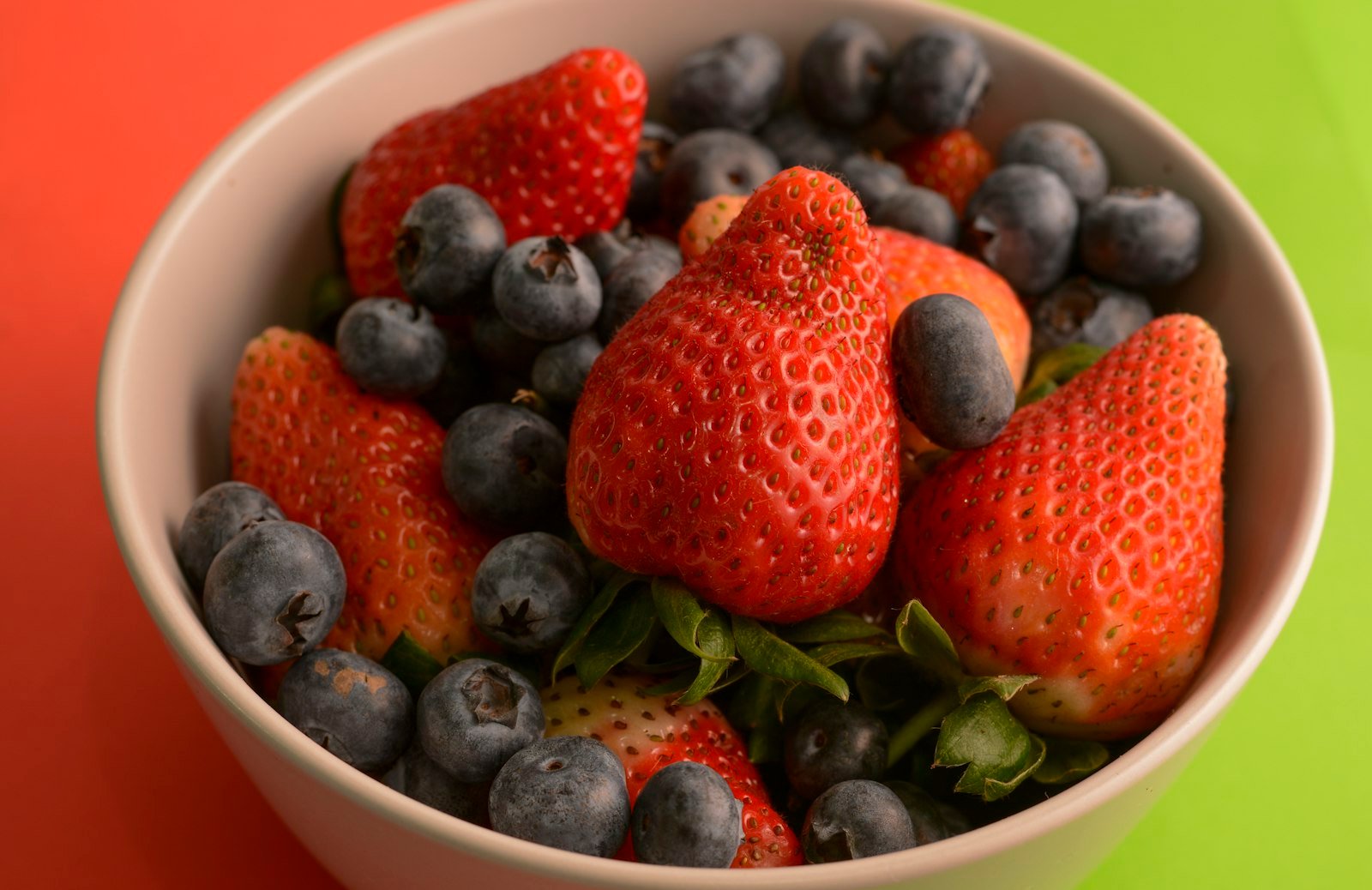
Flavonoids are natural plant compounds that give berries, citrus, and other plants their color. They’re known to support healthy blood vessels. In 2016, Aedín Cassidy of the University of East Anglia and Eric Rimm of Harvard published an analysis in the American Journal of Clinical Nutrition that followed 25,096 men from the Health Professionals Follow-Up Study for 10 years. Men who ate the most anthocyanins, flavanones, and flavones had a roughly 9% to 11% lower risk of developing ED than men who ate the least. The top sources were strawberries, blueberries, red wine, apples and pears, and citrus fruits. Men who ate plenty of these foods and were also physically active had a 21% lower risk.
Natural Approaches to Erectile Health: The Evidence
| Approach | Study | Result |
|---|---|---|
| Weight loss, diet, and exercise | Esposito et al., JAMA, 2004 (110 men, 2 years) | 31% regained normal function vs. about 5% with general advice |
| Aerobic exercise | Gerbild et al., Sexual Medicine, 2018 (review of 10 studies) | 40 minutes, 4 times a week, for 6 months helped reduce ED |
| Pelvic floor exercises | Dorey et al., BJU International, 2005 (55 men) | 40% regained normal function; 35.5% improved |
| Flavonoid-rich foods | Cassidy et al., AJCN, 2016 (25,096 men, 10 years) | 9% to 11% lower risk; 21% lower when combined with exercise |
Sources: JAMA; Sexual Medicine; BJU International; American Journal of Clinical Nutrition.
Foods That Feed Healthy Blood Flow
Beyond berries and citrus, several other foods support the nitric oxide system. Beets and leafy greens are rich in natural nitrates that the body turns into nitric oxide, as we explored in our article on beetroot juice and blood pressure. Cocoa flavanols help keep blood vessels flexible, which is part of why cacao is linked to heart health. And the foods that support the prostate, such as tomatoes, pumpkin seeds, and green tea, fit the same plant-rich pattern.
Your Natural Vitality Plan: 7 Steps
- Move your body most days. Work up to about 40 minutes of brisk walking, cycling, swimming, or jogging four times a week. Build up gradually if you’re starting from scratch.
- Add strength work. Two short sessions a week build muscle, improve insulin sensitivity, and support healthy testosterone levels. Our guide to strength training for a longer life shows how little you need.
- Train your pelvic floor. Find the right muscles by imagining you’re stopping the flow of urine or holding in gas. Squeeze and lift for a count of three to five, then fully relax. Do sets of 10 to 15, two or three times a day, lying down, sitting, and standing. Be patient: Dorey’s program ran for six months.
- Eat the rainbow every day. Aim for a daily serving of berries, plus citrus, apples or pears, leafy greens, and beets. Blueberries are an easy start.
- Move toward a healthy weight. In the JAMA trial, the goal was to lose about 10% of body weight. Even modest weight loss helps blood vessels and hormones.
- Protect your sleep and manage stress. Both Ayurveda and TCM stress rest as the foundation of vitality. Poor sleep and chronic stress raise stress hormones and can interfere with arousal.
- Limit alcohol and avoid smoking. Smoking damages the endothelium directly, and heavy drinking dampens nerve signaling.
The Bottom Line
Erectile health is whole-body health. Clinical trials show that moving more, eating a plant-rich diet, reaching a healthy weight, and training the pelvic floor can restore or improve function for many men, often without any extra cost. These steps also protect the heart and blood vessels, so they pay off well beyond the bedroom. Think of them as a foundation that works alongside any care you’re already receiving.
Frequently Asked Questions
How long does it take for lifestyle changes to help?
It depends on the person, but the studies give a guide. The pelvic floor and exercise programs ran for about six months, and the JAMA lifestyle trial lasted two years. Many men notice gradual changes along the way.
Do Kegel exercises really work for men?
Yes. In Dorey’s trial, three out of four men improved or regained normal function. The key is doing them correctly and consistently, and a pelvic floor physiotherapist can help if you’re unsure.
Is red wine good for erectile function?
Red wine was one source of flavonoids in the Harvard study, but alcohol can also impair erections. Berries, citrus, and other whole fruits give you the same flavonoids without the downsides.
Can these steps be combined with medical treatment?
Yes. Lifestyle changes support the blood vessels and nerves that any treatment relies on, and they can make other approaches work better.
A note on safety: Because ED can be an early sign of heart or blood vessel problems, it’s worth having your blood pressure, blood sugar, and cholesterol checked. Be cautious with “herbal” sexual-enhancement supplements sold online. The U.S. FDA has repeatedly found some of them secretly contain prescription drug ingredients that can interact dangerously with heart medications such as nitrates.
Sources
- Esposito K, Giugliano F, Di Palo C, et al. Effect of lifestyle changes on erectile dysfunction in obese men: a randomized controlled trial. JAMA. 2004;291(24):2978-2984. PubMed
- Gerbild H, Larsen CM, Graugaard C, Areskoug Josefsson K. Physical activity to improve erectile function: a systematic review of intervention studies. Sexual Medicine. 2018;6(2):75-89. PubMed
- Dorey G, Speakman MJ, Feneley RC, et al. Pelvic floor exercises for erectile dysfunction. BJU International. 2005;96(4):595-597. PubMed
- Cassidy A, Franz M, Rimm EB. Dietary flavonoid intake and incidence of erectile dysfunction. American Journal of Clinical Nutrition. 2016. University of East Anglia repository
- NutraIngredients. Wine and tea may decrease risk of erectile dysfunction: study. 2016. NutraIngredients
This article is for educational purposes and is not a substitute for personalized advice from a qualified health practitioner.





