









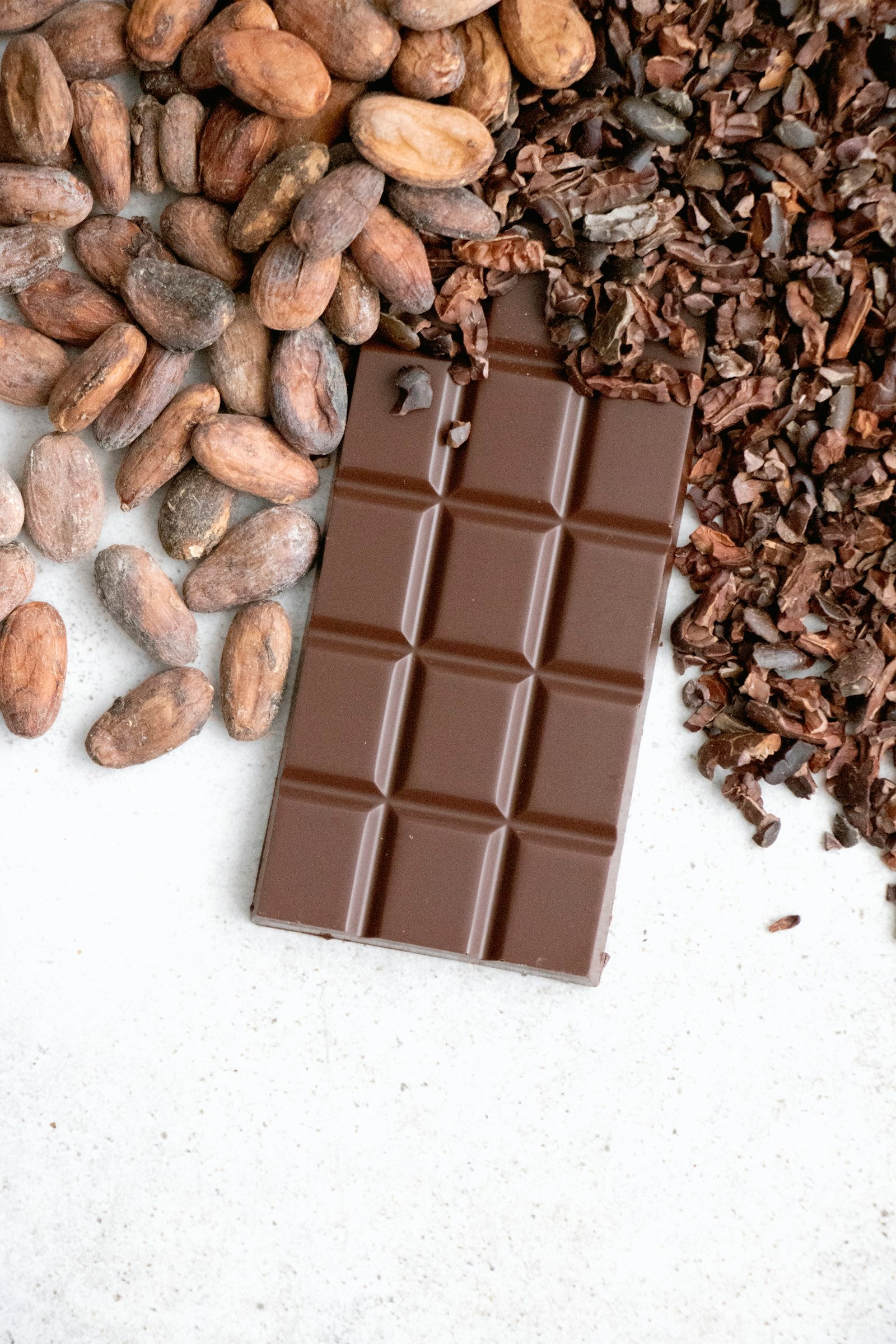
When the Swedish botanist Carl Linnaeus named the cacao tree in the 1700s, he called it Theobroma cacao, which means “food of the gods.” He was following a much older tradition. For the Maya and the Aztecs, cacao was sacred. It was ground into a bitter, frothy drink for ceremonies, offered to the gods, and valued so highly that the beans were used as money.
Today’s candy bars are a long way from that ceremonial drink. But modern research suggests the ancients were onto something. Raw cacao is one of the richest food sources of flavanols, plant compounds that help blood vessels relax. A large clinical trial has now linked them to fewer deaths from heart disease.
Key Takeaways
- Cacao beans are packed with flavanols, especially epicatechin, which helps blood vessels make nitric oxide and stay flexible.
- The Kuna people of Panama’s San Blas islands, who drank several cups of cocoa a day, were known for very low rates of high blood pressure.
- In the COSMOS trial of more than 21,000 older U.S. adults, a daily 500 mg cocoa flavanol supplement was linked to 27% fewer cardiovascular deaths over about 3.6 years.
- A 2025 COSMOS analysis found the cocoa extract lowered hsCRP, a key marker of age-related inflammation, by about 8% per year compared with placebo.
- Processing and sugar strip away much of the benefit, so choose minimally processed cocoa and high-percentage dark chocolate.
The Island People Who Drank Cocoa All Day
Much of the modern interest in cacao began with the Kuna, an Indigenous people living on the San Blas islands off Panama’s Caribbean coast. Researchers led by Dr. Norman Hollenberg of Harvard Medical School noticed something unusual: blood pressure among island-dwelling Kuna did not rise with age the way it does in most populations.
The difference was not in their genes. Kuna who moved to the mainland around Panama City lost their protection. A key lifestyle change stood out. On the islands, people drank about three to four cups of homemade, flavanol-rich cocoa a day. On the mainland, that dropped to about four cups a week.
In a 2006 paper in the Proceedings of the National Academy of Sciences, researchers from UC Davis, Germany, and Harvard reported that island Kuna had more than twice the urinary nitric oxide of mainland Kuna. In separate experiments, they found that epicatechin, a flavanol in cocoa, improved blood flow in people, much like flavanol-rich cocoa itself.
How Cacao Flavanols Help Your Body
Your blood vessels are lined with a thin layer of cells called the endothelium. When it is healthy, it releases nitric oxide, a gas that signals the artery walls to relax and widen. This keeps blood flowing smoothly and pressure in a healthy range. Aging, stress, and poor diet all reduce nitric oxide.
Cocoa flavanols appear to support this system in several ways:
- More nitric oxide: Epicatechin helps the endothelium produce more of it, improving blood flow.
- Gentler blood pressure: A 2017 Cochrane review of 35 trials with 1,804 mostly healthy adults found that cocoa products lowered blood pressure by a small but real amount, about 1.8 mmHg for both the top and bottom numbers, over short periods.
- Calmer inflammation: Chronic, low-grade inflammation, sometimes called “inflammaging,” drives many diseases of later life. Cocoa flavanols seem to quiet some of it.
The COSMOS Trial: Putting Cocoa to the Test
COSMOS (the COcoa Supplement and Multivitamin Outcomes Study) was one of the largest nutrition trials ever run. Researchers at Brigham and Women’s Hospital and Fred Hutchinson Cancer Center enrolled 21,442 older adults: women aged 65 and up and men aged 60 and up. Participants were randomly assigned to take capsules supplying 500 mg of cocoa flavanols a day, or a placebo, for an average of 3.6 years.
The results, published in 2022 in The American Journal of Clinical Nutrition, were encouraging:
- Total cardiovascular events, the main goal, fell by about 10%. This was a promising trend, but it did not reach statistical significance on its own.
- Among people who took their capsules regularly, cardiovascular events fell by about 15%, a significant result.
- Deaths from cardiovascular disease were 27% lower in the cocoa group, also a significant result.
Follow-up studies from the same trial have added more detail. In a 2025 report in Age and Ageing, researchers measured inflammation markers in 598 participants over two years. Levels of hsCRP, a widely used marker of inflammation, fell by about 8.4% per year in the cocoa group compared with placebo. Another COSMOS analysis found no overall boost in thinking skills, but people whose usual diet was lower in quality did show cognitive benefits. In other words, cocoa may help most where the diet has the biggest gaps.
Evidence Snapshot: What Cocoa Flavanols Have Shown
| Study | Who | Finding |
|---|---|---|
| COSMOS, Am J Clin Nutr, 2022 | 21,442 older adults, 3.6 years, 500 mg flavanols/day | 27% fewer cardiovascular deaths; 10% fewer total CVD events (not significant) |
| COSMOS inflammation study, Age and Ageing, 2025 | 598 participants, 2 years | hsCRP fell about 8.4% per year versus placebo |
| Cochrane review, 2017 | 35 trials, 1,804 adults | Blood pressure about 1.8 mmHg lower, short term |
| Schroeter et al., PNAS, 2006 | Kuna people and healthy volunteers | Epicatechin improved blood flow and nitric oxide |
Sources listed below. COSMOS pills and support were donated in part by Mars Edge, which makes cocoa extract products.
Why Your Candy Bar Isn’t the Same Thing
The COSMOS researchers have stressed that their results came from a concentrated cocoa extract, not chocolate. To get 500 mg of flavanols from a typical chocolate bar, you would also take in a lot of sugar, fat, and calories. Three things decide how many flavanols survive:
- Fermentation and roasting: Heavy roasting breaks down flavanols.
- Alkalizing (“Dutch-processing”): This makes cocoa darker and milder but destroys a large share of its flavanols.
- Dilution: Milk chocolate and sweetened cocoa mixes contain far less cacao, with sugar taking its place.
The good news is that you can get closer to the traditional drink at home.
How to Enjoy Cacao the Traditional Way
- Choose natural, non-alkalized cocoa powder. Look for “natural” or “raw cacao” on the label and avoid “processed with alkali.” It will taste more bitter and fruity, which is a good sign.
- Make a simple ceremonial-style drink. Whisk 1 to 2 tablespoons of natural cocoa into hot (not boiling) water or milk. Add a pinch of cinnamon and chili, as the Maya did, and a touch of honey if you like.
- Pick dark chocolate of 70% or higher. One or two squares is a satisfying treat. Brands that list flavanol content on the package make it easier to compare.
- Stir cocoa into everyday foods. Add a spoonful to oatmeal, smoothies, or chili. It pairs well with blueberries, another flavanol-rich superfood.
- Combine it with nuts. Cacao nibs with walnuts or almonds make a crunchy, heart-friendly snack. Our article on a handful of nuts a day explains why.
Cacao works best as part of a whole-food diet. If blood pressure is your focus, it fits nicely alongside other plant medicines like hibiscus tea and garlic.
The Bottom Line
Cacao earned its name as the food of the gods long before scientists measured its flavanols. Today, a major clinical trial links cocoa flavanols to fewer cardiovascular deaths and lower inflammation in older adults, and decades of research show they help blood vessels relax. To enjoy those benefits, go back to cacao’s roots: minimally processed, low in sugar, and rich in flavor. A daily cup of real cocoa or a few squares of dark chocolate can be a pleasure that also supports your heart.
Frequently Asked Questions
How much cocoa do I need to match the COSMOS trial?
COSMOS used 500 mg of cocoa flavanols a day from a supplement. Flavanol content in powders and chocolate varies widely, but a few tablespoons of high-quality natural cocoa can supply a meaningful amount. Some brands now list flavanols on the label.
Is cacao different from cocoa?
The words are often used interchangeably. “Cacao” usually refers to less processed or raw products, while “cocoa” often means roasted powder. What matters most is whether the product is alkalized and how much sugar has been added.
Does dark chocolate raise blood sugar?
High-percentage dark chocolate contains much less sugar than milk chocolate, and its fat and fiber slow digestion. A small portion has only a modest effect on blood sugar for most people.
Can I drink cocoa at night?
Cocoa contains some caffeine and a related stimulant called theobromine. If you are sensitive, enjoy it earlier in the day.
A quick note: Independent testing has found traces of heavy metals such as lead and cadmium in some dark chocolate and cocoa products. Enjoying modest amounts and rotating among brands that publish testing results is a sensible approach, especially during pregnancy and for children.
Sources
- Sesso HD, et al. Effect of cocoa flavanol supplementation for the prevention of cardiovascular disease events: the COSMOS randomized clinical trial. The American Journal of Clinical Nutrition, 2022. https://doi.org/10.1093/ajcn/nqac055
- MedicalResearch.com interview with Howard Sesso on COSMOS cocoa results (2022): https://medicalresearch.com/cosmos-first-large-trial-of-cocoa-supplement-for-heart-disease-and-cancer-prevention/
- Li S, et al. Cocoa extract and inflammaging markers in COSMOS. Age and Ageing, 2025. Summary: https://www.sciencedaily.com/releases/2025/09/250927031221.htm
- Ried K, Fakler P, Stocks NP. Effect of cocoa on blood pressure. Cochrane Database of Systematic Reviews, 2017. https://doi.org/10.1002/14651858.CD008893.pub3
- UC Davis. Heart-healthy compound in chocolate identified (Schroeter et al., PNAS, 2006): https://www.ucdavis.edu/news/heart-healthy-compound-chocolate-identified
- Mass General Brigham. Cocoa extract supplement benefits cognition in older adults with lower diet quality: https://news.massgeneralbrigham.org/en/cocoa-extract-supplement-benefits-cognition-in-older-adults-with-lower-diet-quality
This article is for educational purposes and is not a substitute for personalized advice from a qualified health practitioner.





