











For most of human history, nobody needed to be told to eat a variety of plants. Foragers gathered whatever roots, berries, greens and seeds each season offered, and farming villages grew dozens of crops side by side, flavoring their pots with wild herbs. Variety was simply how people ate.
Modern grocery shopping works differently. Many of us cycle through the same handful of foods every week. A 2016 review in Molecular Metabolism pointed out that roughly three-quarters of the world’s food now comes from just 12 plants and five animal species, even though far more edible plants exist.
That narrowing matters for the trillions of microbes in your gut. A finding from the world’s largest citizen-science microbiome project turned old folk wisdom into a simple target: eat 30 different plants a week. Here is where that number came from and how to reach it.
Key Takeaways
- The American Gut Project, published in mSystems in 2018, found that people who ate more than 30 different plant types per week had more diverse gut microbes than people who ate 10 or fewer.
- In that project, the variety of plants people ate explained more about their gut microbes than labels like “vegan” or “omnivore.”
- Different plants carry different fibers and plant compounds, and different microbes specialize in breaking them down. Variety feeds a wider community.
- Herbs, spices, nuts, seeds, legumes, whole grains, fruits and vegetables all count, so 30 a week is more reachable than it sounds.
- Traditional food cultures, from Japan’s “many foods a day” advice to the Indian thali and the Mediterranean table, built variety into everyday meals long before microbiome science existed.
Where the “30 Plants a Week” Idea Came From
The American Gut Project began as an open, crowdfunded effort led by researchers including Rob Knight and Daniel McDonald, then at the University of California San Diego. Anyone could join by mailing in a stool sample and answering a diet and lifestyle questionnaire. When the team published its first major analysis in mSystems in May 2018, more than 11,000 people had taken part, mostly from the United States, the United Kingdom and Australia.
One of the questions asked participants roughly how many different types of plants they ate in a typical week. Those eating more than 30 types of plants per week had more diverse gut microbial communities than those eating 10 or fewer. Their stool samples also held different mixes of molecules.
The researchers reported something else intriguing. The high-plant eaters carried fewer microbial genes linked to antibiotic resistance. The team suggested low-plant eaters might eat more meat from antibiotic-treated animals or more processed foods, but the study did not test why.
Perhaps the most striking point in the paper was this: the sheer diversity of plants a person ate said more about their gut microbes than whether they called themselves vegan, vegetarian or omnivore. A meat eater who rotates through many vegetables, grains, beans and herbs may share more with a varied plant-based eater than with someone who eats the same three vegetables every week.
Why variety, and not just volume?
Your body cannot break down most dietary fibers on its own. Gut microbes do that work, and each species carries enzymes suited to particular fibers. Hannah Holscher, a University of Illinois nutrition researcher who worked on the diet analysis, explained that because plants differ in the types of fiber they contain, eating many kinds supports a wider range of microbes, giving new weight to the advice to “eat the rainbow.”
That is the difference between simply eating more fiber, which our post on fibermaxxing covers, and eating a wider variety of fiber sources, which is the focus here.
What Other Research Says About Dietary Diversity
The American Gut finding fits a larger body of work. In a 2016 review in Molecular Metabolism, Mark Heiman and Frank Greenway argued that a healthy gut microbiome depends on dietary diversity. Their summary put it simply: the more diverse the diet, the more diverse the microbiome, and the better it can adapt to disruptions. They noted that lower microbial richness is common in obesity, type 2 diabetes and inflammatory bowel disease.
An earlier Nature study of 178 older adults in Ireland, led by Marcus Claesson and Paul O’Toole, found that people in long-term residential care, whose diets tended to be less varied, had significantly less diverse gut microbes than those living in the community. Loss of the community-type microbes went along with greater frailty and higher markers of inflammation. The study could not prove cause and effect, but the pattern was striking.
A 2019 study in Cell Host & Microbe from Abigail Johnson and Dan Knights at the University of Minnesota added a useful twist. Tracking 34 people’s daily meals and stool samples for about 17 days, they found that nutrient totals on labels predicted microbial responses poorly. The specific foods mattered more. Foods that look similar on paper, such as rice and potatoes, could affect microbes differently, which supports counting distinct foods rather than just nutrients.
The Evidence at a Glance
| Study | Who | What they found |
|---|---|---|
| McDonald et al., mSystems, 2018 (American Gut Project) | More than 11,000 citizen scientists, mainly in the US, UK and Australia | Eating more than 30 plant types per week was linked to more diverse gut microbes than eating 10 or fewer, plus fewer antibiotic-resistance genes. Plant variety mattered more than diet labels like vegan. |
| Claesson et al., Nature, 2012 | 178 older adults in Ireland, at home and in care | Those in long-stay care had less diverse microbes than community dwellers; loss of diversity tracked with frailty and inflammation. |
| Johnson et al., Cell Host & Microbe, 2019 | 34 adults with daily food logs and stool samples | Specific foods predicted microbiome changes better than nutrient totals; responses were highly personal. |
| Heiman and Greenway, Molecular Metabolism, 2016 (review) | Summary of human and animal research | Concluded that a healthy, adaptable microbiome depends on a diverse diet, and that shrinking food variety may reduce microbial richness. |
These studies show associations, and scientists are still working out how much microbial diversity improves health on its own. Even so, eating a wide range of whole plants carries little downside and matches nearly every traditional food culture on Earth.
Traditional Kitchens Knew This Already
In 1985, Japan’s government adopted a national nutrition slogan encouraging people to eat 30 different foods each day. The country’s later Dietary Guidelines, introduced in 2000, moved away from the exact number but kept the spirit: build meals from a staple, a main dish and side dishes, and combine vegetables, fruits, beans, fish and dairy. A traditional meal of rice, miso soup, pickles, fish and small vegetable sides can easily hold ten plants, counting the soybeans, seaweed, scallions and sesame.
The Indian thali works the same way: small bowls of dal, vegetable curries, rice or flatbread, yogurt, chutney and pickle on one platter. Ayurveda teaches that a balanced meal should include all six tastes, sweet, sour, salty, bitter, pungent and astringent, which naturally pulls in a wide range of plants and spices. The tempering of cumin, mustard seed, turmeric, curry leaves and asafoetida that starts so many Indian dishes adds five plants before a single vegetable hits the pan.
Mediterranean meals layer vegetables, beans, grains, olives and nuts with oregano, parsley, mint and thyme. A Greek salad, a bowl of lentil soup and a slice of whole-grain bread drizzled with extra virgin olive oil can cover a dozen plants in one sitting.
What Counts Toward Your 30
“Plants” means far more than vegetables. Each type counts once per week, however often you eat it:
- Vegetables and fruits: fresh, frozen or canned all count. Red and green peppers are often counted separately, since different colors carry different plant pigments.
- Legumes: chickpeas, lentils, black beans, kidney beans, peas, edamame. Our guide to beans, lentils and chickpeas explains why they are such a longevity staple.
- Whole grains: oats, brown rice, barley, quinoa, buckwheat, rye, millet.
- Nuts and seeds: almonds, walnuts, pistachios, chia, flax, pumpkin, sunflower and sesame seeds. See why a handful of nuts a day is linked to longer life.
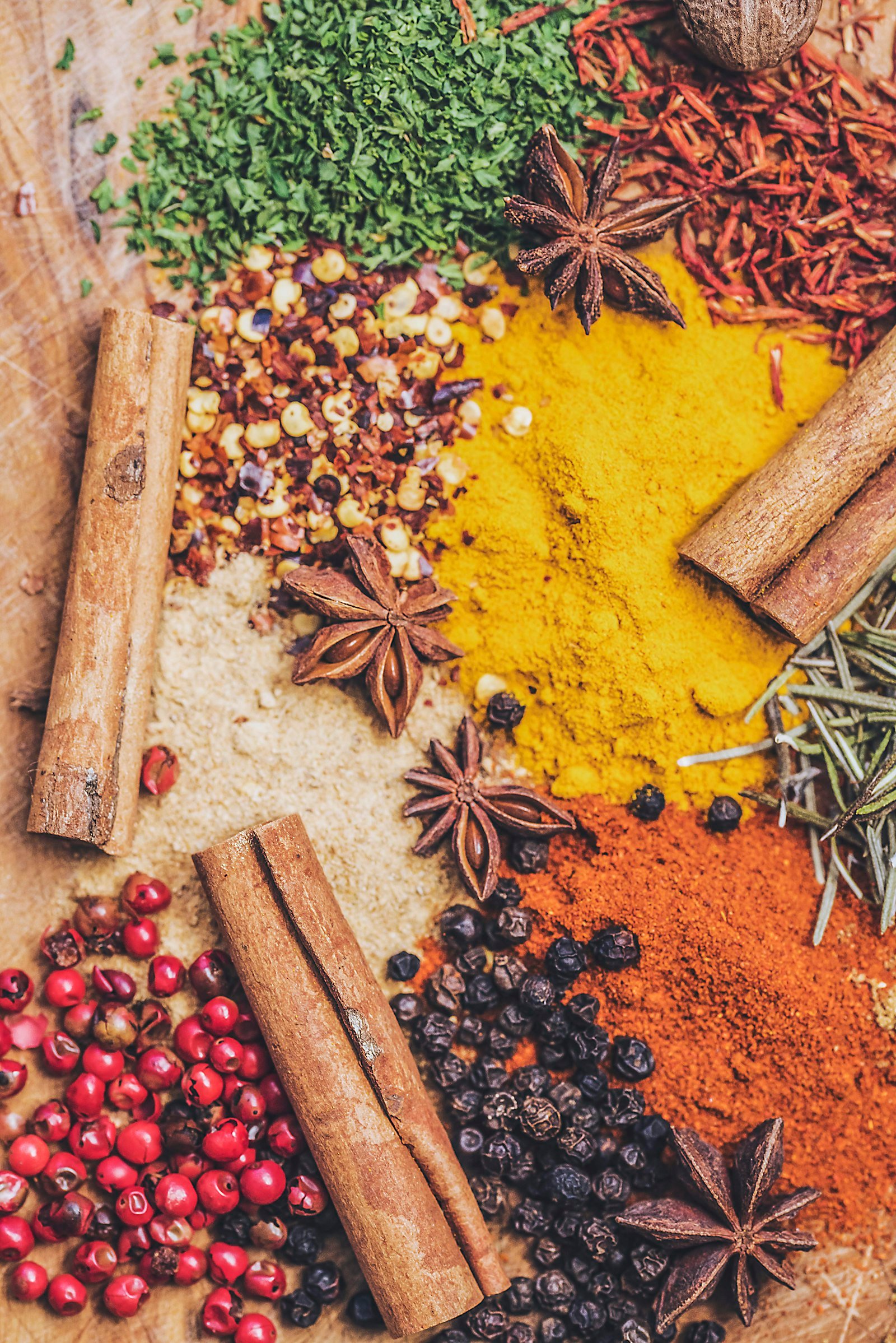
- Herbs and spices: fresh or dried. Because the amounts are small, many people count them as a quarter point each, but they still add plant compounds and flavor.
- Other plant foods: coffee, tea, cacao, olives and seaweed are often counted too, though refined products like white flour, juice and sugar generally are not.
How to Reach 30 Plants a Week
- Take a quick inventory. For a few days, jot down every different plant you eat to find your starting point.
- Buy mixes instead of singles. Mixed greens, frozen stir-fry vegetables or a five-bean blend add several plants in one purchase.
- Build a seed and nut jar. Mix pumpkin, sunflower, sesame, flax and walnuts, and sprinkle a spoonful on oatmeal, salads and soups.
- Start dishes with a spice base. Borrow from Indian cooking and warm cumin, mustard seed and turmeric in oil, or use the Italian trio of onion, garlic and fresh herbs. Fenugreek and cinnamon, covered in our post on blood-sugar spices, are easy additions.
- Swap one plant each time you shop. Trade spinach for chard, or apples for pears, to rotate in new fibers at no extra cost.
- Add a “plus three” to familiar meals. Stir chickpeas, grated carrot and parsley into a soup, or top toast with avocado, tomato and hemp seeds.
- Go slowly. If your diet has been low in plants, add new foods over a few weeks and drink plenty of water so your gut can adjust.
The Bottom Line
The “30 plants a week” target is not a magic number, but it is a helpful nudge grounded in real research. The American Gut Project linked the widest plant variety to the most diverse gut microbes, and other studies tie richer microbial communities to healthier aging. Counting plants is simply a modern way to bring that ancestral habit back to your table, and it pairs naturally with other gut-friendly habits like enjoying fermented foods.
Frequently Asked Questions
Do I have to eat exactly 30 different plants every week?
No. In the American Gut Project, 30 or more types per week was the high end of the scale, compared with 10 or fewer at the low end. Any step toward greater variety is a move in the right direction. Think of 30 as a friendly goal rather than a strict rule.
Is plant variety more important than eating a vegan diet?
In the American Gut data, the variety of plants people ate explained more about their gut microbes than whether they described themselves as vegan or omnivore. You can benefit from plant diversity whatever your eating style.
How quickly can my gut microbes change?
Research reviewed by Heiman and Greenway notes that shifts in gut bacteria can appear within a few days of a diet change. Lasting benefits depend on keeping the habit going.
Safety note: If you have a digestive condition such as IBS or inflammatory bowel disease, or follow a prescribed eating plan like low-FODMAP, add new plants gradually and work with your practitioner so variety supports, rather than upsets, your current approach.
Sources
- McDonald D, Hyde E, et al. American Gut: an Open Platform for Citizen Science Microbiome Research. mSystems, 2018
- UC San Diego Today: What’s in Your Gut? (American Gut Project results, 2018)
- University of Illinois: Scientists highlight impact of diet in world’s largest citizen-science microbiome project
- Heiman ML, Greenway FL. A healthy gastrointestinal microbiome is dependent on dietary diversity. Molecular Metabolism, 2016
- Claesson MJ, et al. Gut microbiota composition correlates with diet and health in the elderly. Nature, 2012
- NOVA: Nutrition labels aren’t enough to predict diet’s effects on gut microbes (Johnson et al., Cell Host & Microbe, 2019)
- Toyo Keizai: Japanese Health Habit, Variety Is the Spice of Life
- FAO: Food-based dietary guidelines, Japan
This article is for educational purposes and is not a substitute for personalized advice from a qualified health practitioner.





