











Long before anyone measured blood sugar in a lab, healers noticed that movement mattered for the “sweet urine” disease. Ancient Ayurvedic texts described prameha, the family of conditions that includes what we now call diabetes, and prescribed vyayama, or vigorous physical work, as part of the remedy alongside diet and herbs. The Sushruta Samhita went so far as to advise patients to take on hard physical labor and long walks. These healers had no idea about insulin receptors or glucose transporters, but they understood something modern science has since confirmed: a body that works its muscles handles sugar far better than one that sits still.
Today, most blood sugar advice focuses on food, and for good reason. But there is a quieter partner in the story that gets far less attention: your muscles. Skeletal muscle is the body’s largest tissue for clearing glucose from the bloodstream after a meal. Every time you build or use it, you are expanding your personal “sugar storage tank.” This article looks at what the research says about strength training and blood sugar, and how to start, even if you have never touched a weight.
Key Takeaways
- Muscle is the body’s main destination for blood sugar after meals, so more active muscle means more places for glucose to go.
- A large meta-analysis of 47 trials found that structured exercise, including resistance training alone, lowered HbA1c in people with type 2 diabetes.
- In the 26-week DARE trial, combining aerobic and resistance training lowered HbA1c by nearly 1 percentage point compared with no exercise.
- In nearly 100,000 women, those doing more than 150 minutes a week of strength and conditioning work had about a 40% lower risk of developing type 2 diabetes.
- You do not need a gym: bodyweight moves, resistance bands, and even a seated calf exercise can help.
Why Muscle Matters So Much for Blood Sugar
When you eat a meal containing carbohydrates, glucose enters your bloodstream. Insulin acts like a key, signaling cells to open their doors and pull that glucose inside. Muscle tissue is the biggest customer. It burns glucose for energy and stores the extra as glycogen, a ready-to-use fuel reserve.
Two things make muscle especially valuable for anyone working on blood sugar balance:
- Contracting muscle can take up glucose with less need for insulin. When muscle works, it activates its own pathway for drawing in glucose. This is one reason exercise helps even when insulin is not working as well as it should.
- Bigger, well-trained muscles offer more storage. Each session drains some of the glycogen stored in muscle, and the muscle then refills that tank by pulling glucose from the blood in the hours afterward. More muscle mass and more frequent use mean a larger, more active “sponge.”
The flip side matters too. Muscle that sits idle contributes surprisingly little. Researchers at the University of Houston noted that during periods of inactivity, skeletal muscle accounts for only about 15% of the body’s after-meal glucose burning. In other words, the potential is there, but it has to be switched on.
What the Research Shows
A 47-Trial Review: Structured Exercise Lowers HbA1c
HbA1c is a blood test that reflects your average blood sugar over the past two to three months. In 2011, a team led by Daniel Umpierre published a meta-analysis in JAMA that pooled 47 randomized trials involving more than 8,500 people with type 2 diabetes. Structured exercise programs lowered HbA1c by 0.67 percentage points on average. Resistance training alone lowered it by 0.57 points, aerobic training by 0.73, and combined programs by 0.51. The authors noted that the three types gave broadly similar results.
Time mattered. Programs with more than 150 minutes of exercise per week lowered HbA1c by 0.89 points, compared with 0.36 points for programs with 150 minutes or less. Simply being told to exercise, without a structured program, did little on its own, though advice combined with dietary guidance did help. The lesson: a consistent, planned routine beats good intentions.
The DARE Trial: Weights Plus Cardio Works Best
The Diabetes Aerobic and Resistance Exercise (DARE) trial, led by Dr. Ronald Sigal and published in the Annals of Internal Medicine in 2007, put 251 previously inactive adults aged 39 to 70 with type 2 diabetes into four groups for 26 weeks: aerobic exercise, resistance training, both, or no exercise. Each exercise session lasted about 45 minutes, three times a week.
Both the aerobic group and the resistance group lowered HbA1c by about 0.5 percentage points. The combined group did best, with a drop of 0.97 points compared with the control group, whose HbA1c did not change. That finding supports what many traditional systems suggest: a well-rounded practice that works the whole body.
Strength Work and Diabetes Prevention
Strength training may also help keep type 2 diabetes from developing in the first place. A Harvard team led by Anders Grøntved followed 99,316 women from the Nurses’ Health Study and Nurses’ Health Study II for about eight years, publishing the results in PLOS Medicine in 2014. Women who did more than 150 minutes a week of muscle-strengthening and conditioning activities (such as weights, resistance exercise, yoga, toning, and stretching) had about a 40% lower risk of type 2 diabetes than women who did none.
The strongest result came from combining approaches. Women who did at least 150 minutes of moderate-to-vigorous aerobic activity plus at least 60 minutes of muscle-strengthening work each week had about one-third the risk of inactive women. Because this was an observational study, it shows a strong link rather than proof of cause, but the pattern lines up with the trial evidence above.
The “Soleus Push-Up”: A Tiny Muscle With a Big Effect
Even small muscles can make a difference when used the right way. In a 2022 study in iScience, physiologist Marc Hamilton and colleagues studied the soleus, a deep calf muscle built for endurance. Volunteers performed a seated “soleus push-up,” raising and lowering their heels while sitting. During a glucose drink test, this simple movement led to 52% less rise in blood sugar after the drink and 60% less insulin needed. The studies were small (10 to 15 participants), so larger trials are needed, but the idea is encouraging for anyone who sits for long periods.
The Evidence at a Glance
| Study | Who Was Studied | Key Finding |
|---|---|---|
| Umpierre et al., JAMA 2011 | 47 trials, 8,538 adults with type 2 diabetes | Resistance training lowered HbA1c by 0.57 points; over 150 min/week lowered it by 0.89 |
| Sigal et al. (DARE), Annals of Internal Medicine 2007 | 251 inactive adults with type 2 diabetes, 26 weeks | Aerobic plus resistance training lowered HbA1c by 0.97 points vs. no exercise |
| Grøntved et al., PLOS Medicine 2014 | 99,316 women followed about 8 years | Over 150 min/week of strength and conditioning work linked to about 40% lower diabetes risk |
| Hamilton et al., iScience 2022 | Small lab studies (10 to 15 adults) | Seated soleus push-ups cut the post-drink glucose rise by 52% and insulin by 60% |
How to Start Strength Training for Better Blood Sugar
The good news is that the benefits begin with modest effort. Here is a simple, practical path.
Step 1: Begin With Your Own Body Weight
Start with five foundational moves: chair squats (sit down and stand up from a sturdy chair), wall push-ups, standing calf raises, glute bridges on the floor, and step-ups on a low stair. Aim for 1 to 2 sets of 8 to 12 slow, controlled repetitions of each.
Step 2: Train Two or Three Days a Week
Most trials used about three sessions per week. Leave at least a day between strength sessions for the same muscle groups, so your muscles can recover and rebuild.
Step 3: Add Resistance Gradually
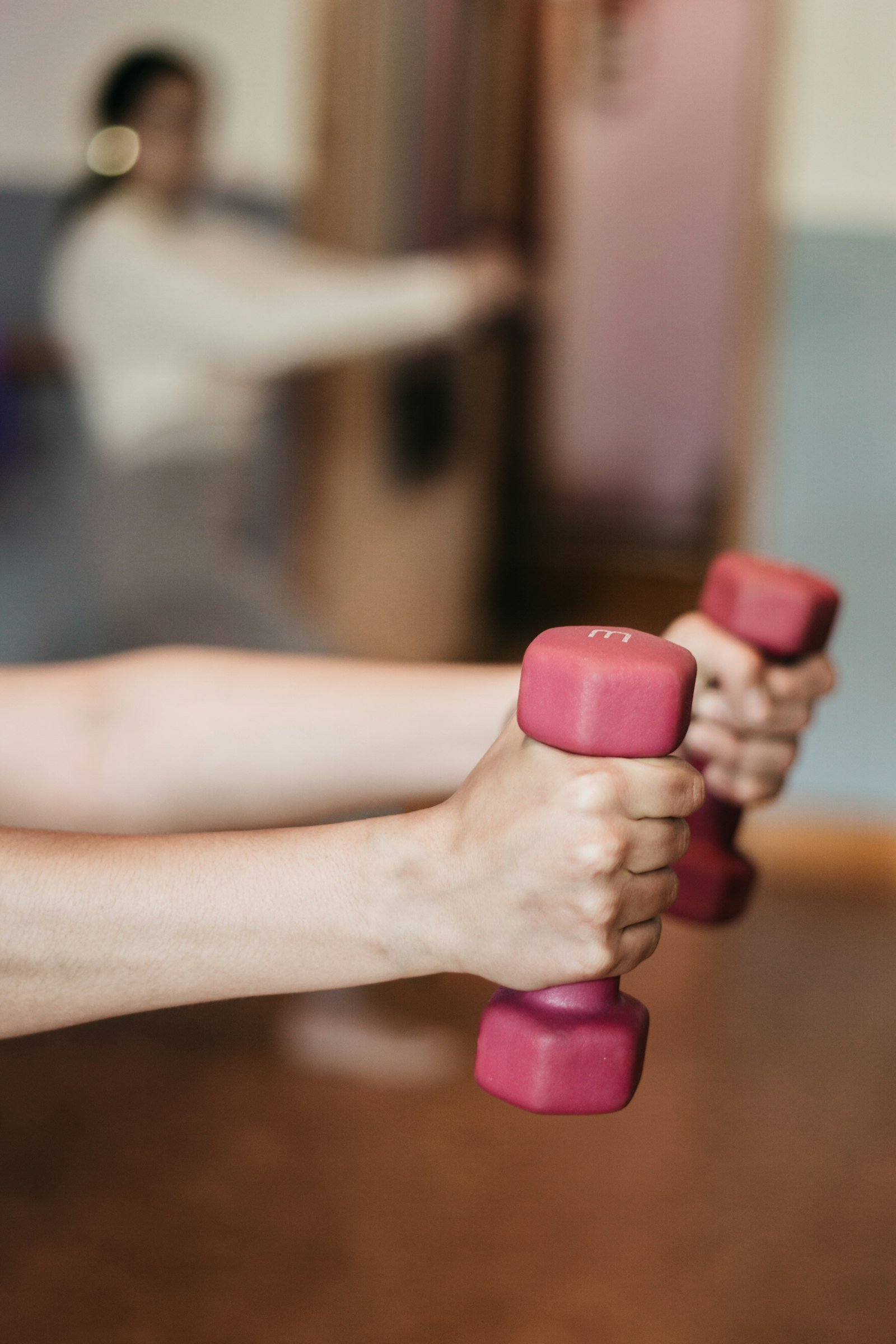
When 12 repetitions feel easy, add a resistance band or light dumbbells, or slow the movement down. Gradual progression is what builds muscle over time.
Step 4: Pair It With Movement You Enjoy
The DARE trial showed the best results when strength work was combined with aerobic activity. Brisk walking, cycling, swimming, or dancing all count. A short walk after meals is a great companion habit; we cover it in our guide to food order, vinegar, and walking for blood sugar.
Step 5: Use “Movement Snacks” When You Sit
If you work at a desk, try soleus push-ups: sit with feet flat, raise your heels as high as you can while keeping your toes on the floor, then lower them. Repeat at a steady pace for a few minutes at a time throughout the day. Isometric holds such as wall sits are another simple option, and we explain their benefits in our article on wall sits and blood pressure.
Step 6: Feed and Rest Your Muscles
Muscles are built from protein and rebuilt during sleep. Include protein at each meal from foods like beans, lentils, eggs, fish, yogurt, or tofu (plant proteins work well too, as we discuss in this look at plant-powered muscle). Protect your sleep as well; short or irregular nights can weaken insulin’s effect, as covered in our piece on sleep and blood sugar.
Strength Training as Part of a Whole-Body Approach
Traditional healing systems rarely treated one habit in isolation, and neither should we. Strength training works best alongside a whole-food diet rich in fiber and vegetables, steady sleep, stress management, and supportive kitchen herbs. Spices such as fenugreek and cinnamon, for example, have their own research for blood sugar, which we explore in Fenugreek and Cinnamon: Two Kitchen Spices With Real Research for Blood Sugar. Together, these habits build a body that handles sugar the way it was designed to.
The Bottom Line
Your muscles are one of the most powerful natural tools you have for steady blood sugar. Research from dozens of trials shows that regular resistance training lowers HbA1c, and combining it with aerobic activity works even better. Large studies link strength work with a lower chance of developing type 2 diabetes. You do not need a gym membership or heavy weights. A few bodyweight moves two or three times a week, a walk after meals, and some calf raises at your desk can put your body’s biggest sugar sponge back to work.
Frequently Asked Questions
How long does it take for strength training to affect blood sugar?
A single session can improve how your muscles take up glucose for the following hours, while changes in HbA1c, which reflects about three months of blood sugar, were measured in trials lasting 12 to 26 weeks.
Is strength training better than walking for blood sugar?
Neither is clearly better on its own. In the large 2011 meta-analysis, aerobic and resistance training gave similar HbA1c reductions. The DARE trial found that doing both produced the greatest improvement.
Am I too old to start lifting weights?
No. Muscle responds to training at any age, and older adults often have the most to gain because muscle naturally declines over time. Start with light, controlled bodyweight moves and progress slowly.
Do I need heavy weights to see a benefit?
No. Moderate resistance from bands, light dumbbells, or your own body weight, done consistently and progressed gradually, is enough to build strength and improve how your body handles glucose.
Does yoga count as strength training?
In the Nurses’ Health Study analysis, yoga, toning, and stretching were included with muscle-strengthening and conditioning activities. Strength-focused styles that involve holding poses can help build muscle, especially for beginners.
Safety note: If you take insulin or medications that lower blood sugar, exercise can make your levels drop further, sometimes hours later. Check your blood sugar before and after new workouts, keep a quick source of glucose nearby, and let your practitioner know you are starting a training routine so your plan can be adjusted if needed.
Sources
- Umpierre D, Ribeiro PAB, Kramer CK, et al. Physical activity advice only or structured exercise training and association with HbA1c levels in type 2 diabetes: a systematic review and meta-analysis. JAMA. 2011;305(17):1790-1799. Summary via EurekAlert
- Sigal RJ, et al. Effects of aerobic training, resistance training, or both on glycemic control in type 2 diabetes. Annals of Internal Medicine. 2007. Summary via ScienceDaily
- Grøntved A, Pan A, Mekary RA, et al. Muscle-strengthening and conditioning activities and risk of type 2 diabetes: a prospective study in two cohorts of US women. PLOS Medicine. 2014;11(1):e1001587. Read the study
- Hamilton MT, Hamilton DG, Zderic TW. A potent physiological method to magnify and sustain soleus oxidative metabolism improves glucose and lipid regulation. iScience. 2022;25(9):104869. Read the study
- University of Houston. Discovery unlocks potential of “special” muscle. 2022. Read the release
This article is for educational purposes and is not a substitute for personalized advice from a qualified health practitioner.