








Long before anyone had heard of “forever chemicals,” traditional healers already saw the gut as the body’s main exit. Hippocrates prescribed ptisane, a soothing barley gruel, to people recovering from illness. Ayurvedic physicians treated regular, healthy elimination as a sign of good health. In Scottish and Irish kitchens, a daily bowl of oats was seen as simple, steady nourishment.
These traditions had something right. The fiber in oats and barley does more than keep you regular. New research suggests that one special type, beta-glucan, may help your body get rid of PFAS. These are man-made chemicals that build up in nearly everyone and stay in the body for years.
Key Takeaways
- PFAS (“per- and polyfluoroalkyl substances”) are found in nonstick pans, stain-proof fabrics, food packaging, and many water supplies. Some of the long-chain types have half-lives in the body of roughly 2 to 7 years.
- A 2025 study in Environmental Health found that men who took an oat beta-glucan drink three times a day for four weeks had larger drops in several long-chain PFAS, including PFOA and PFOS, than a control group.
- Researchers think gel-forming fiber traps PFAS in the gut, much as it traps bile acids, so less gets reabsorbed and more leaves in the stool.
- The study was small and short, but the approach is food-based, low-cost, and has other proven benefits, such as lower cholesterol.
- Pairing more fiber with less daily PFAS exposure, for example by filtering water and avoiding worn nonstick pans, is the most practical strategy.
What Are PFAS, and Why Do They Stay So Long?
PFAS are a family of thousands of synthetic chemicals prized for repelling water, grease, and stains. Their carbon-fluorine bonds are among the strongest in chemistry, so they barely break down, either in the environment or in the body. That is how they earned the nickname “forever chemicals.”
Once inside you, many PFAS bind to proteins in the blood and circulate through the liver. The liver releases bile into the gut to help digest fats. Some PFAS travel out with that bile. The trouble is that the gut normally reabsorbs most bile acids and sends them back to the liver to be used again. This recycling loop is called enterohepatic circulation. PFAS ride the same loop, which is a big reason they linger so long.
If something in the gut could catch PFAS before they are reabsorbed, the body could break that loop and send them out in the stool instead.
Enter Beta-Glucan: The Gel-Forming Fiber
Beta-glucan is a soluble fiber found mostly in oats and barley, and also in some mushrooms. When it meets water in the gut, it forms a thick, viscous gel. That gel is already known to bind bile acids, which is why oat and barley fiber lower LDL cholesterol. Your liver has to pull cholesterol from the blood to make fresh bile.
Environmental health researchers, led by Professor Jennifer Schlezinger at Boston University, noticed that PFAS look a lot like bile acids at the molecular level. They asked whether the same fiber gel might catch PFAS too.
What the 2025 Study Found
The team used stored blood samples from a randomized, double-blind clinical trial in the Toronto area. The trial was originally designed to test an oat beta-glucan drink for cholesterol. They analyzed 72 men who had followed the protocol. Forty-two took sachets supplying 1 gram of oat beta-glucan three times a day (3 grams daily), and 30 took a look-alike rice powder with no beta-glucan. Both groups did this for four weeks.
PFAS levels drifted down in both groups over the month. That may reflect changes in background exposure. But in the fiber group, several long-chain PFAS fell more sharply, including PFOA and PFOS, the two best known and most studied. Long-chain PFAS are the ones that tend to hang around longest, so this is where help matters most.
Earlier animal work by the same group showed the same pattern. Mice fed oat beta-glucan excreted about twice as much PFAS in their feces and had lower PFAS levels in gut tissue and blood.
Evidence Snapshot: Ways to Lower PFAS in the Body
| Approach | Study | What happened |
|---|---|---|
| Oat beta-glucan drink (3 g/day) | Schlezinger et al., Environmental Health, 2025; 72 men, 4 weeks | Greater declines in several long-chain PFAS, including PFOA and PFOS, versus control |
| Beta-glucan in diet (animal study) | Same research group, mice | About double the PFAS excreted in feces; lower levels in gut tissue and blood |
| Regular plasma donation | Gasiorowski et al., JAMA Network Open, 2022; 285 firefighters, 12 months | Average blood PFAS fell by about 30% with donation every 6 weeks |
Sources: Environmental Health (2025); medRxiv preprint (2024); The Conversation summary of the JAMA Network Open firefighter trial (2022).
Why This Matters for Everyday Detox
Many “detox” products promise to flush out mystery toxins. This research is different. It names a real, measurable chemical, finds a plausible pathway, and tests a common food fiber in people. It also fits with how the body already cleans itself: your liver packages waste into bile, and your gut decides how much leaves for good.
Fiber supports that gut “exit door” in other ways too. It feeds beneficial bacteria, speeds up transit time, and helps carry bile out of the body. We have written before about how broccoli sprouts switch on the body’s own detox enzymes. Fiber works on the other end of the process, helping the waste your liver has already packaged leave the body instead of looping back.
The researchers are clear about the limits. The study was small, included only men with high cholesterol, and lasted just a month. Long-chain PFAS take years to clear, so a month can only show a direction, not a finish line. Larger controlled trials are underway, with funding from the U.S. Department of Defense, which has a strong interest because firefighting foams have exposed many service members.
How to Put Gel-Forming Fiber to Work
The study used 3 grams of beta-glucan a day. That is the same daily amount the U.S. Food and Drug Administration already links with lower cholesterol in its health claim for oat and barley fiber. You can reach it with food spread across the day:
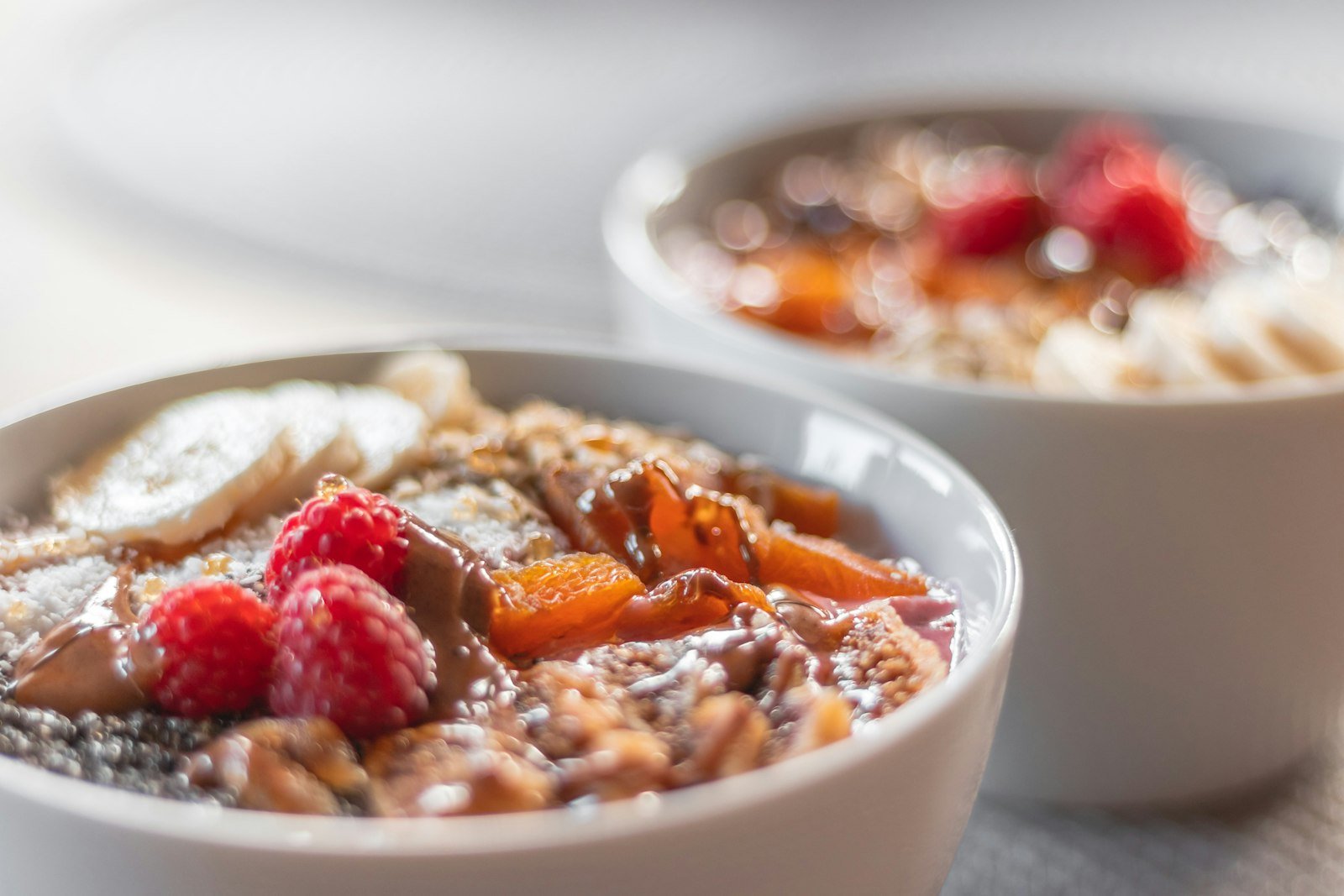
- Start the day with oats. Choose rolled or steel-cut oats, or oat bran, over sugary instant packets. Oat bran is especially concentrated in beta-glucan.
- Bring back barley. Add pearled or hulled barley to soups and stews, or use it in place of rice in grain bowls. Barley is one of the richest beta-glucan sources of all.
- Split it up. The trial gave fiber three times a day, with meals. Eating some beta-glucan at each meal may help it meet the bile your body releases when you eat.
- Add mushrooms. Shiitake, oyster, and maitake mushrooms supply their own beta-glucans, along with a long history in Traditional Chinese Medicine.
- Round out with other fibers. Beans and lentils add more soluble fiber. See our guide to beans, lentils, and chickpeas for easy ideas.
- Increase slowly and drink water. Raising fiber over a week or two, with plenty of fluids, keeps your gut comfortable.
Turn Down the Incoming Flow
Helping your body clear PFAS works best when you also take in less. A few simple changes make a difference:
- Filter your drinking water. Reverse osmosis and good activated-carbon filters can reduce PFAS in tap water. Check your local water report if you can.
- Retire scratched nonstick pans. Cook with cast iron, stainless steel, or ceramic instead.
- Eat fewer grease-proof packaged foods. Fast-food wrappers and microwave popcorn bags have often been treated with PFAS. Cutting back on ultra-processed foods helps on this front too.
- Skip “stain-resistant” sprays on carpets, couches, and clothing when you have a choice.
If you enjoy saunas, they have real heart benefits. But as we explained in our look at sauna detox, sweat is not the body’s main route for clearing most chemicals. The gut and kidneys do most of that work.
The Bottom Line
Oats and barley have nourished people for thousands of years. Modern science is now uncovering one more gift they may offer: a gel-forming fiber that may help the body catch and remove some of the most stubborn chemicals of the modern age. The evidence is early, but it is promising. Eating more oats and barley has almost no downside, and the same fiber already lowers cholesterol and feeds a healthy gut. Pair it with cleaner water and cookware, and you are supporting your body’s own detox system from both directions.
Frequently Asked Questions
Do I need a beta-glucan supplement, or will oatmeal work?
The study used a fiber drink, but beta-glucan from whole oats, oat bran, and barley is the same type of fiber. Food sources also bring minerals, protein, and other fibers. A supplement may help if you can’t reach about 3 grams a day from food.
How long does it take to lower PFAS levels?
Long-chain PFAS can take years to clear naturally. The study showed a measurable shift in four weeks, but think of fiber as a steady, long-term habit rather than a quick cleanse.
Does all fiber work the same way?
Probably not. The researchers focused on gel-forming (viscous) fibers like beta-glucan and psyllium, because they bind bile acids. Insoluble fibers, like wheat bran, act more like a broom than a sponge and are less likely to trap PFAS.
Can I test my PFAS levels?
Yes. Some labs offer PFAS blood tests, and the U.S. National Academies have published guidance on who may benefit from testing. This can be useful if you live near a known contamination site or have worked with firefighting foam.
A quick note: Thick soluble fibers can slow the absorption of some medications. If you take daily medicines, especially thyroid, diabetes, or heart drugs, take them a couple of hours apart from large servings of oat bran or fiber supplements, and ask your pharmacist about timing.
Sources
- Schlezinger JJ, et al. PFAS in circulation in a Canadian population and piloting a novel method to reduce serum PFAS. Environmental Health, 2025. https://doi.org/10.1186/s12940-025-01165-8
- Preprint version with trial methods (medRxiv, 2024): https://www.medrxiv.org/content/10.1101/2024.08.02.24311171v1
- Fortune Well. Eating more fiber could help reduce forever chemicals in your blood (June 2025): https://fortune.com/well/2025/06/02/forever-chemicals-pfas-fiber-study/
- Military Health System Research Symposium abstract on beta-glucan and PFAS excretion in mice: https://mhsrs.health.mil/MHSRS/download/downloadabstractfile/5906
- The Conversation. New evidence shows blood or plasma donations can reduce the PFAS in our bodies (2022): https://theconversation.com/new-evidence-shows-blood-or-plasma-donations-can-reduce-the-pfas-forever-chemicals-in-our-bodies-178771
This article is for educational purposes and is not a substitute for personalized advice from a qualified health practitioner.





